
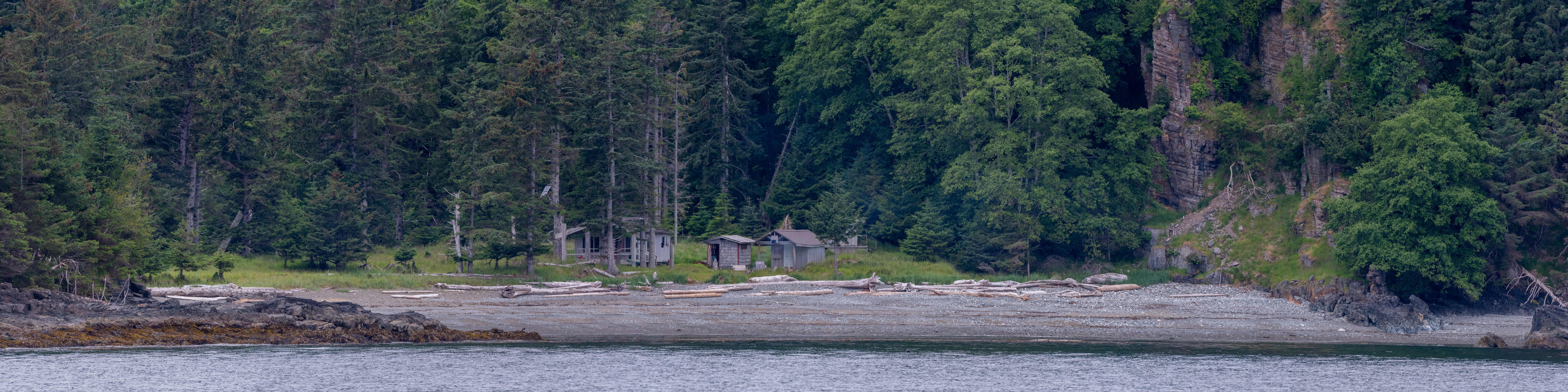
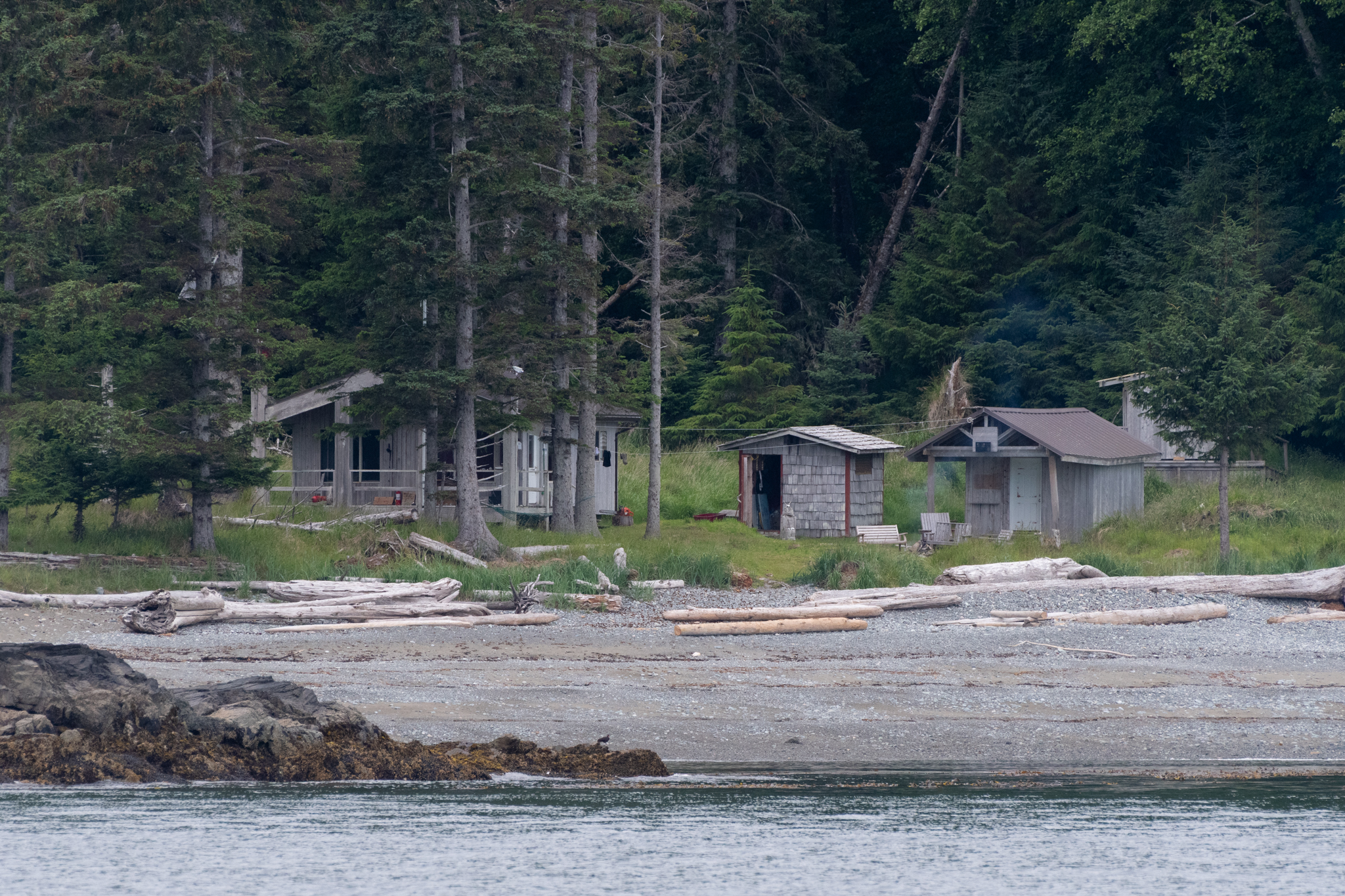
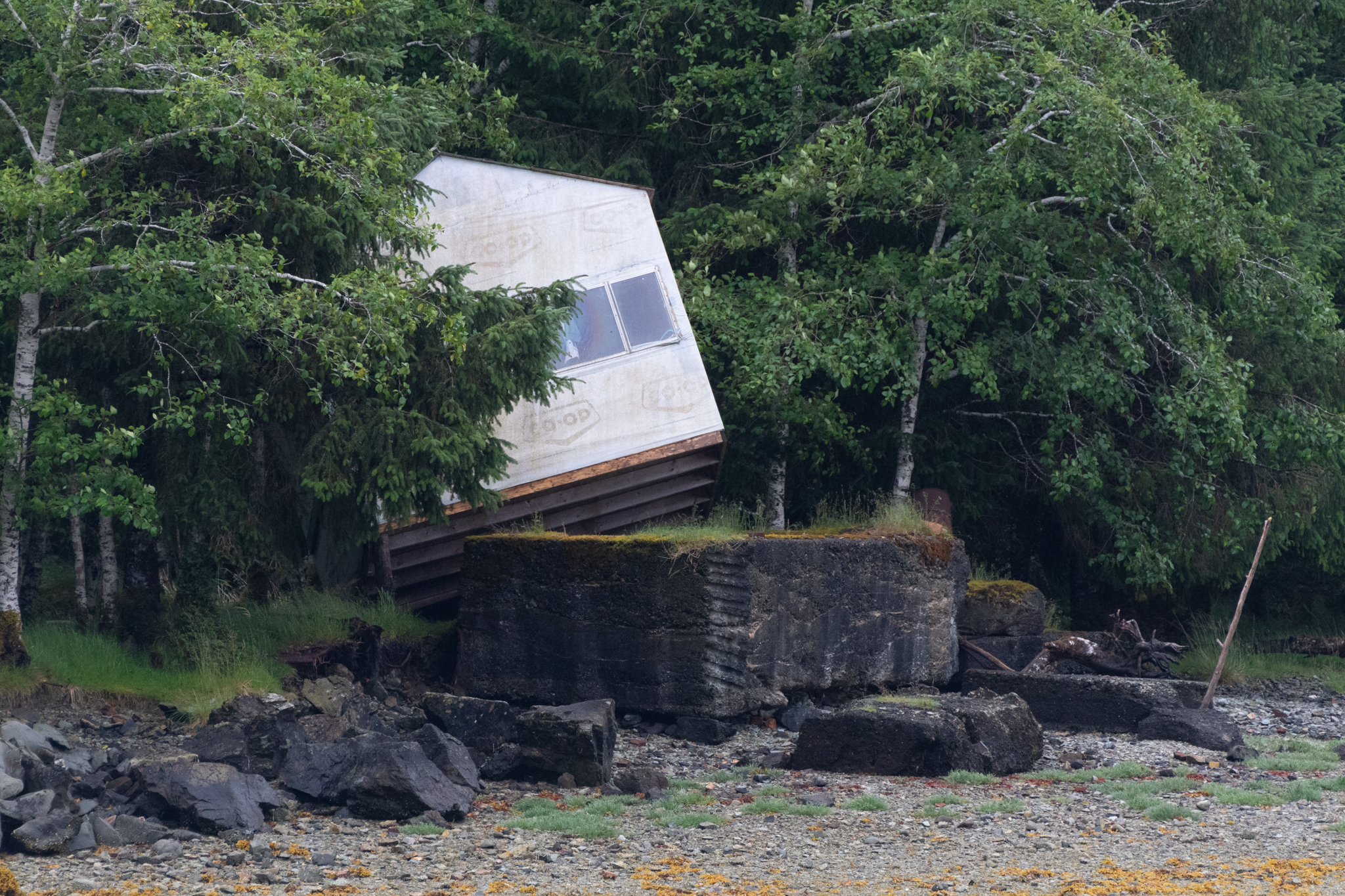
After an overnight at the Sandspit Marina to stock up on toilet paper from the nearby marine store as well as to top our batteries off without running the engine due to a bunch of overcast days in a row, we headed to a protected anchorage just north of Gwaii Haanas. With a day until our permit to enter the park and nasty weather forecast for that day, we decided to stage up in Thurston Harbour (52°50’29″N 131°44’48″W) and wait out the bad weather. This did mean we were unable to stop to go ashore at the northmost Haida Watchman site, Ḵ’uuna Llnagaay (Skedans), but we motored past it to see what we could from the water.
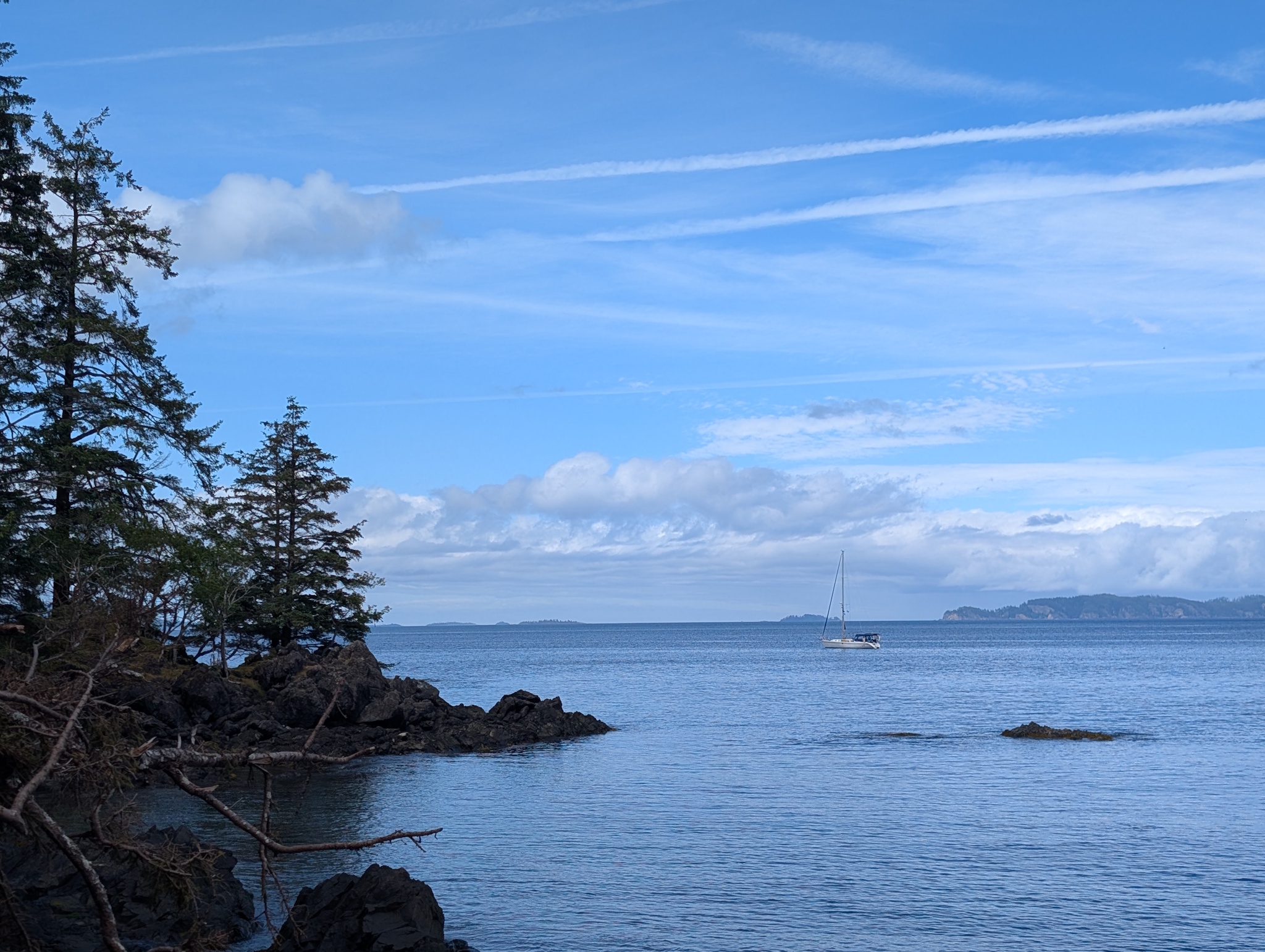
The weather came and went as predicted, though we barely noticed in the protection of our anchorage, and on Friday morning, July 11th, we entered Gwaii Haanas, heading towards the first Haida Watchmen site we’d planned to stop at, T’aanuu Llnagaay (Tanu). The protocol in Gwaii Haanas is to hail the Watchmen posts on VHF channel 6 for permission to come ashore and see the site, so we did just that, and ended up going with another group, a tour group with a company called Bluewater Adventures on their 66ft sailboat, Island Solitude. We ended up anchoring north-east of the site at 52° 46.1103′ N, 131° 36.8337′ W in very calm weather. I wouldn’t anchor here in any other conditions.
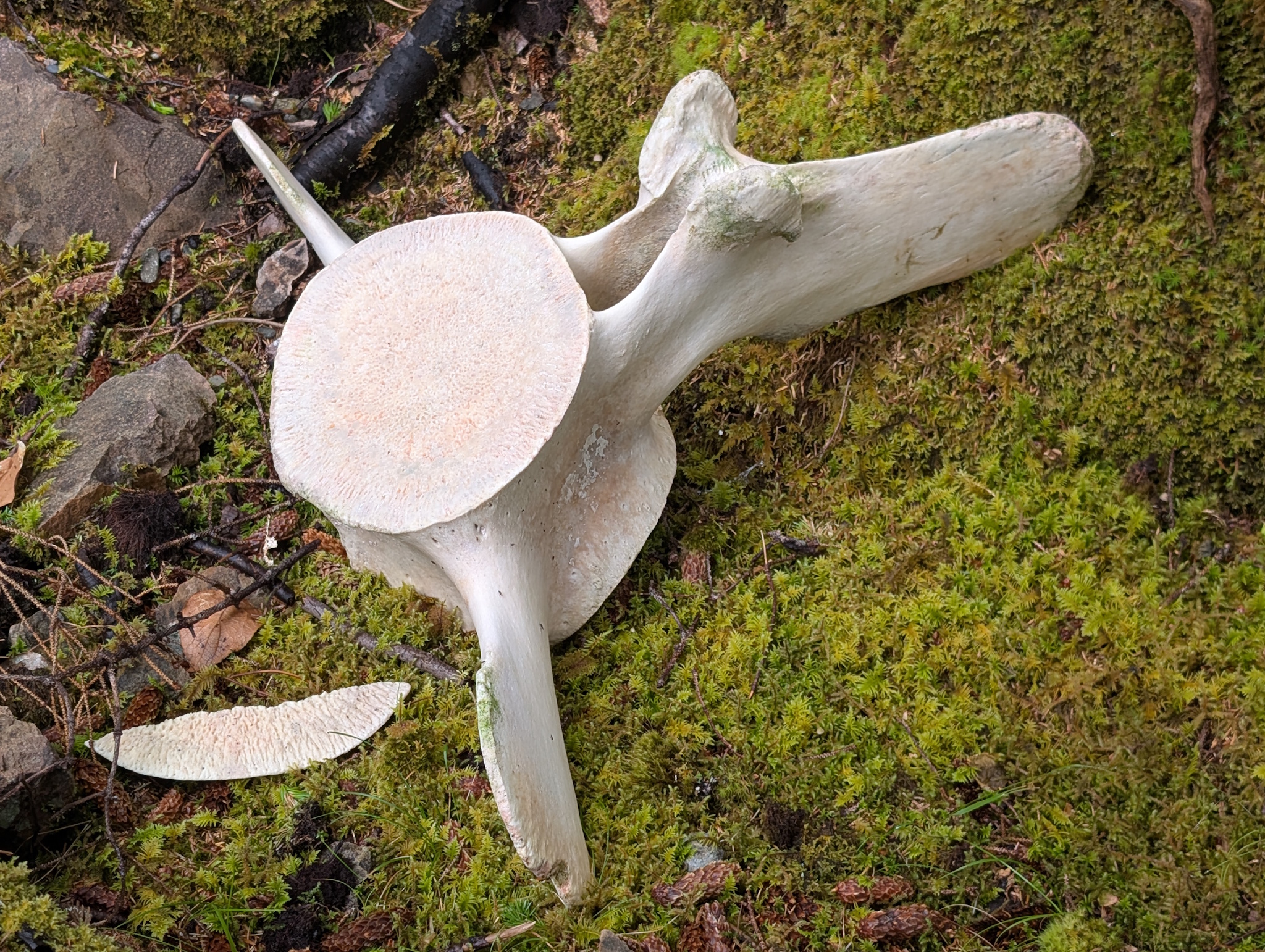
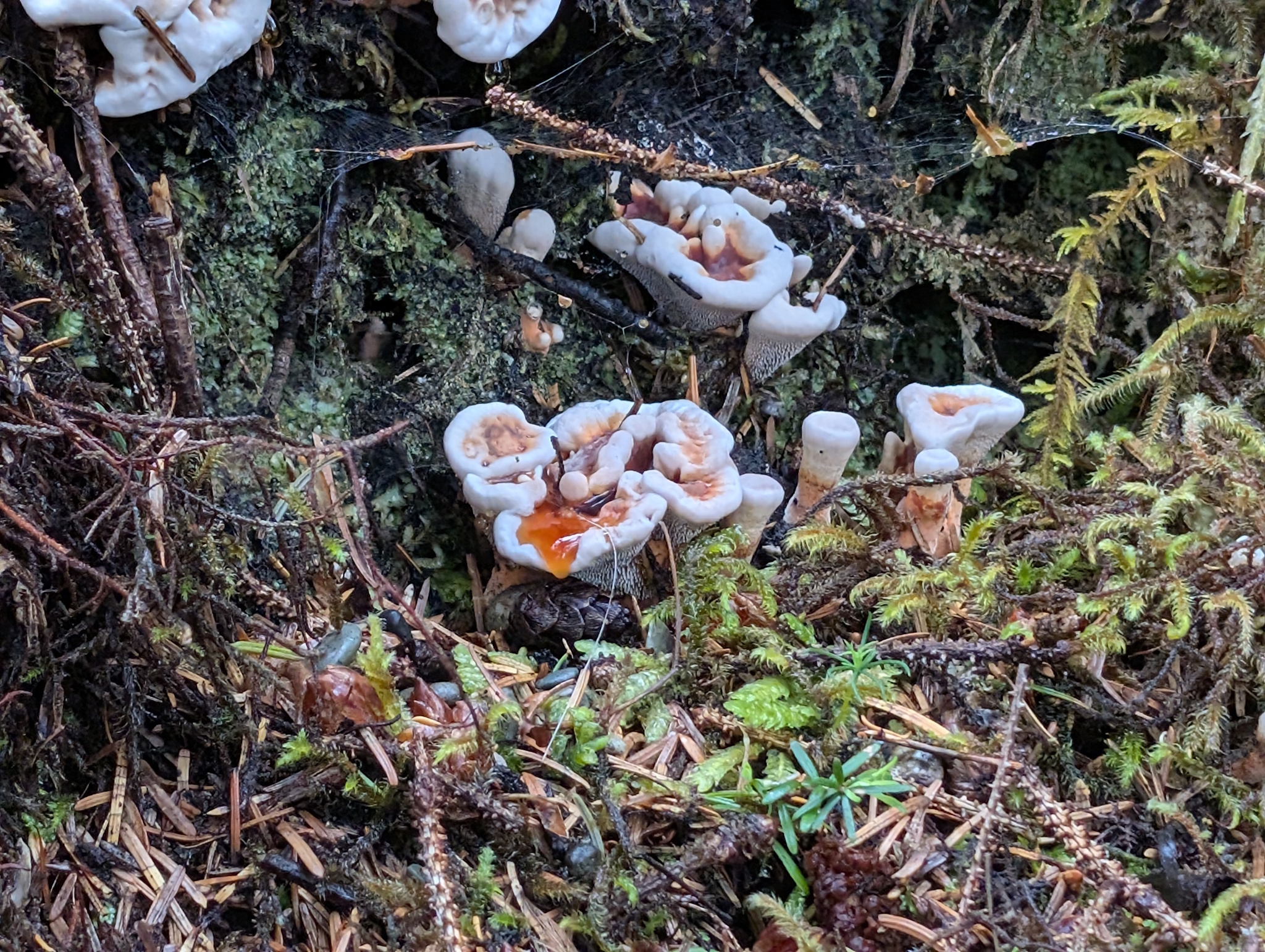
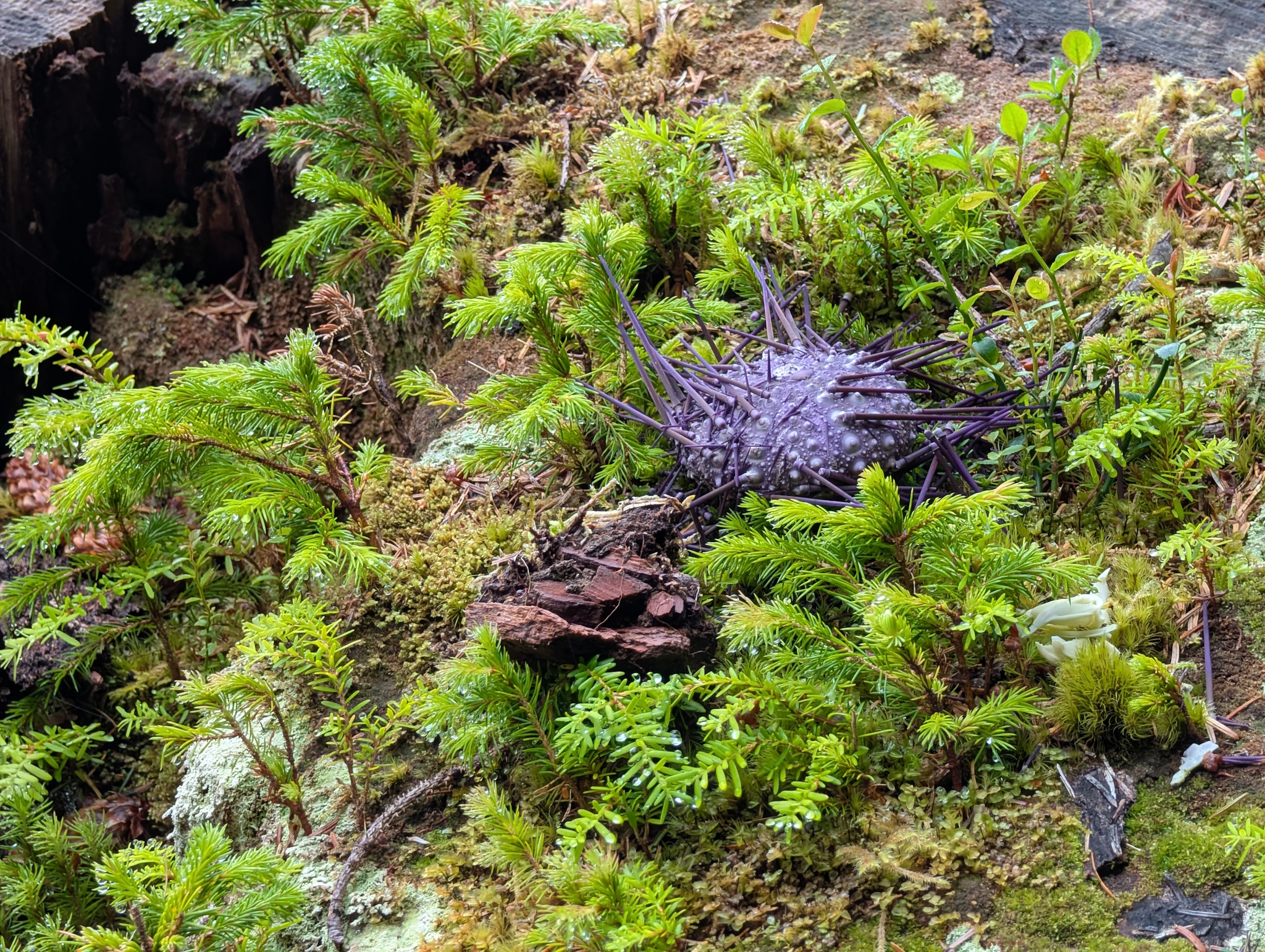
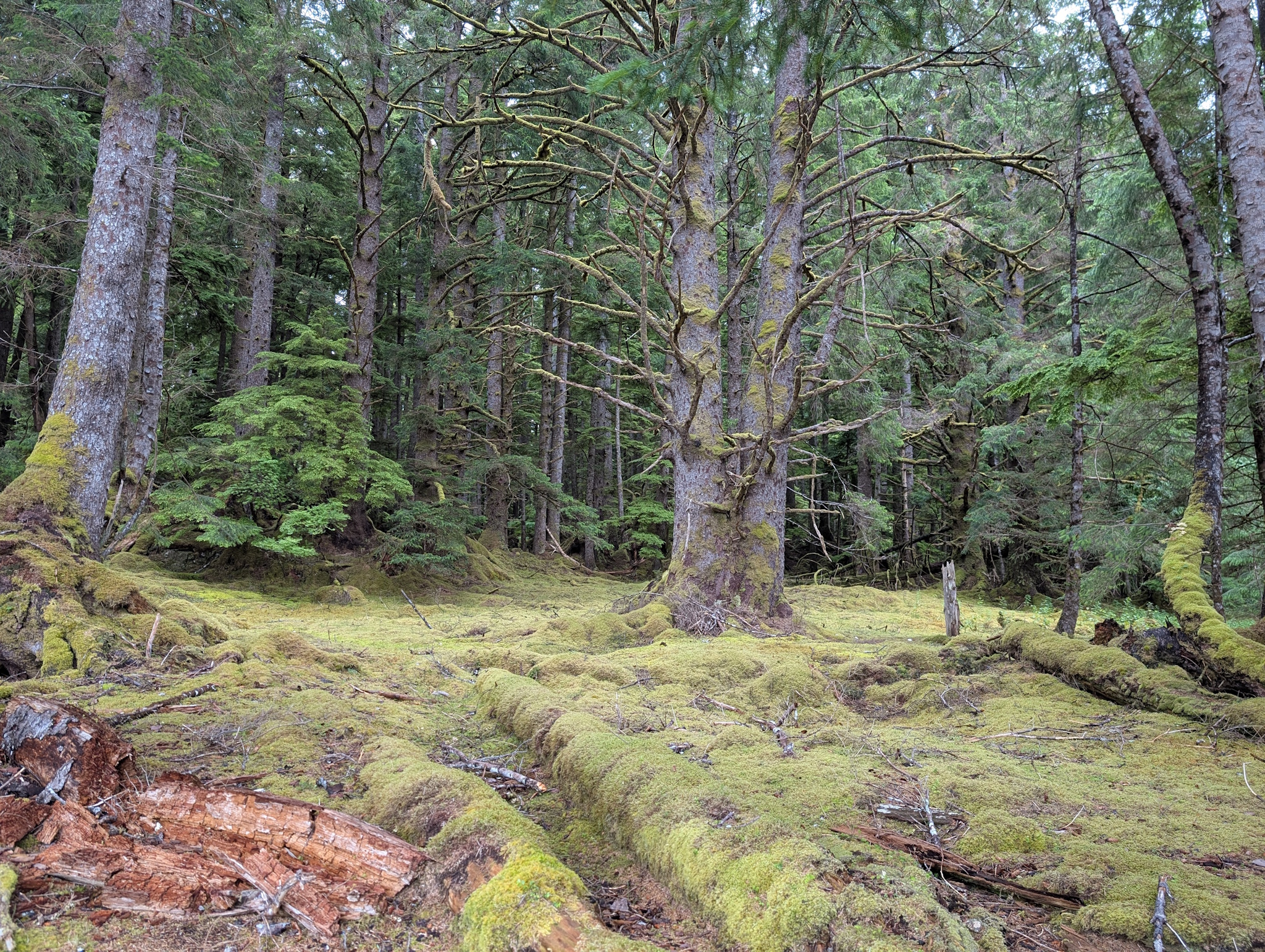
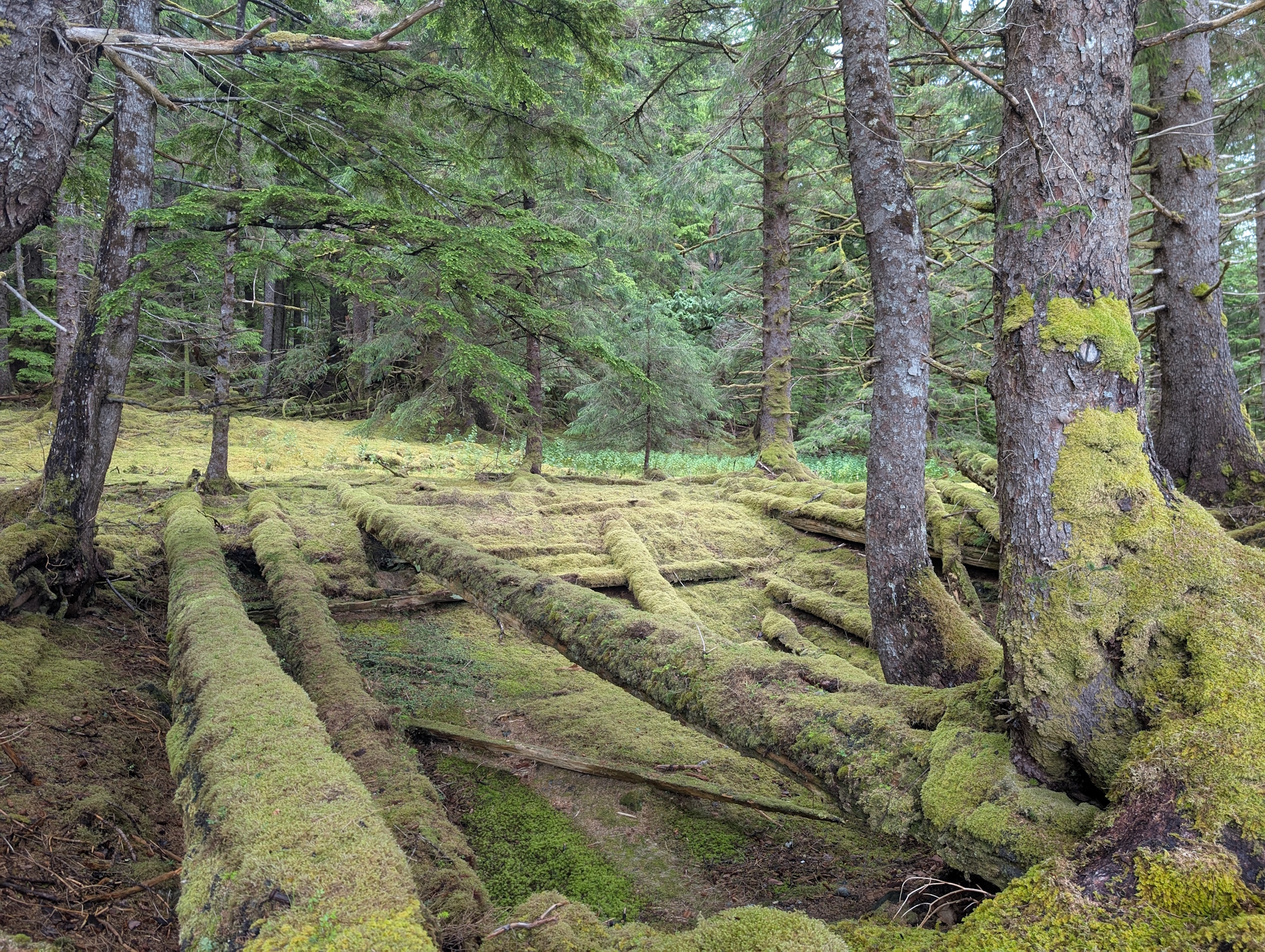
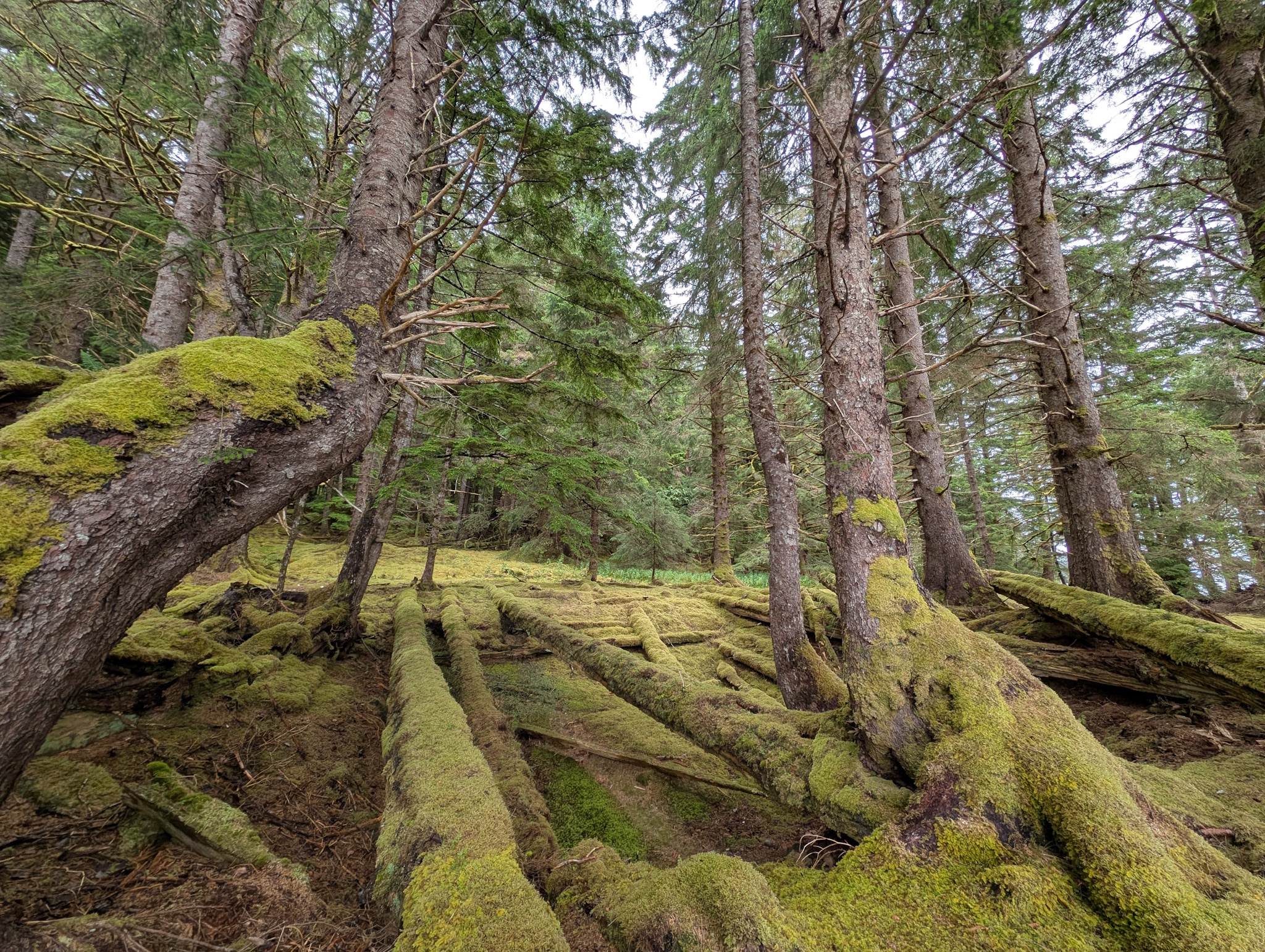
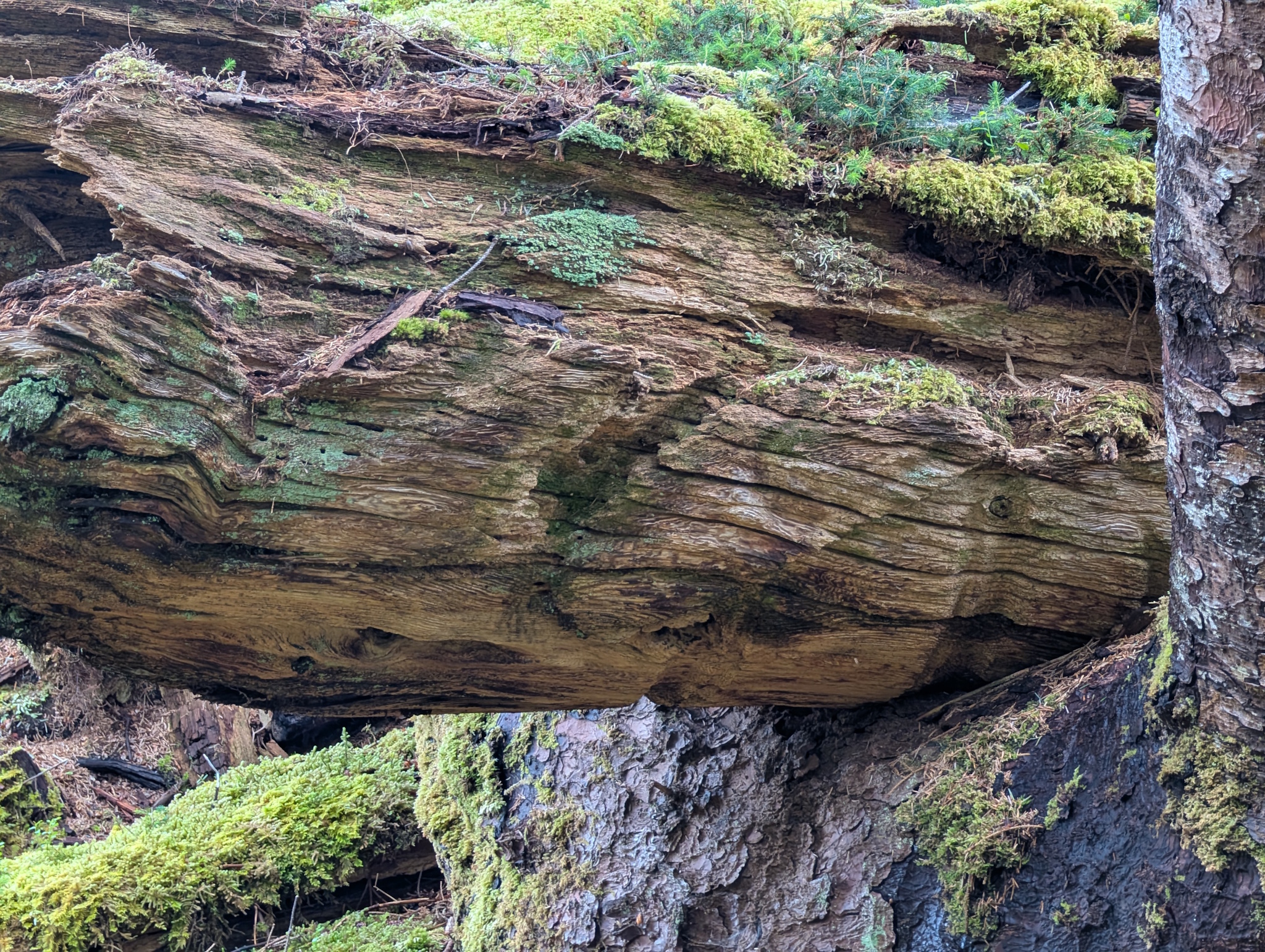
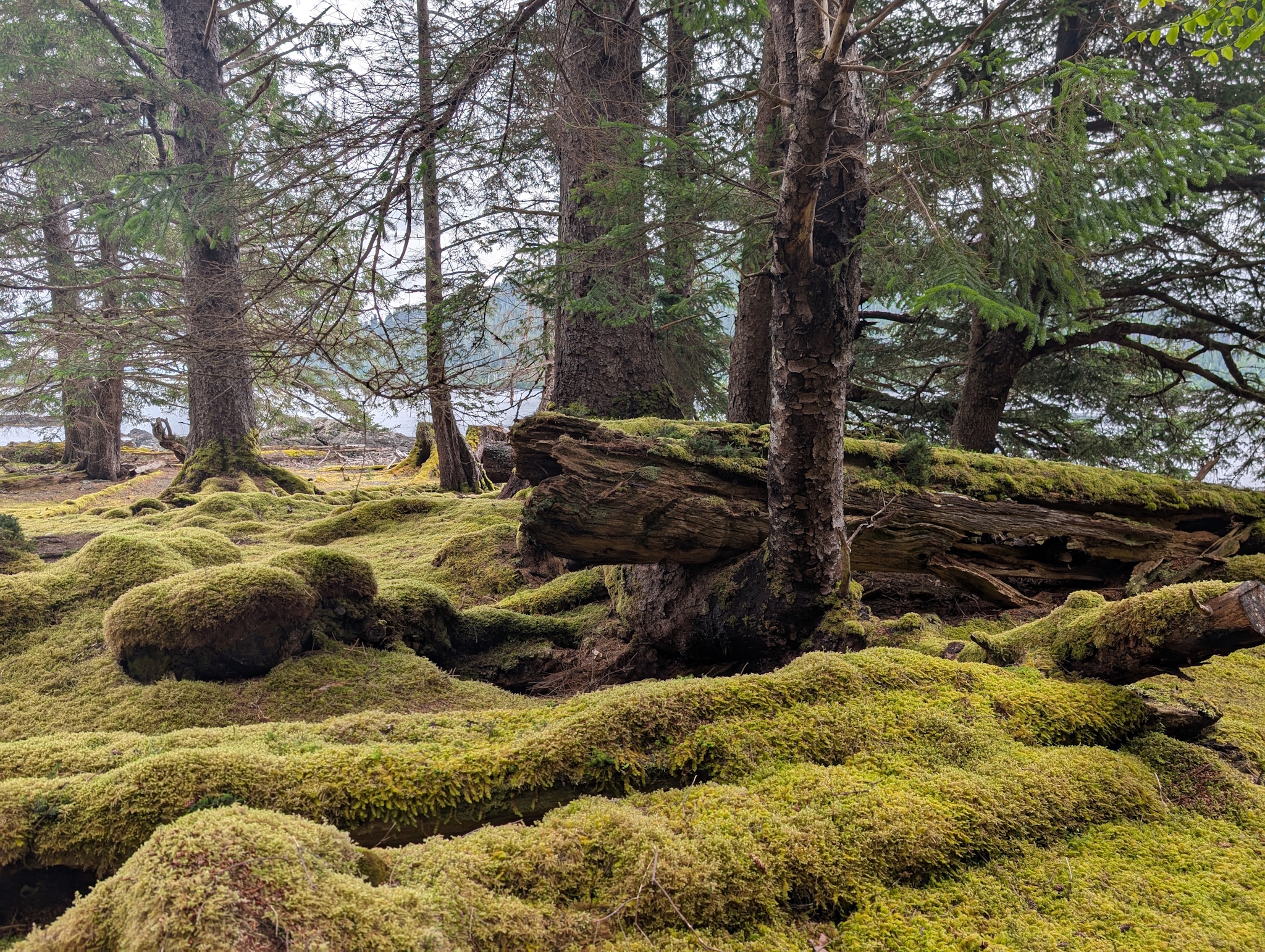
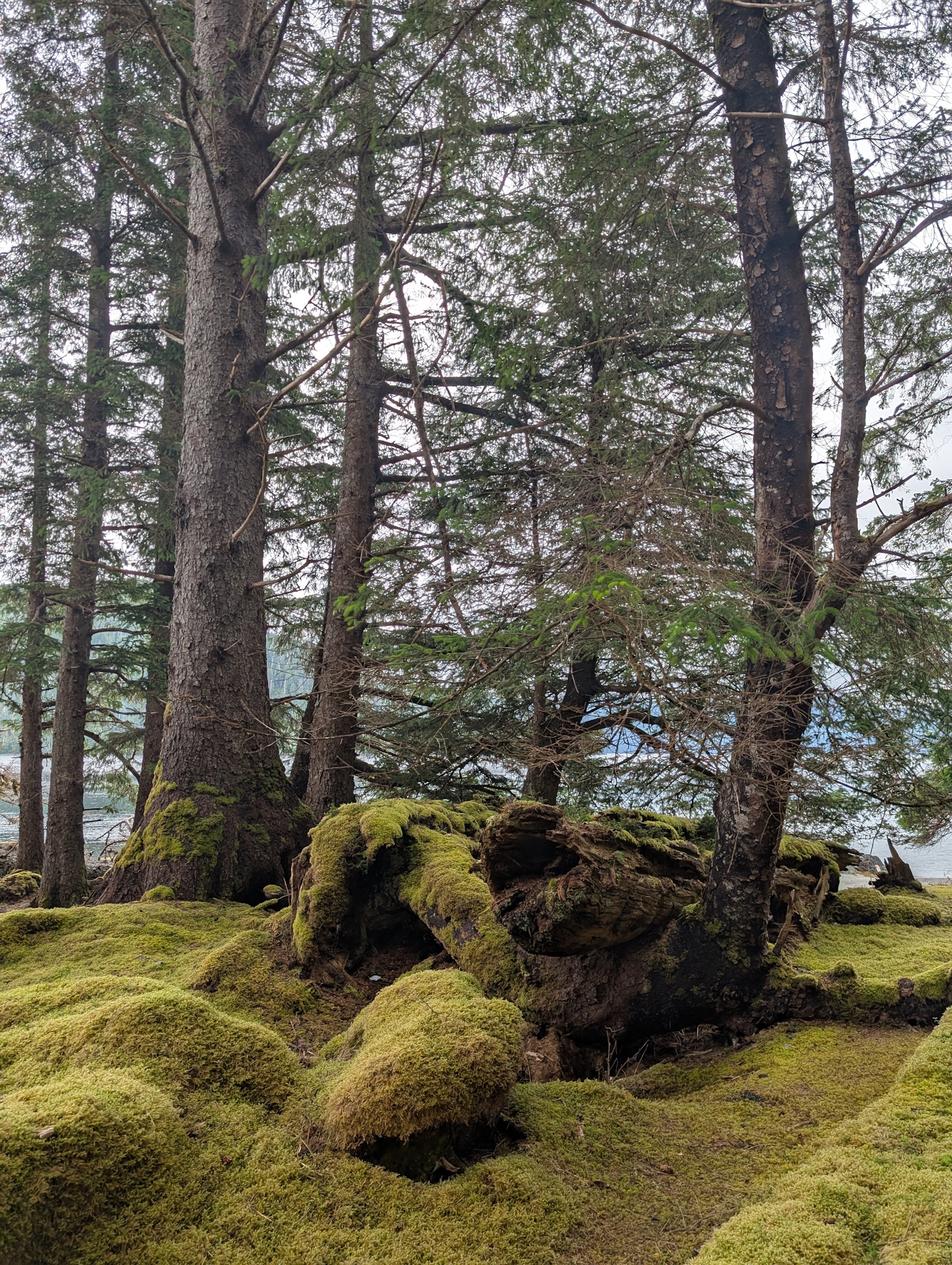
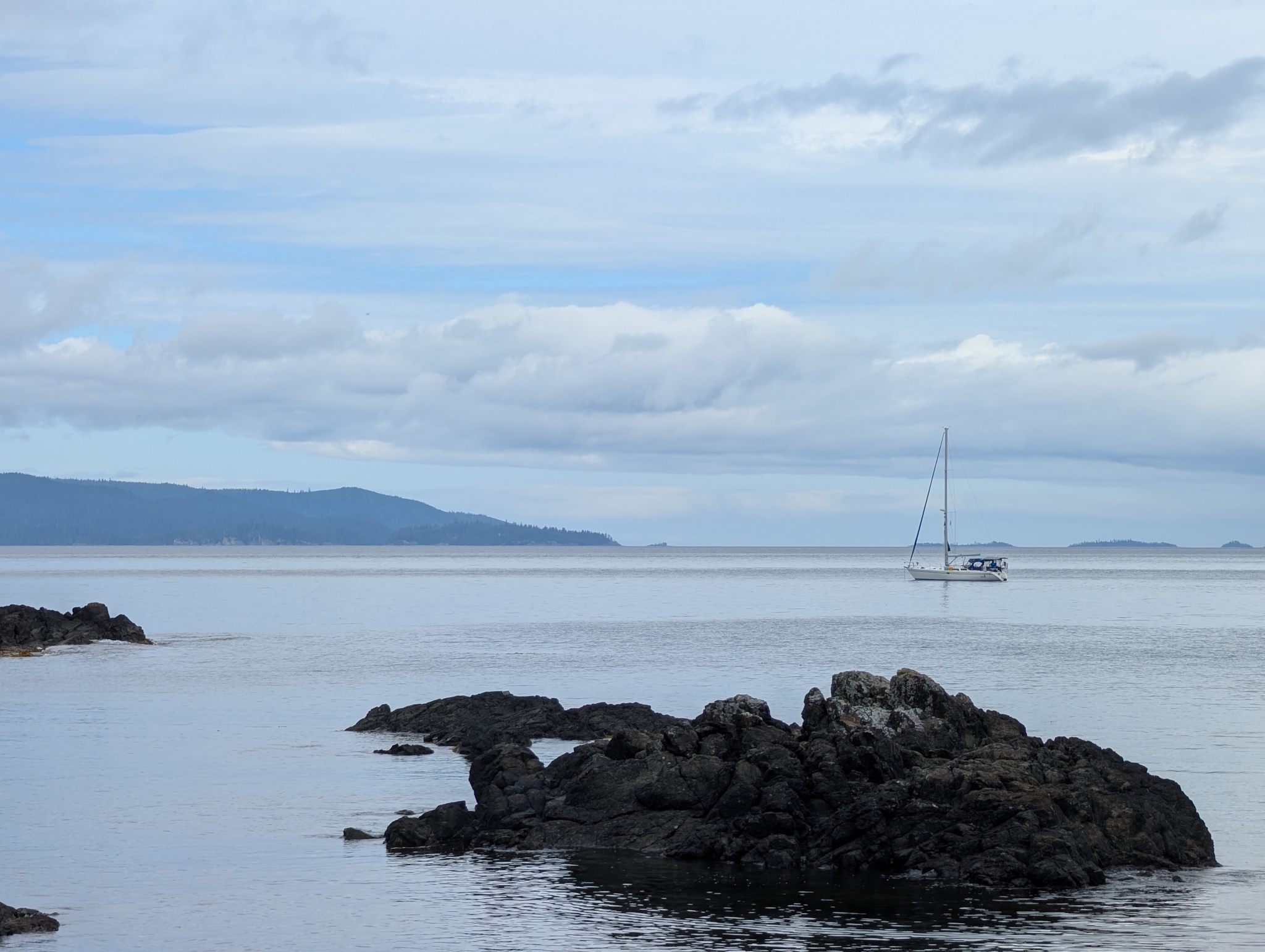
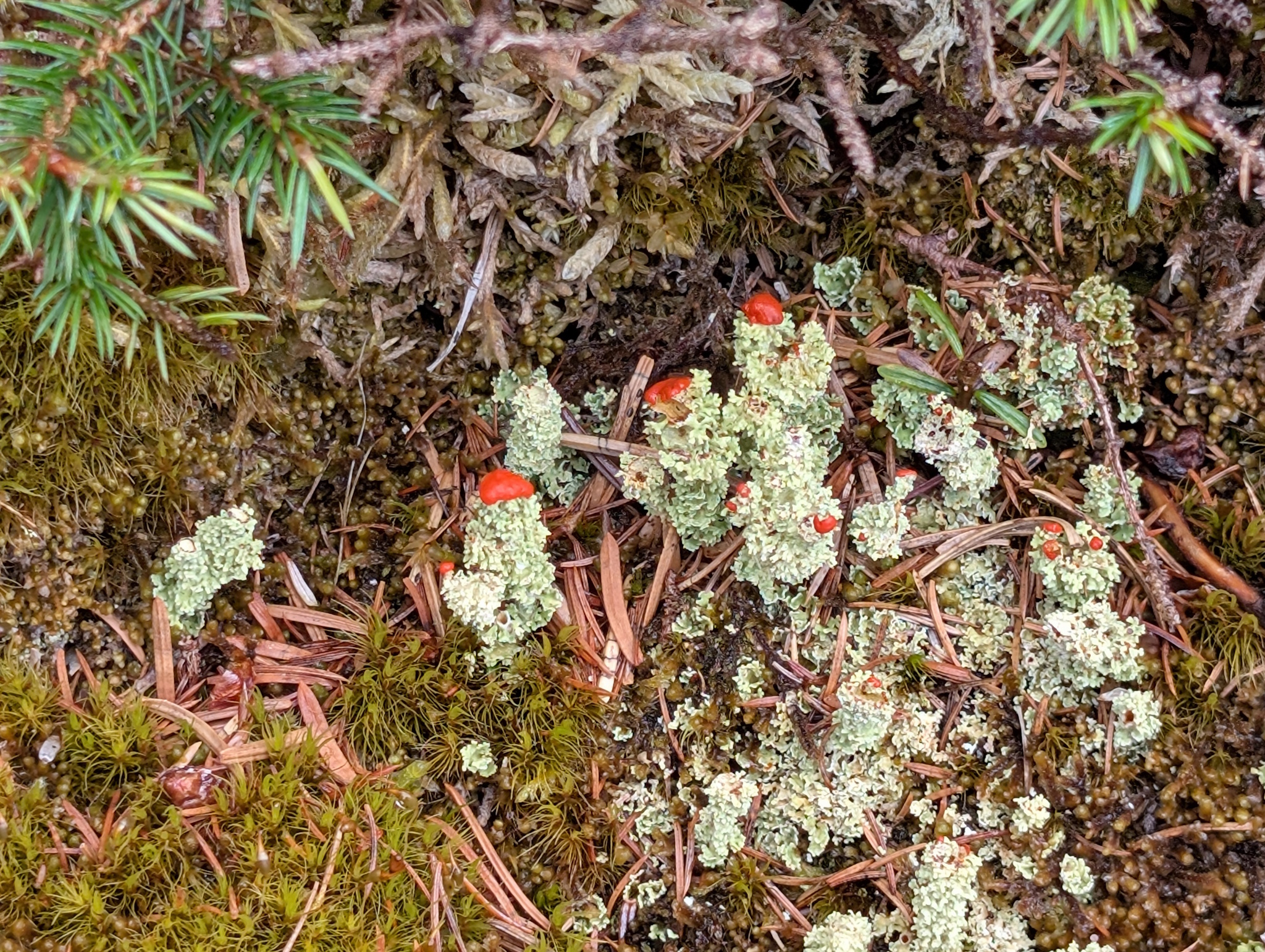
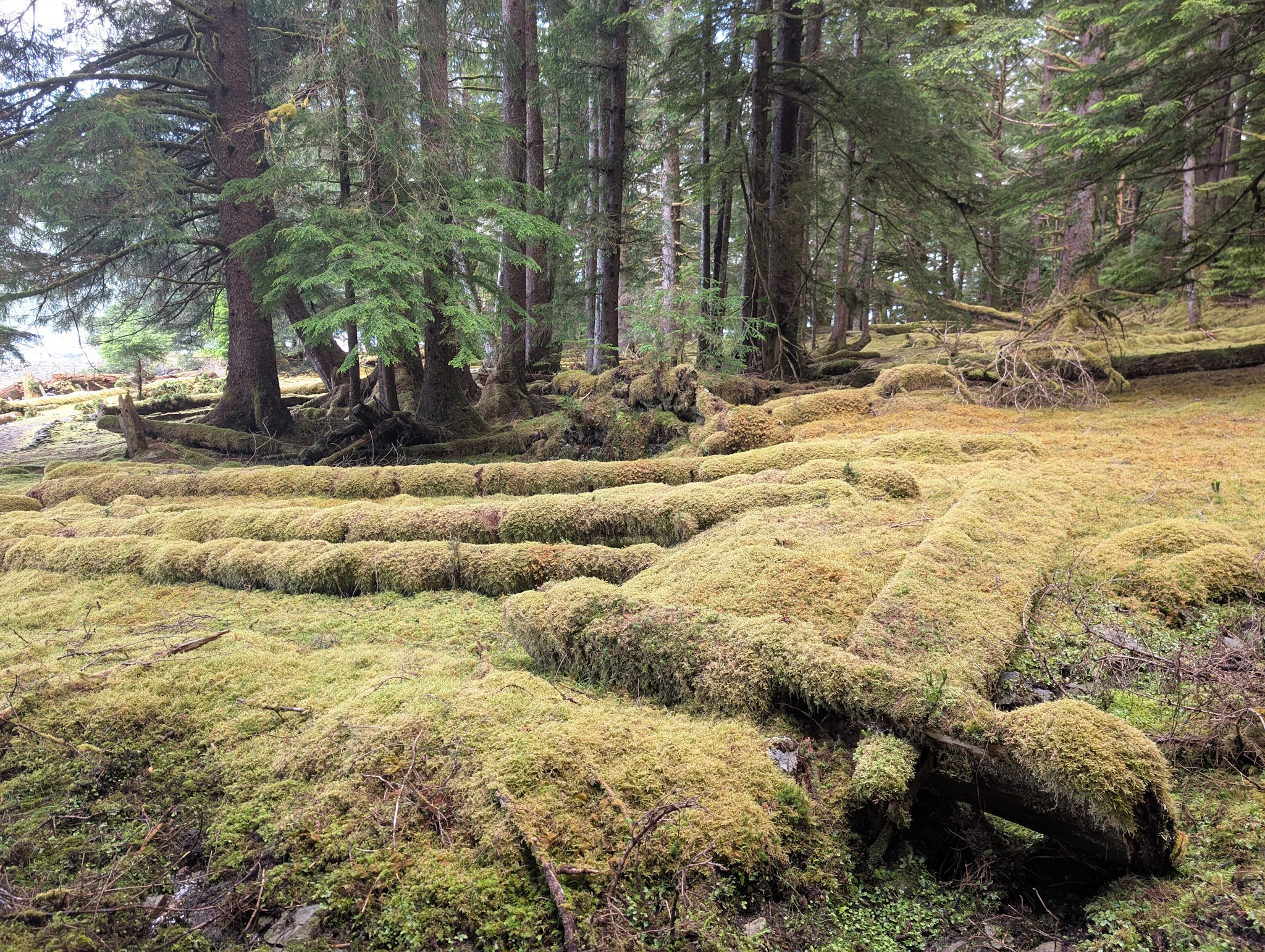
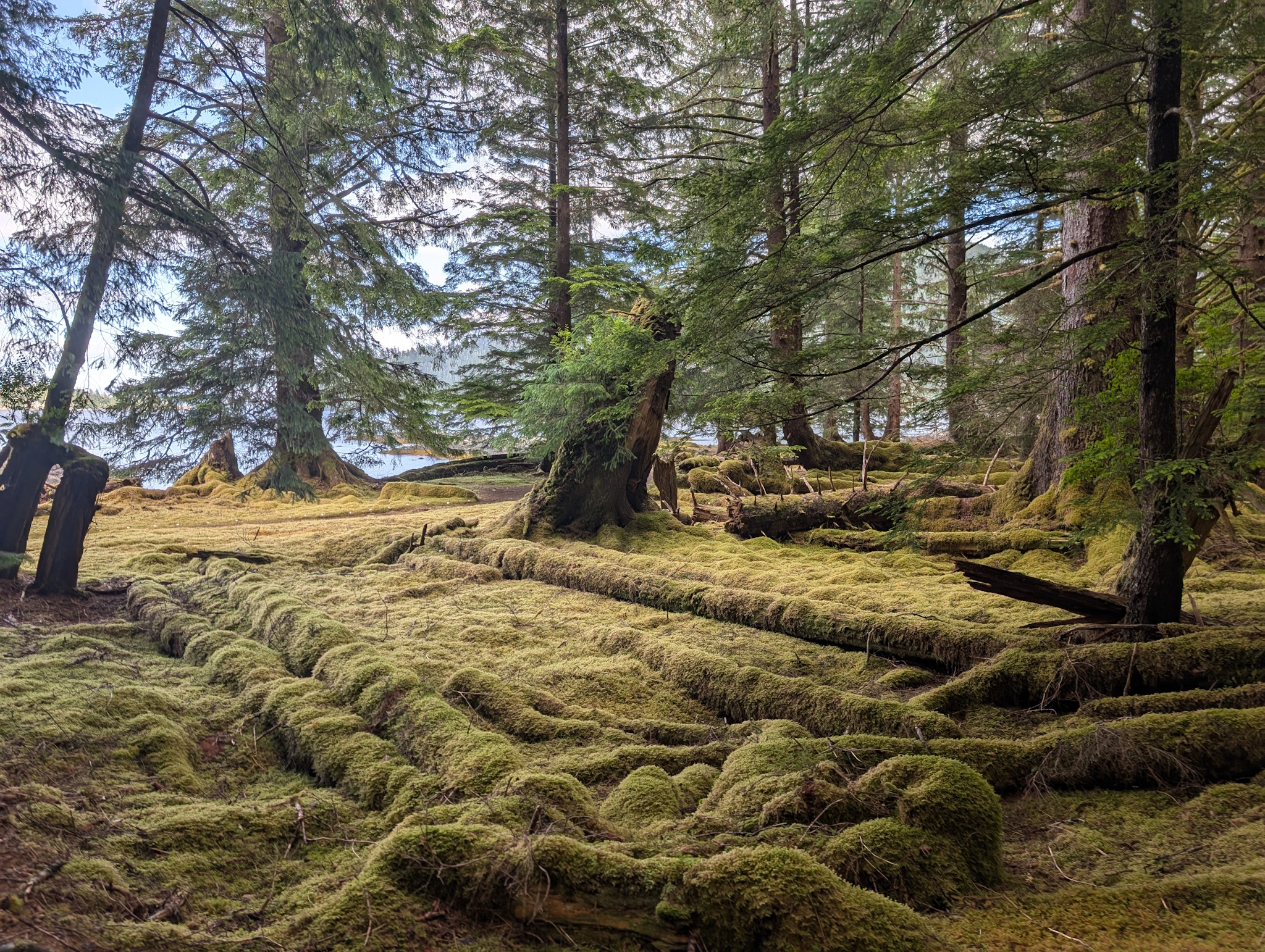
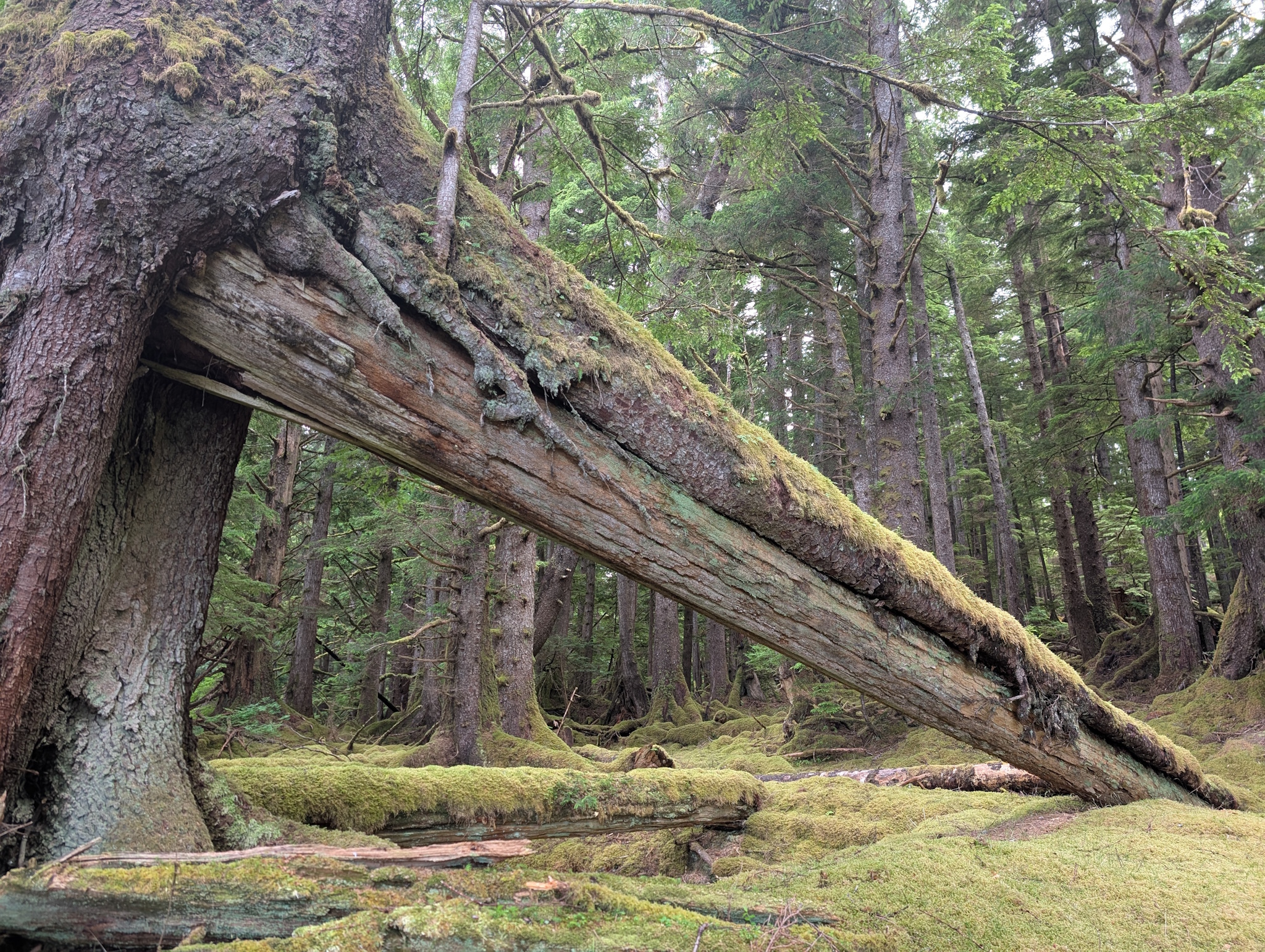
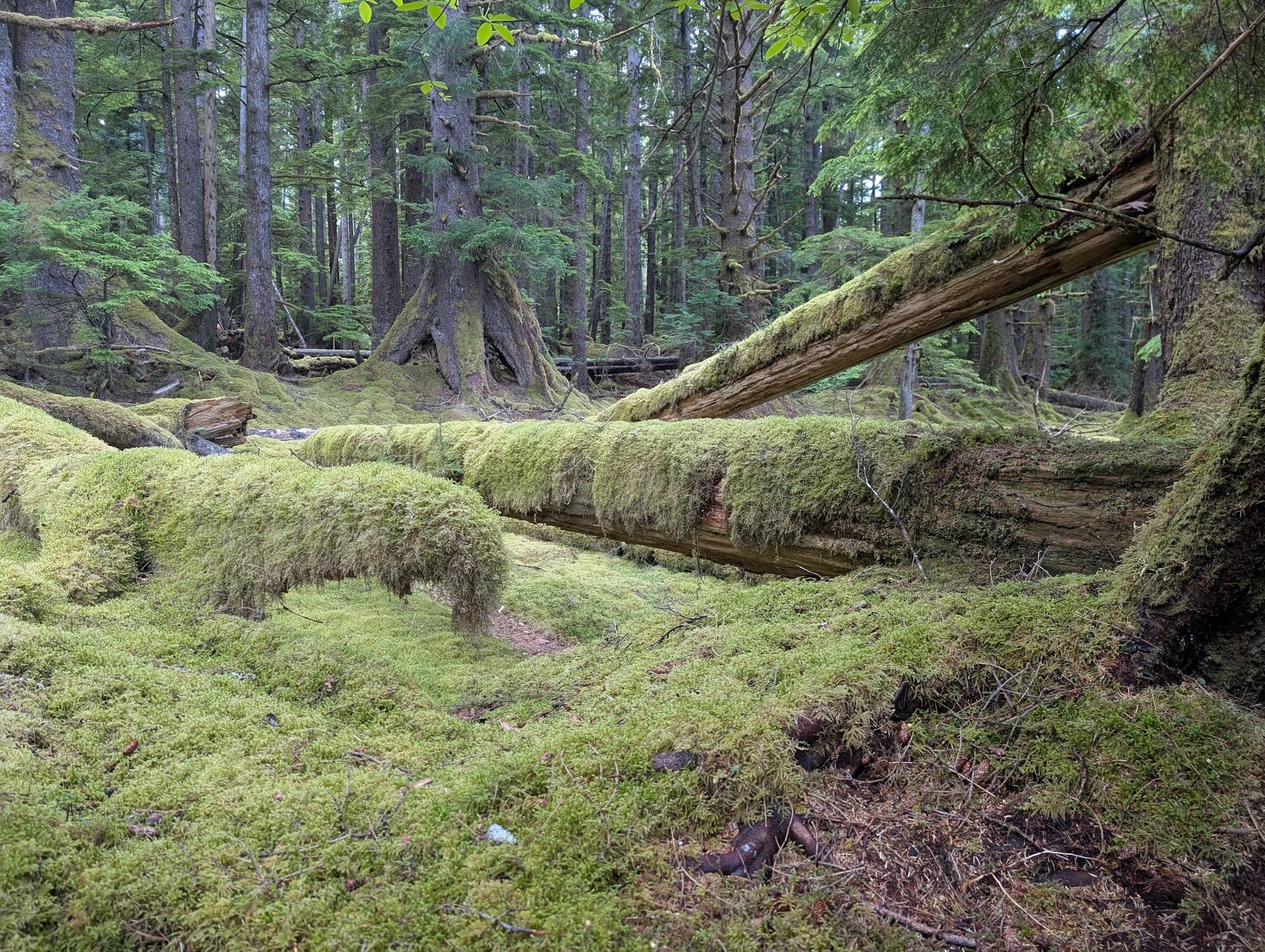
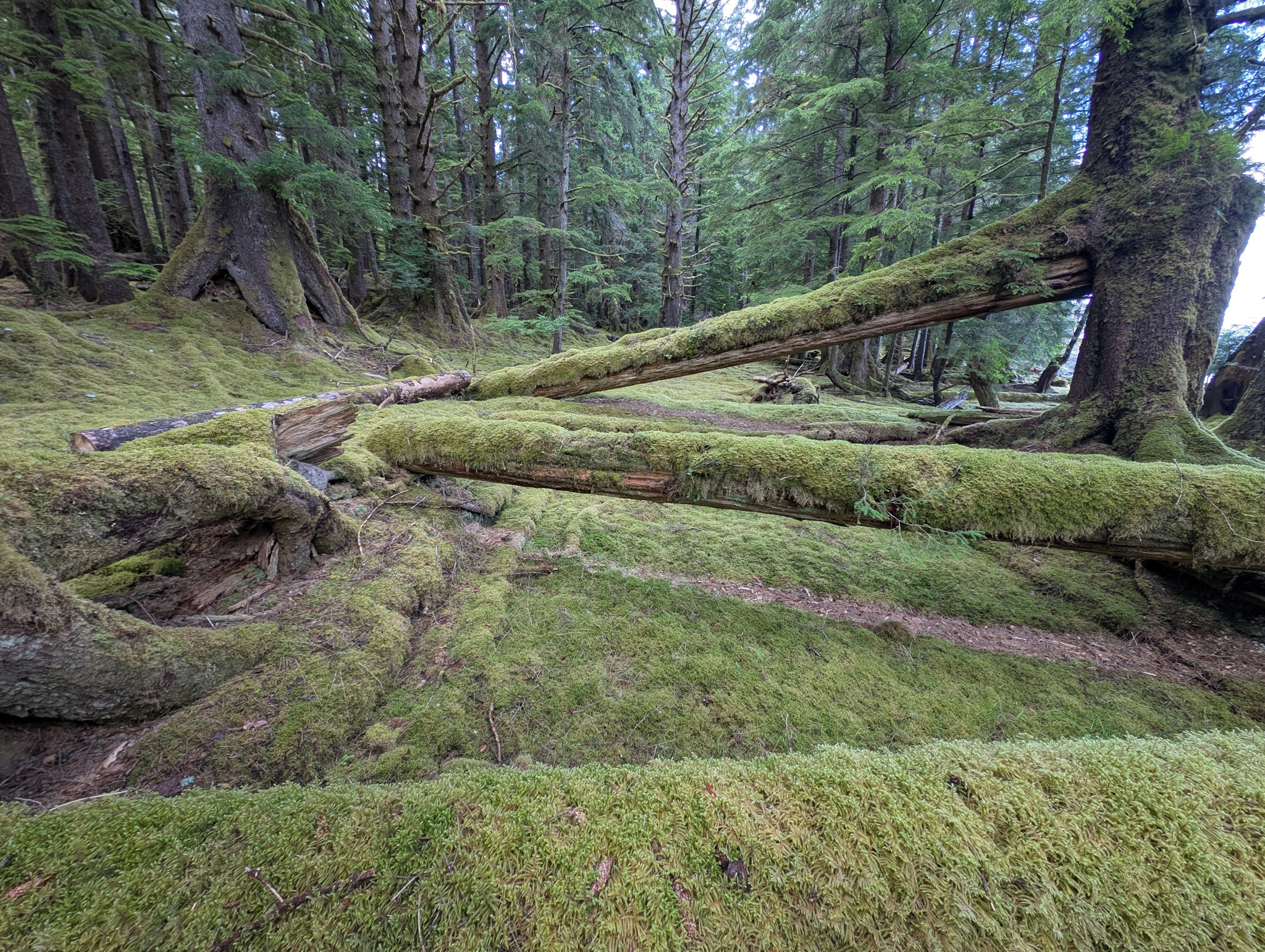
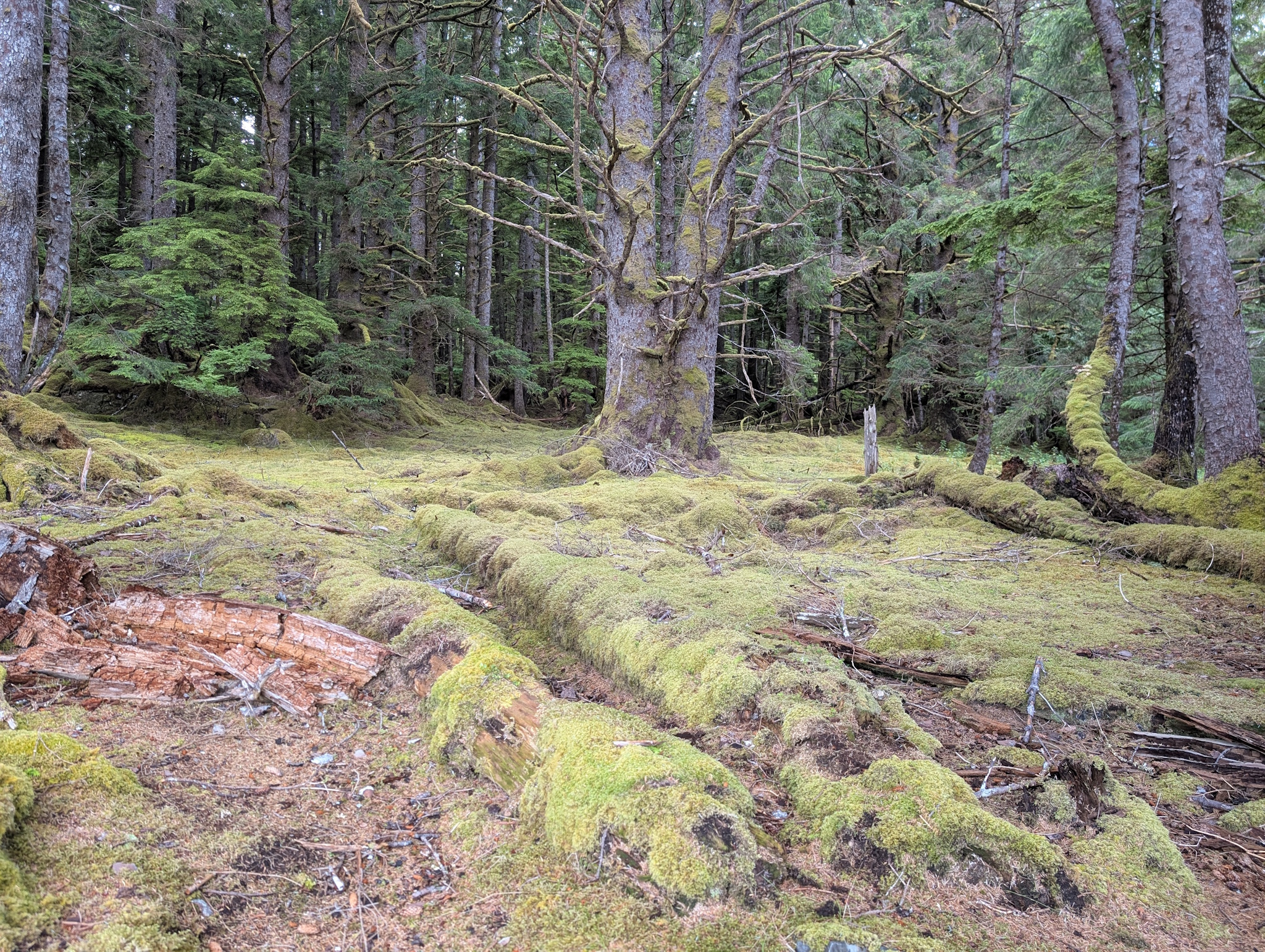
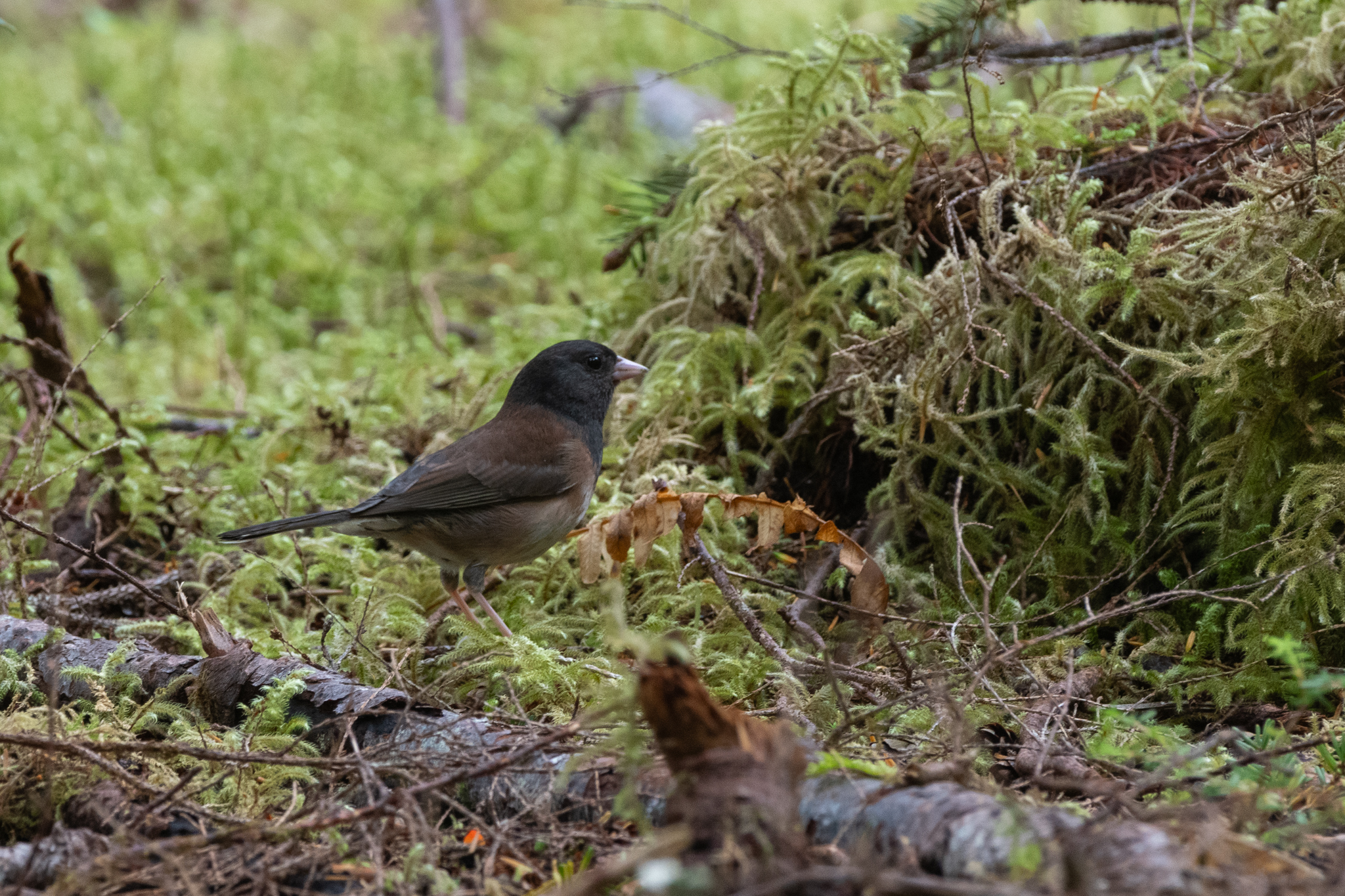
The Tanu site is beautiful and quiet, aside from the small birds singing all around in the trees. Our Watchman tour guide, Grace, was funny, sarcastic, and sometimes serious, giving us stories of the lives of the people who had lived here, and what eventually happened (in short, the smallpox epidemic introduced to the Haida).
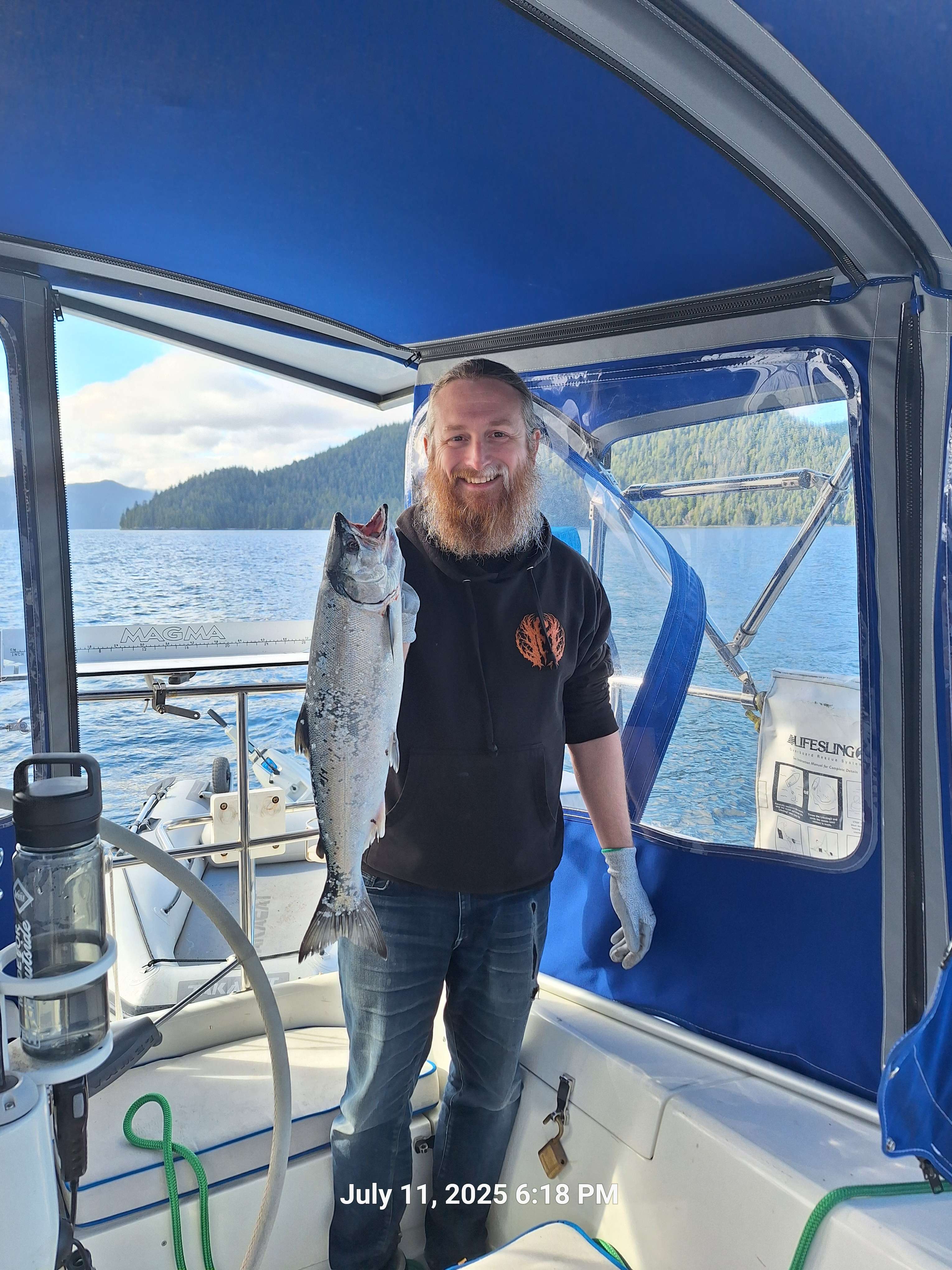
Our anchorage outside the Tanu site was perfectly fine in settled weather, but not somewhere you’d want to stay overnight or in high winds, so once back to Kestrel, we pulled anchor and headed south towards our nearby anchorage for the next two days, Beljay Bay (52°41’29″N 131°37’56″W). On the way, as soon as we were beyond the no-fishing boundary around Tanu, I dropped the salmon trolling rigs in the water. After about 45 minutes or so, one of the poles started tugging hard, and I fought and reeled in a nice big 23 inch long wild Coho salmon. I fileted half, then my partner took a turn at the other half to get practice at fileting a salmon–not to say I’m any good at it, but I’m getting better, and we ended up with what looked like about three meals worth of meat from the one fish.
With high winds and heavy rain forecast all throughout Saturday, we needed to ensure we’d be secure and protected. Anchoring in about 70 feet of water, using about 235 feet of our chain as well as the Mantus bridle, we set as usual. The next day, with gusts of up to 25 knots coming down between a few of the surrounding mountains, was alternating between the high winds and moderate rain, so we stayed in the boat all day, reading and napping. Some nice big pieces of that salmon with a maple-gochujang glaze made for a delicious dinner alongside a salad with some of our few remaining fresh greens.
Hlk’yah G̱awG̱a (Windy Bay)
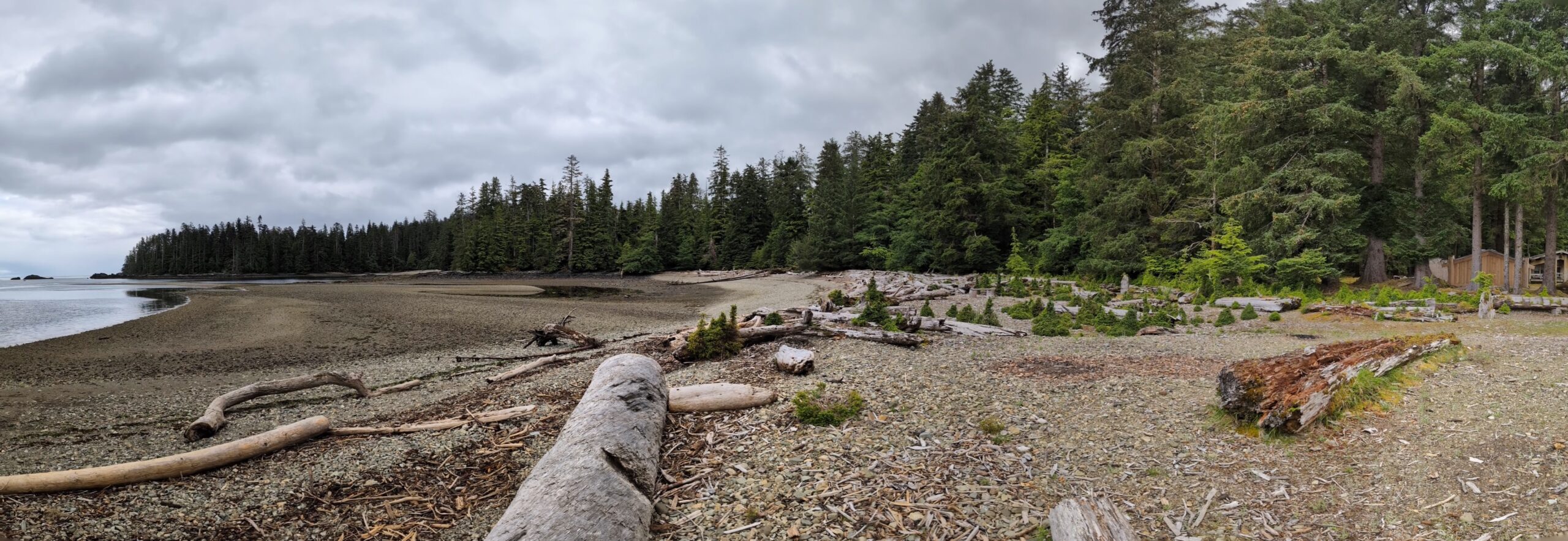
On Sunday (July 13th) late morning we pulled anchor and motored through the calm to Hlk’yah G̱awG̱a (Windy Bay), anchoring in about 40 feet of water out in front of where two motorboats and a small sailboat were anchored. Not a place I’d want to sit at in any other weather, which is why we hadn’t even been sure we’d be able to visit here, but our lucky streak with weather continued.
Going ashore there wasn’t as much to see as Tanu; the house sites at Hlk’yah G̱awG̱a are apparently not even visible except as vague depressions in the ground that you wouldn’t be able to spot unless you knew where they were. But there is the big legacy pole, raised in 2013 for the 20 years of Gwaii Haanas anniversary, as well as a small longhouse; newer construction, but with the original muraled wall from the one raised during/for the protests in the 80s.
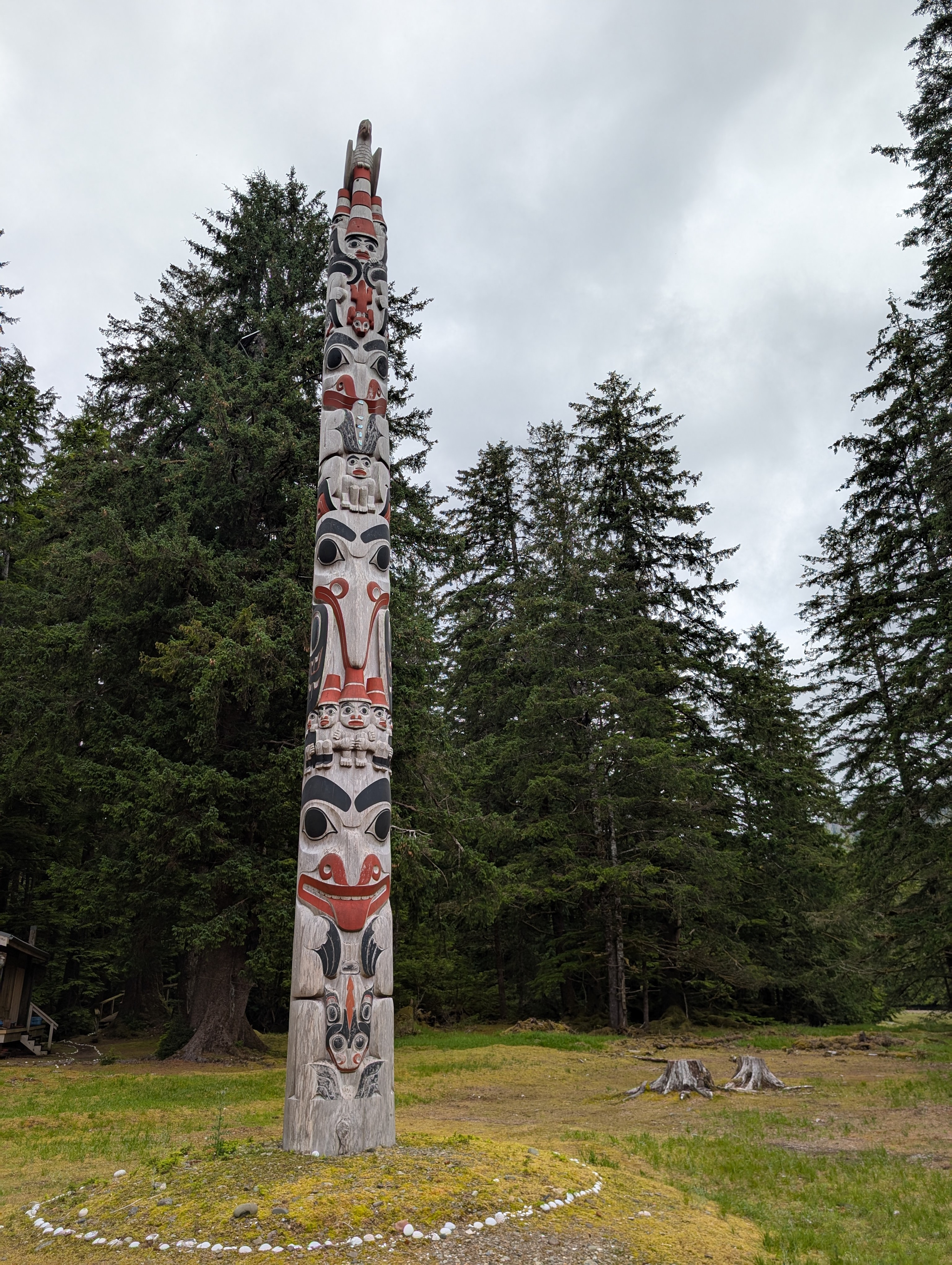
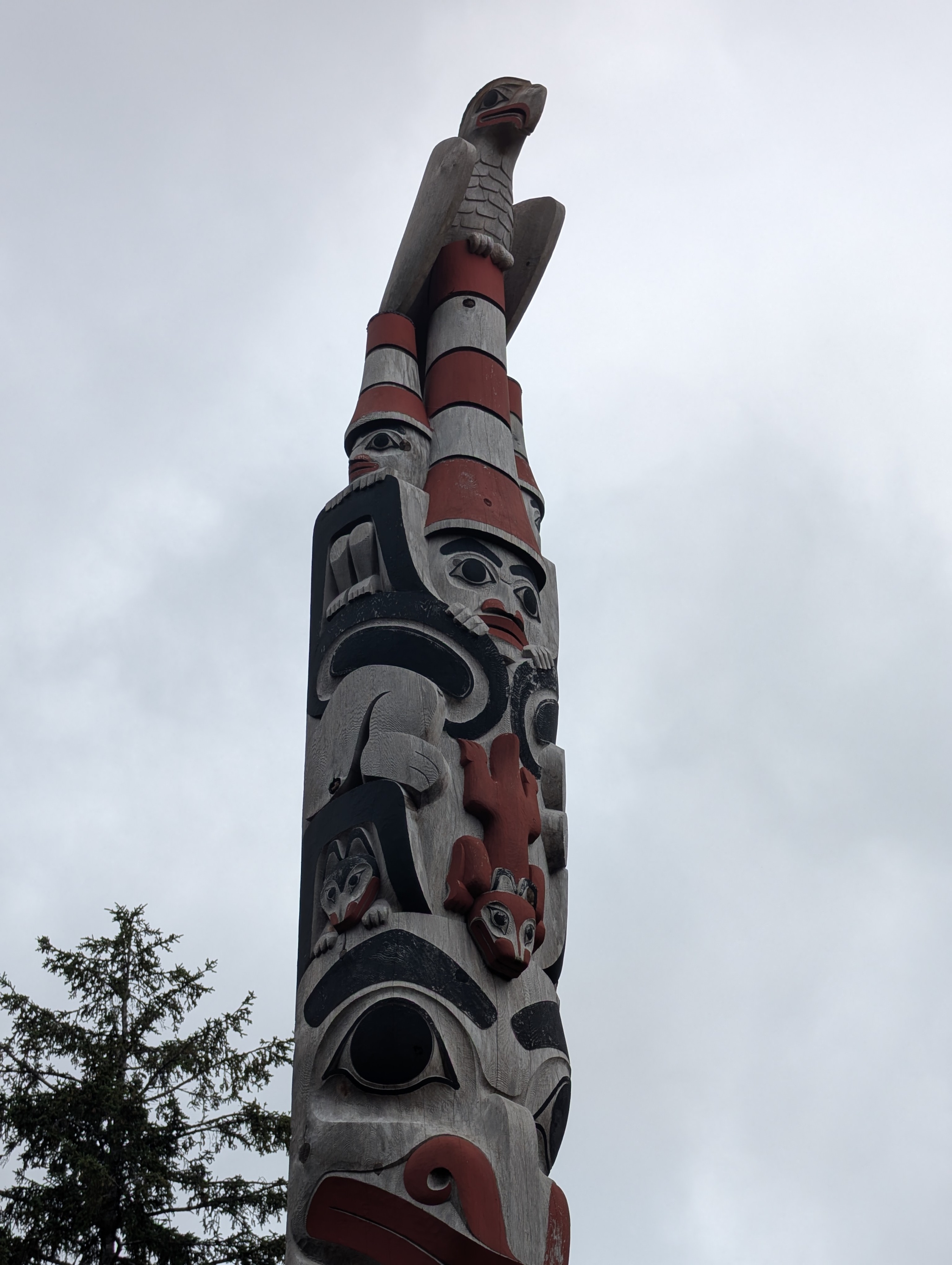
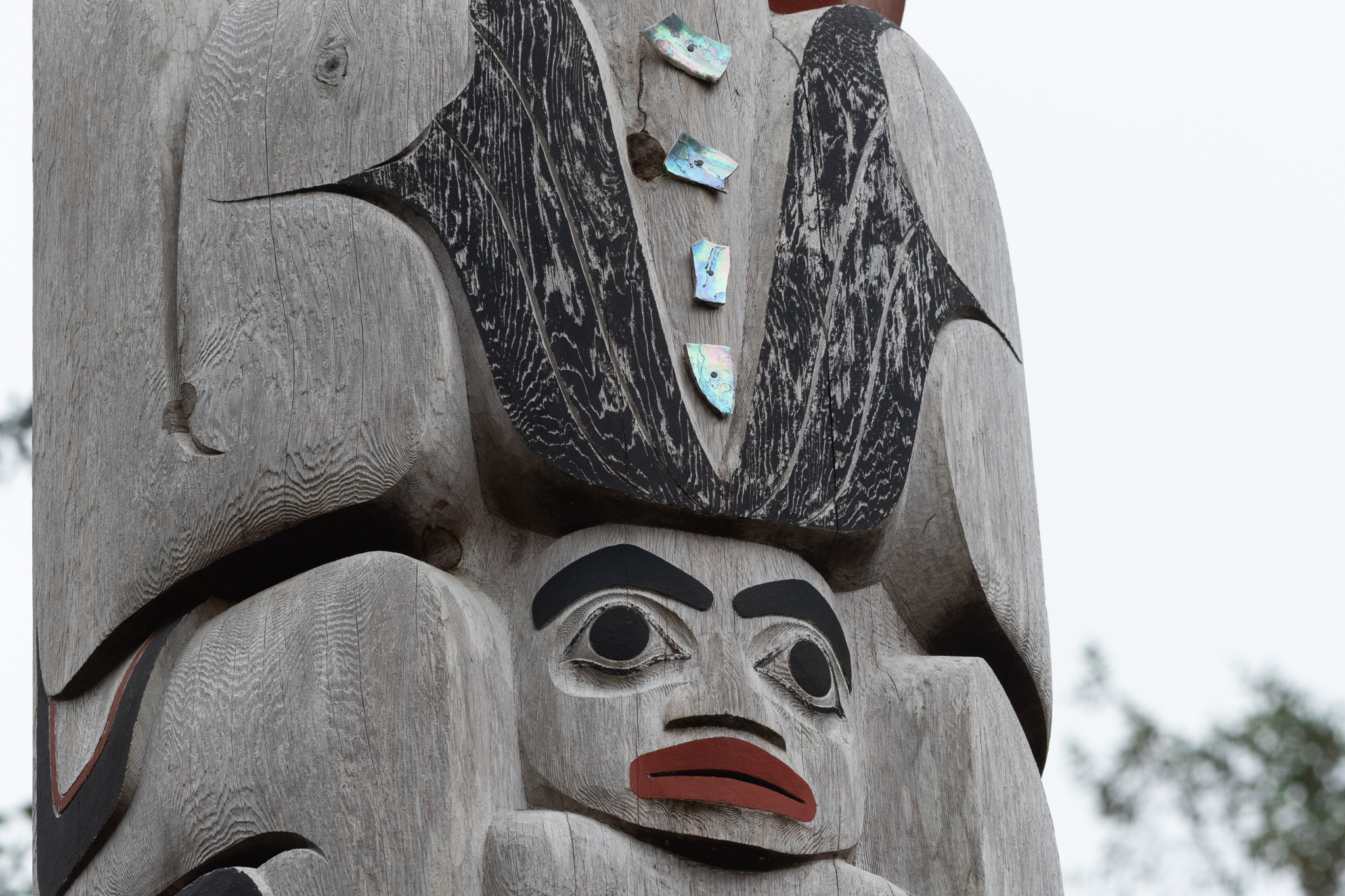
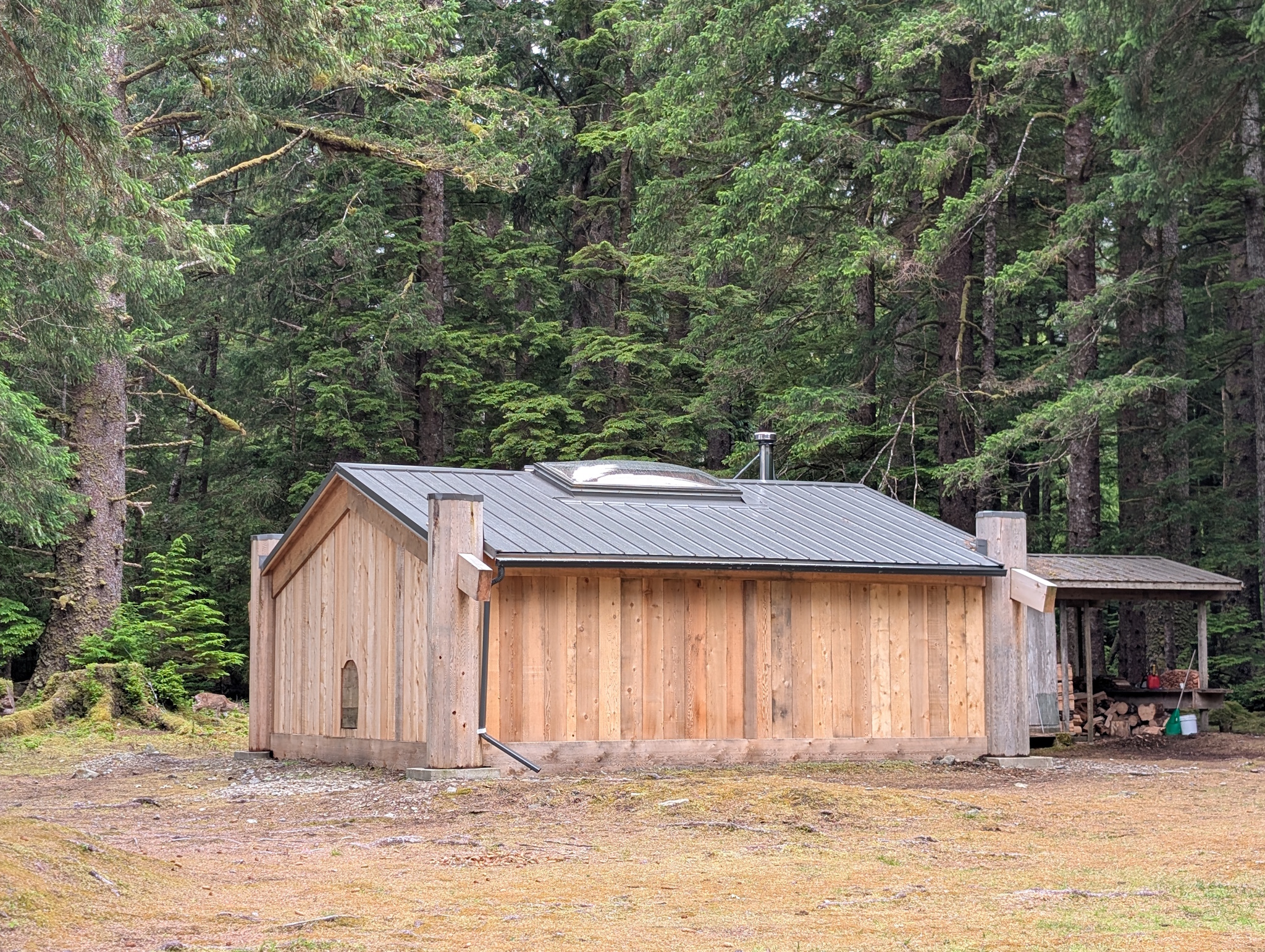
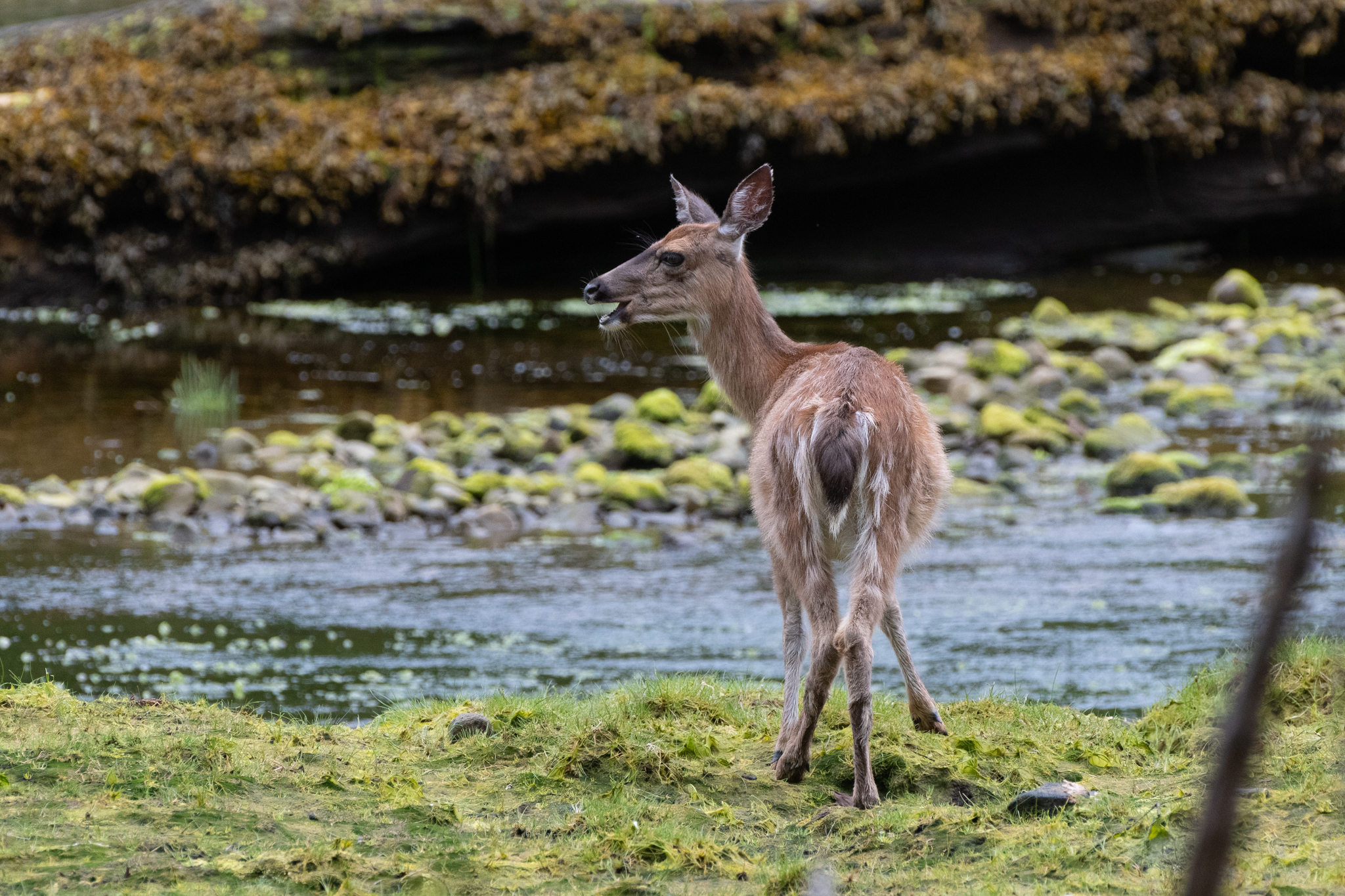
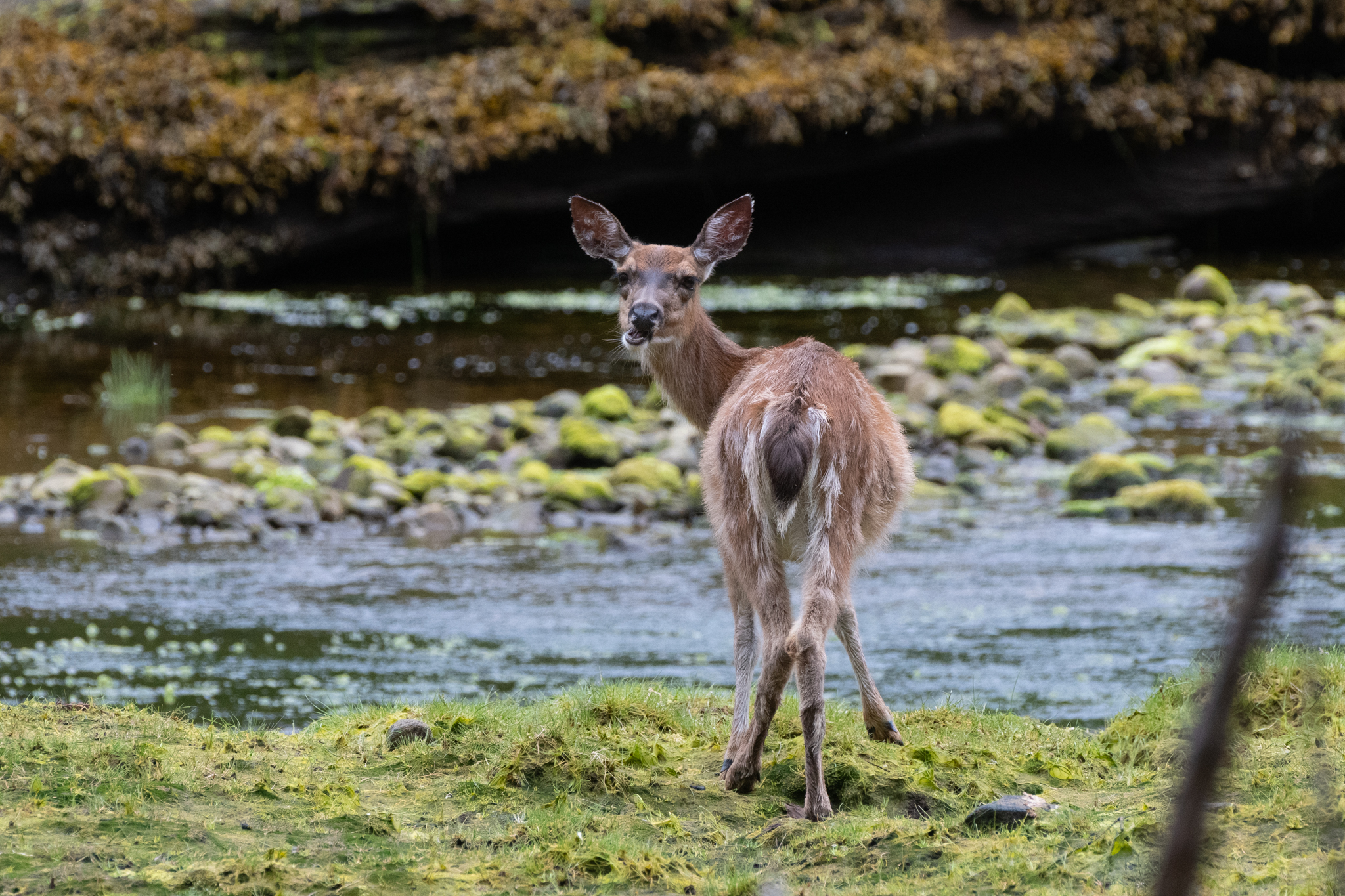
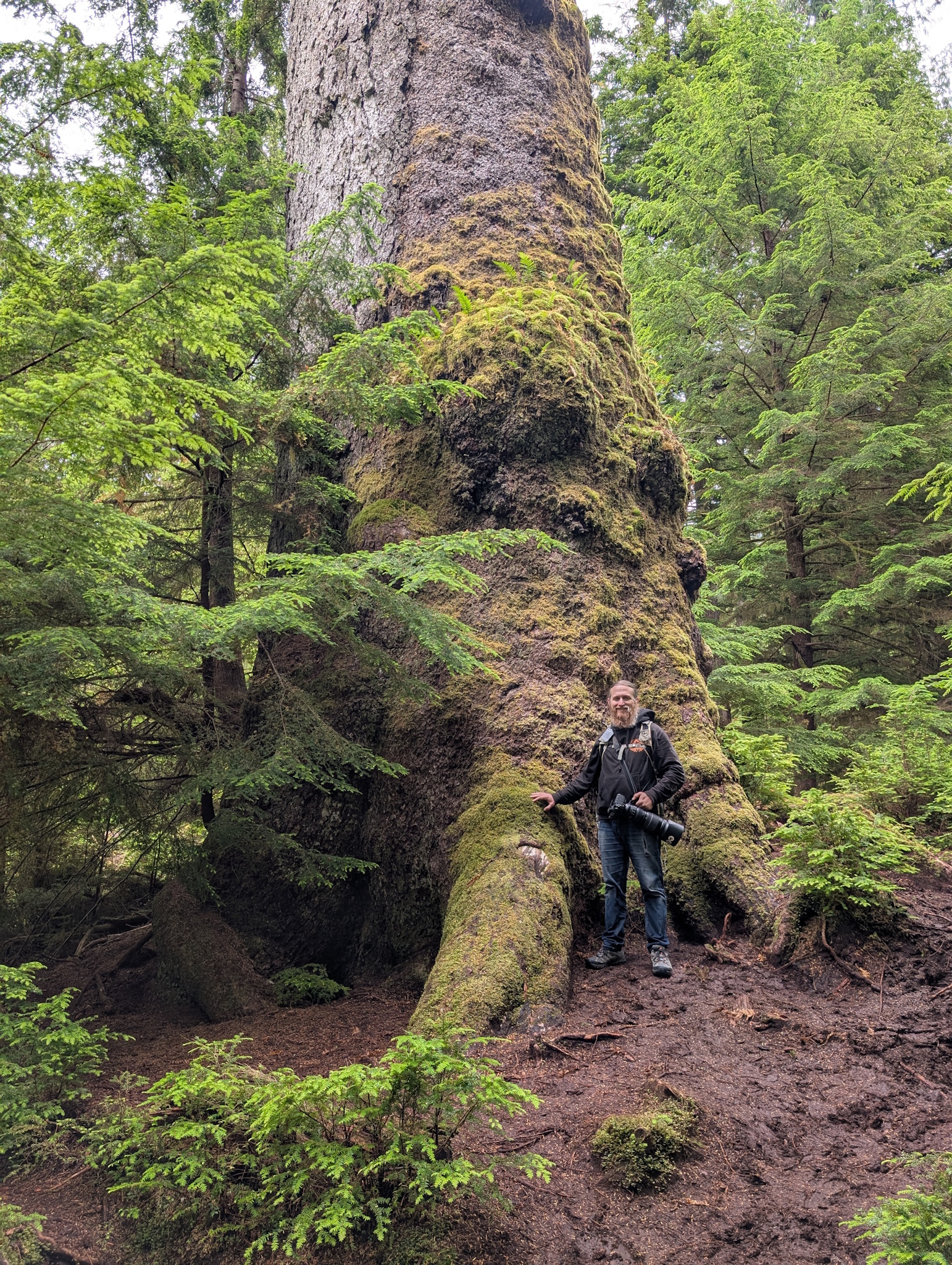
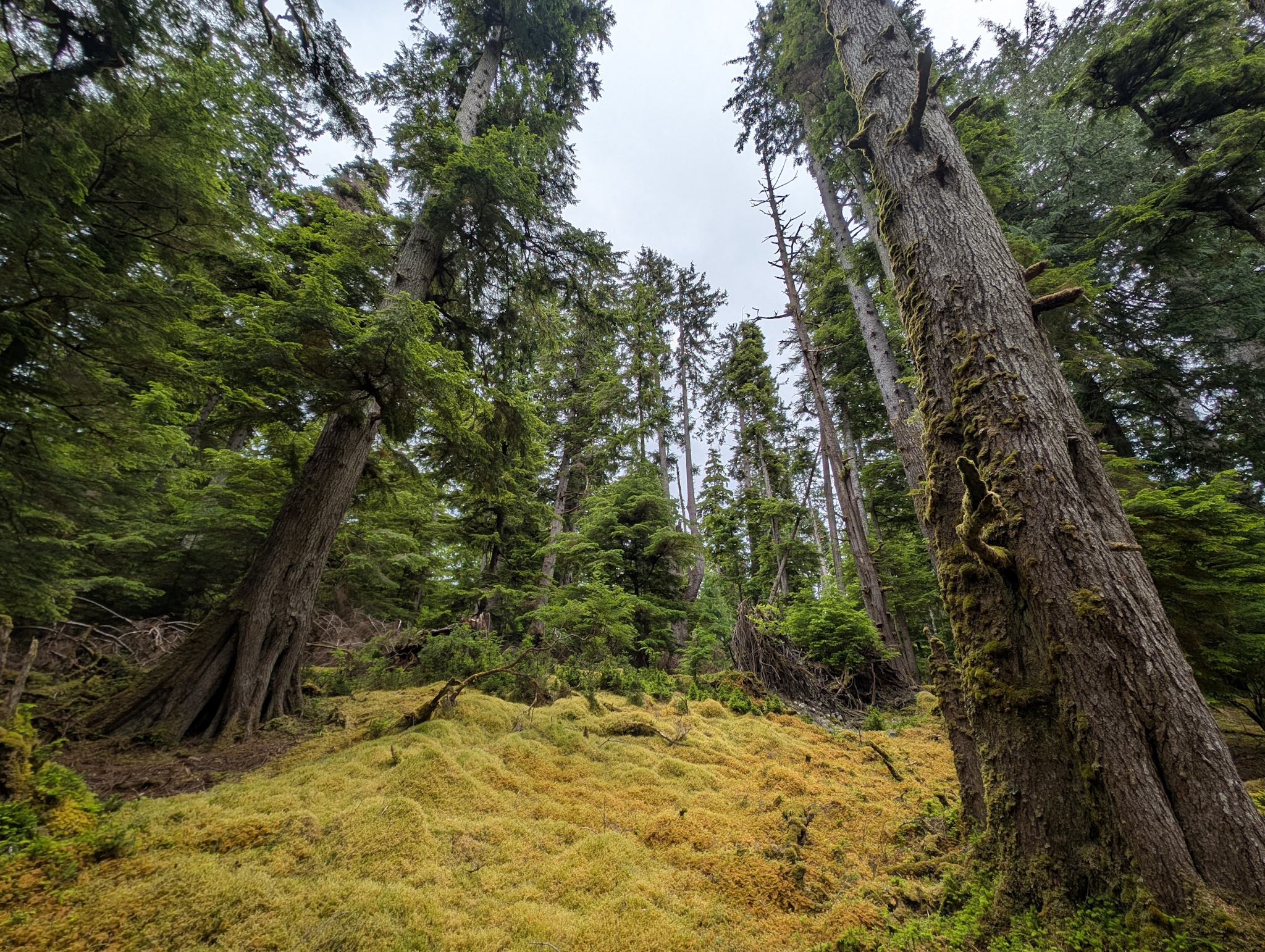
The other thing to do there was a brief hike to an enormous spruce tree, which we did, seeing a small group of the invasive black-tailed deer on the way. I do hope the Haida are able to get hunting licensing set up in the next few years to make money from hunting tourists and to help control the problem, as the deer have destroyed most of the underbrush that historically filled the forest floor.
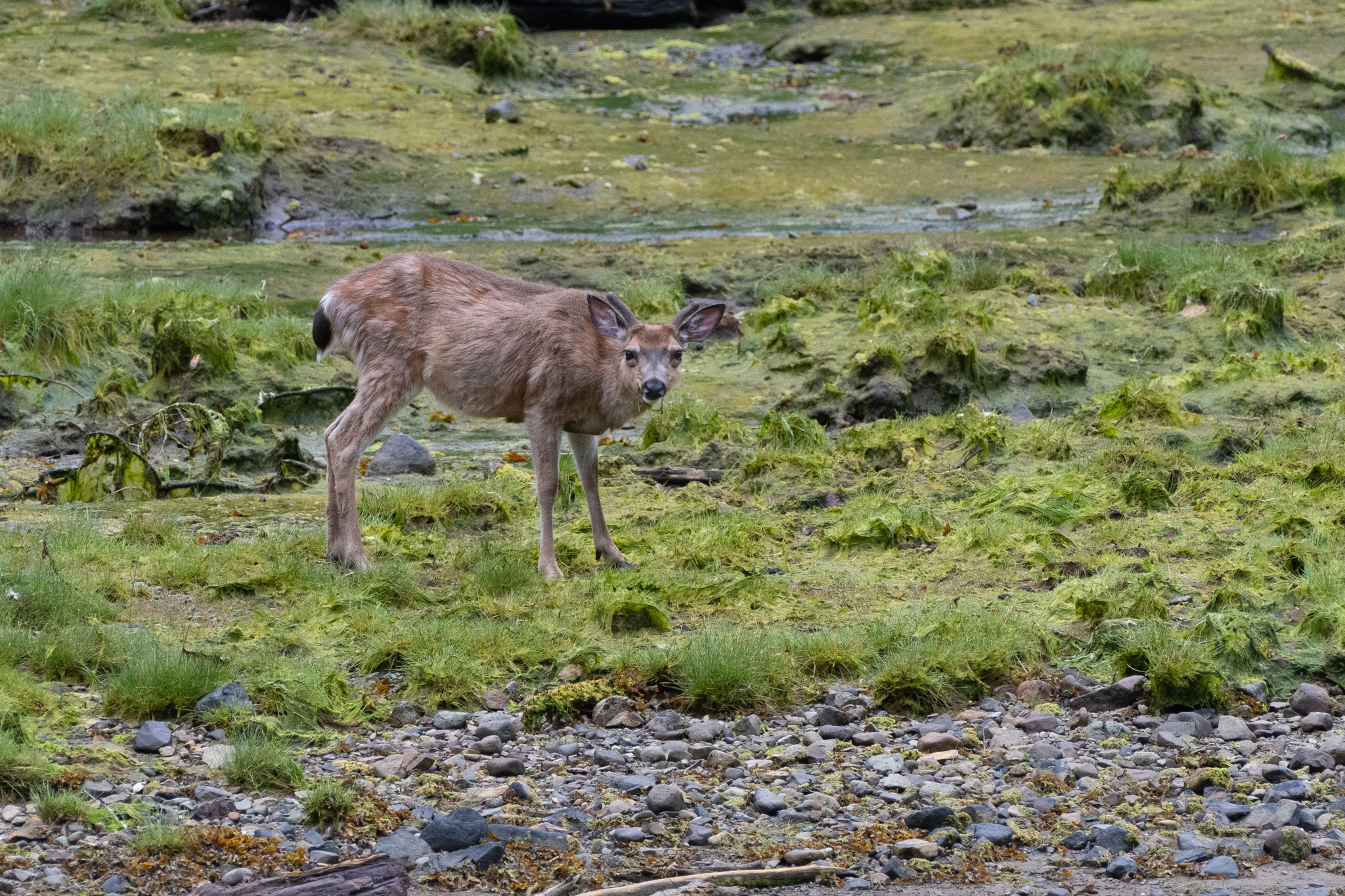
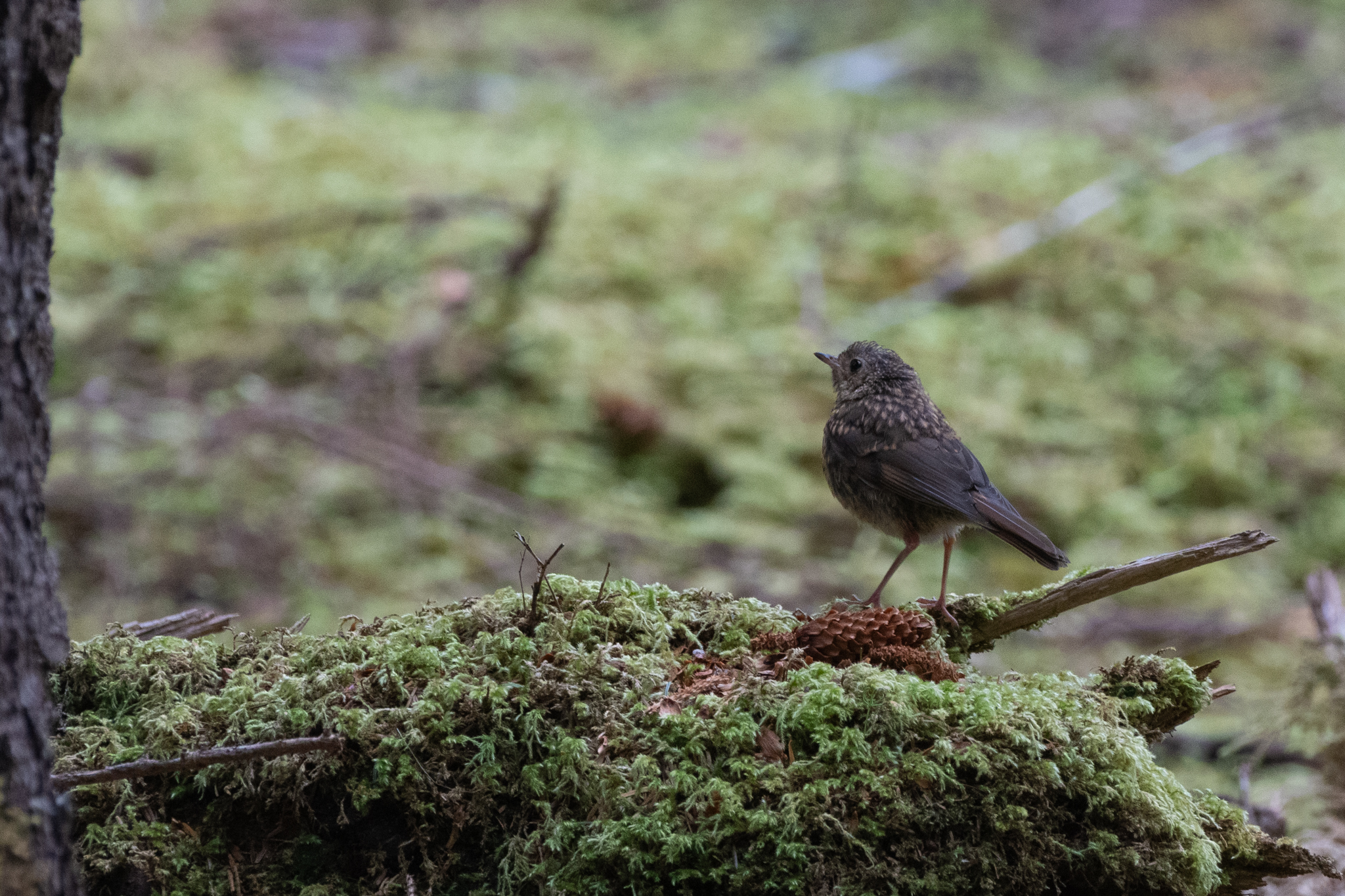
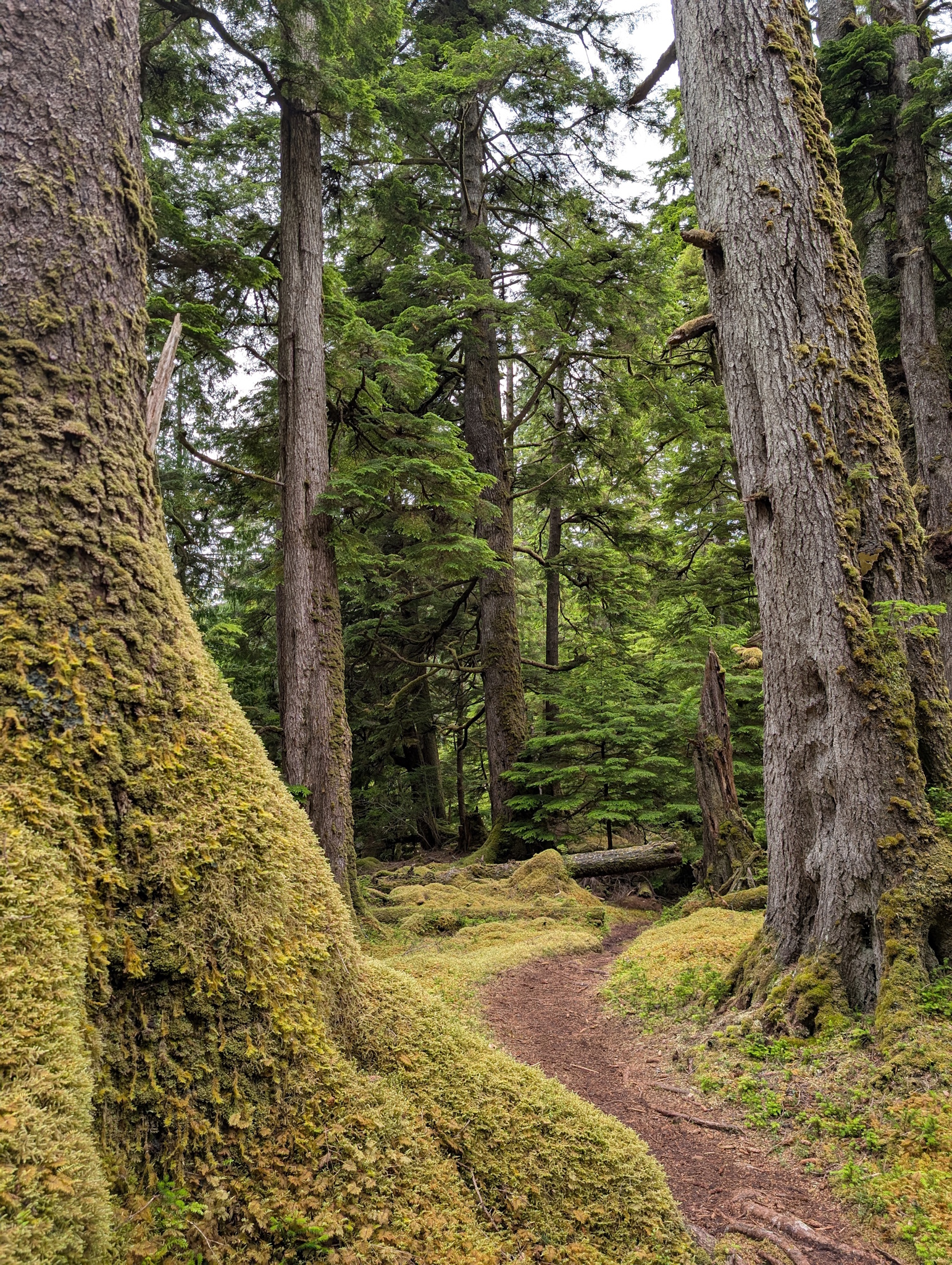
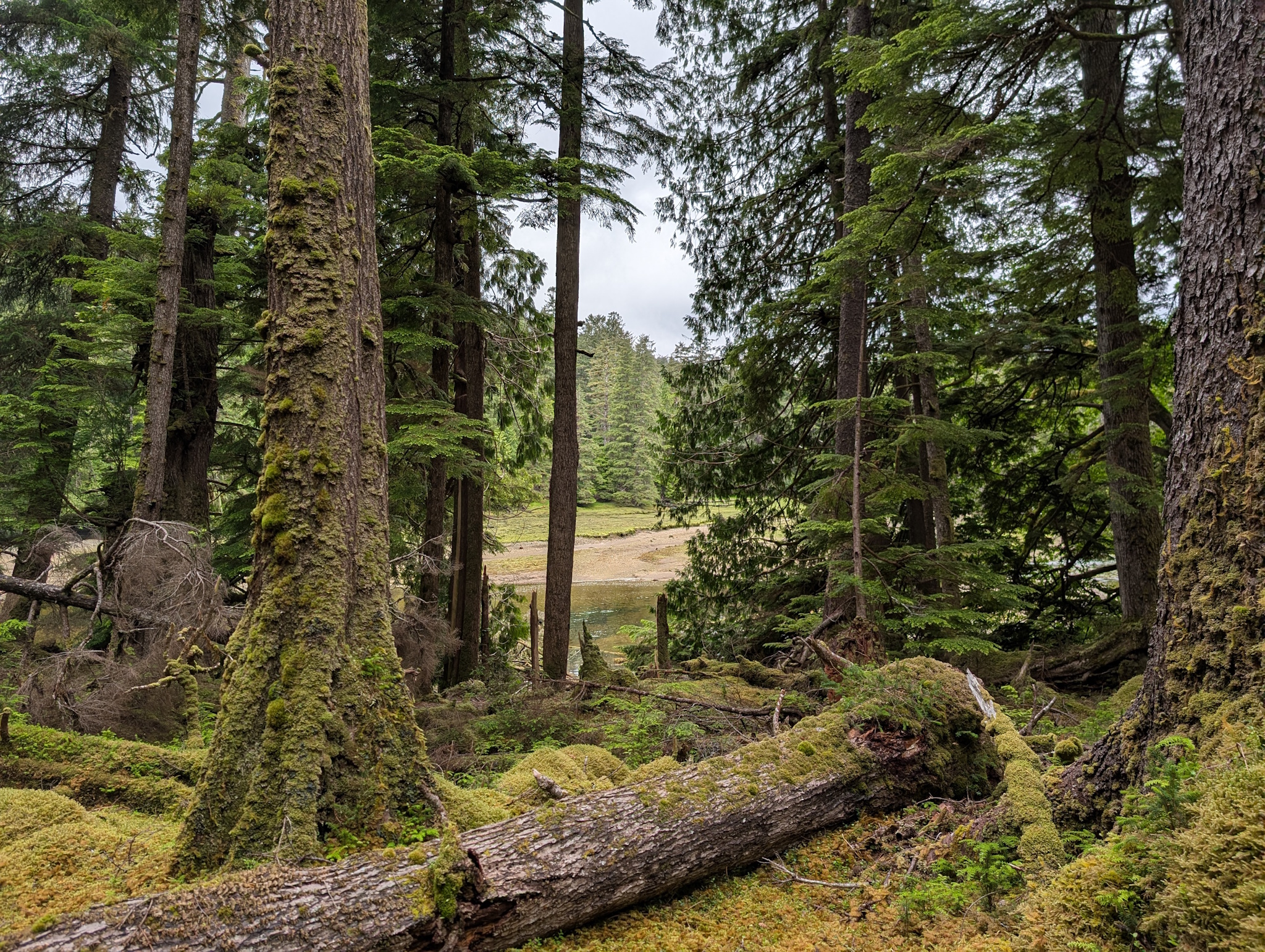
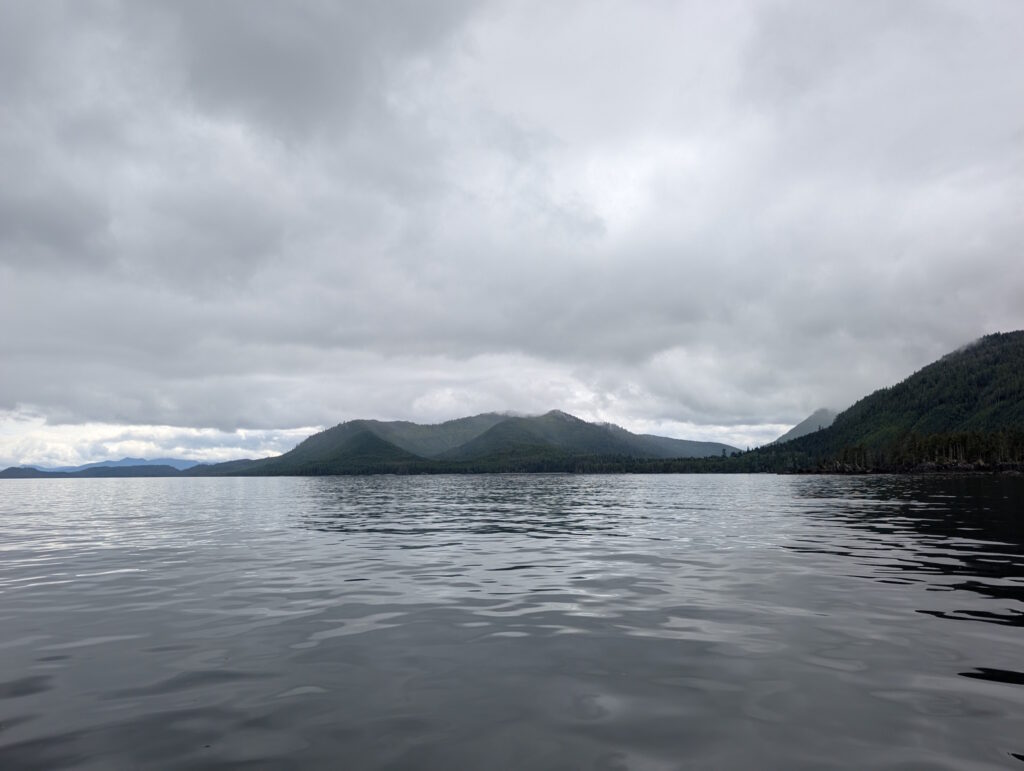
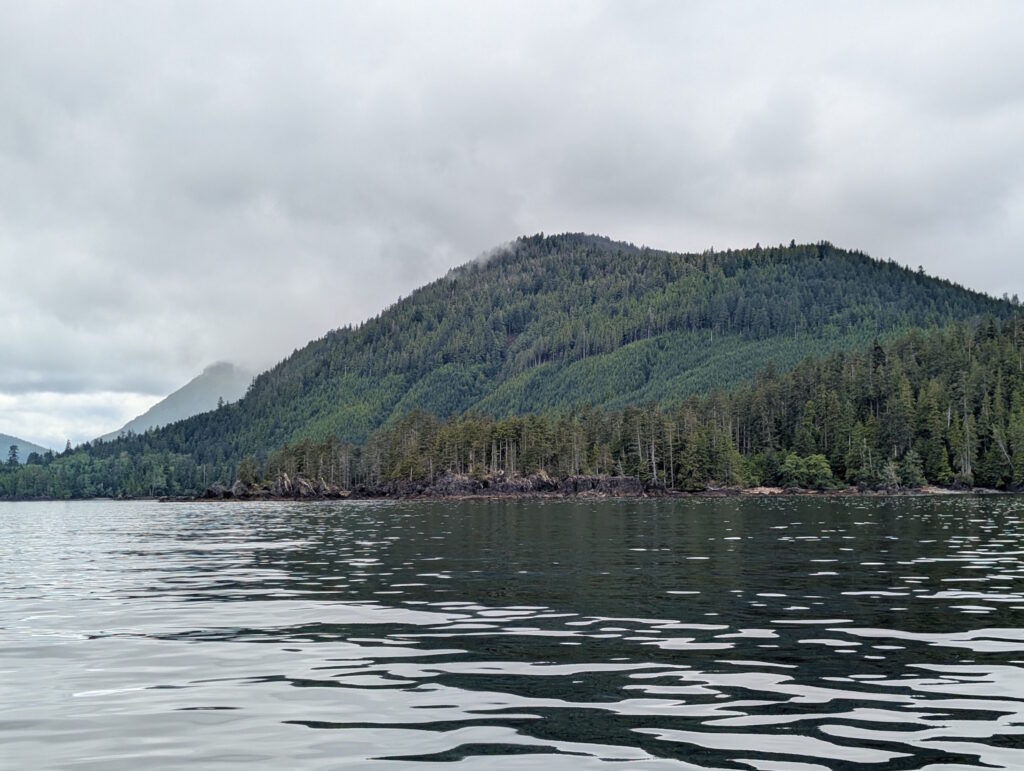
From Windy Bay we motored through calm waters and very little wind through Gogit Passage down to one of the unnamed anchorages (52°34’09″N 131°24’18″W) on the north side of Ramsey Island, just across the water from Hotspring Island. Though the afternoon had turned out to be somewhat sunny, we decided to wait until Monday before heading over to check out the hot springs and meet the Watchmen there.
Hotspring Island?! What a cliffhanger!