
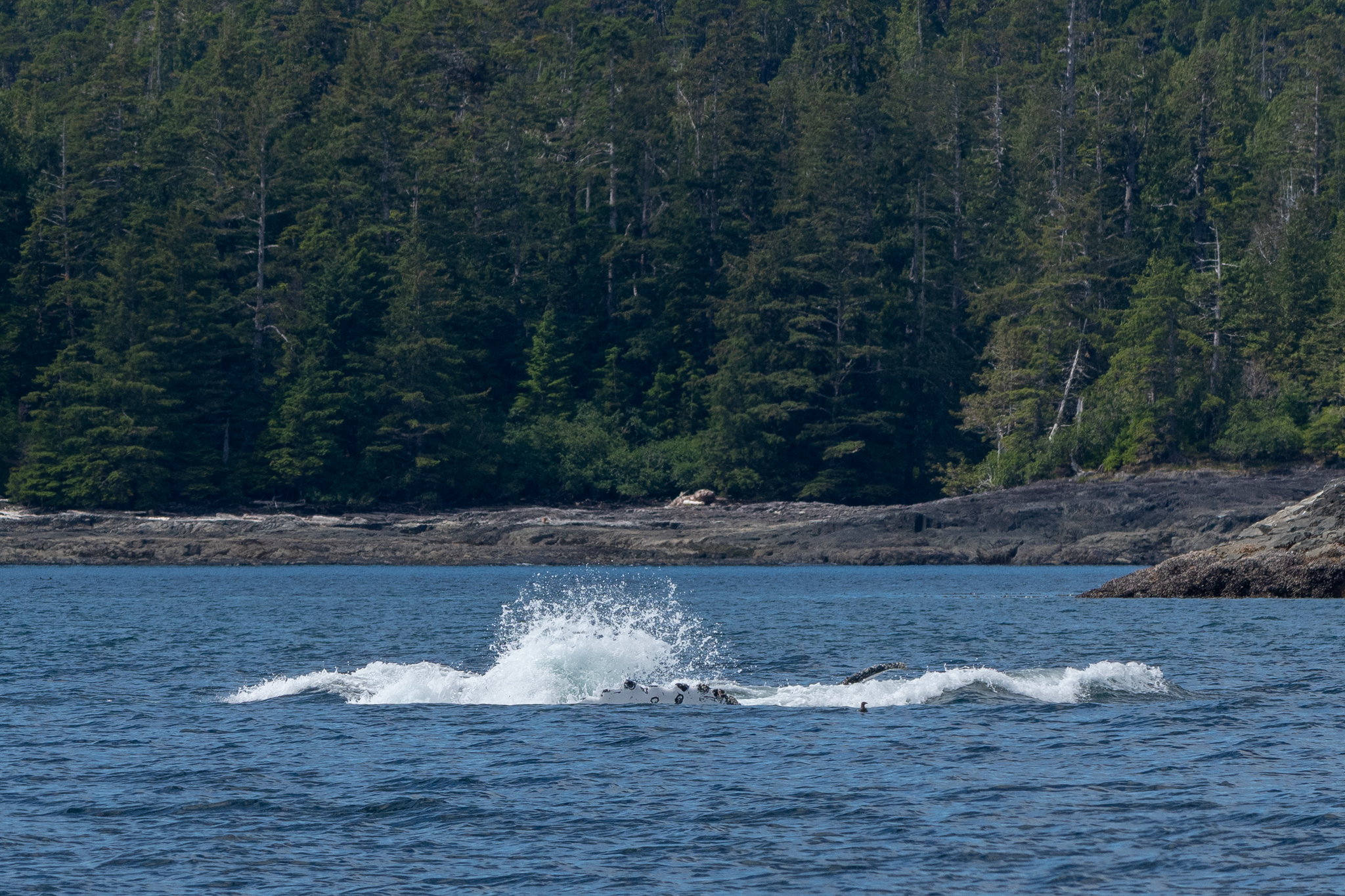
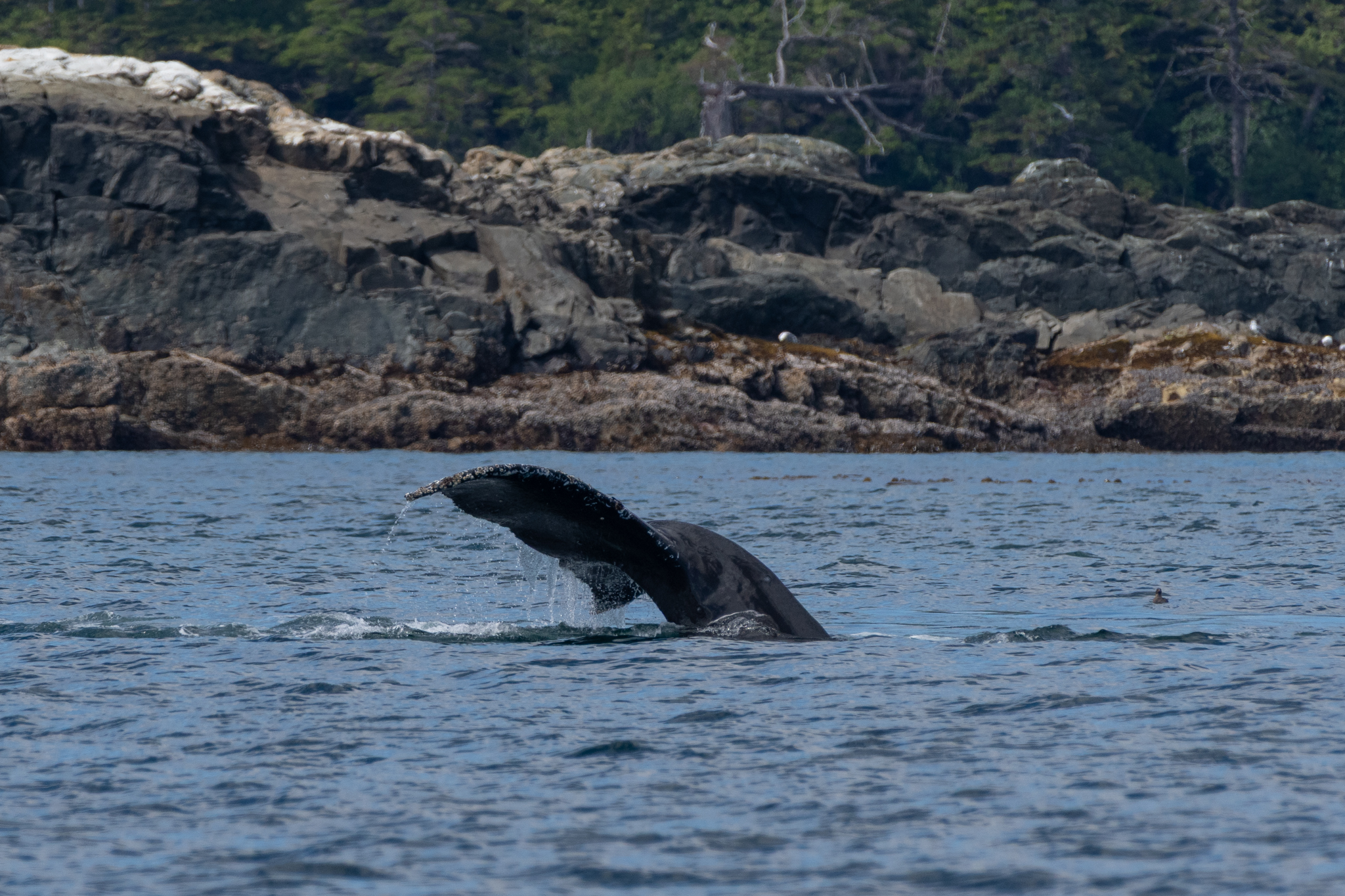
With the weather looking promising for the afternoon, in the late morning of Saturday the 26th we pulled anchor to head past Rose Harbour to SG̱ang Gwaay. We saw more humpback whales on the way, luckily none quite as close as the previous day. The areas to the east of and west of the Houston Stewart Channel, the body of water separating the southern end of Moresby Island and Kunghit Island, were full of humpbacks feeding each day we passed through. I’d only ever seen a few humpback whales in the wild (some up in Alaska, the one near Hakai Institute) and suddenly we’re seeing at least five to seven individuals per day!
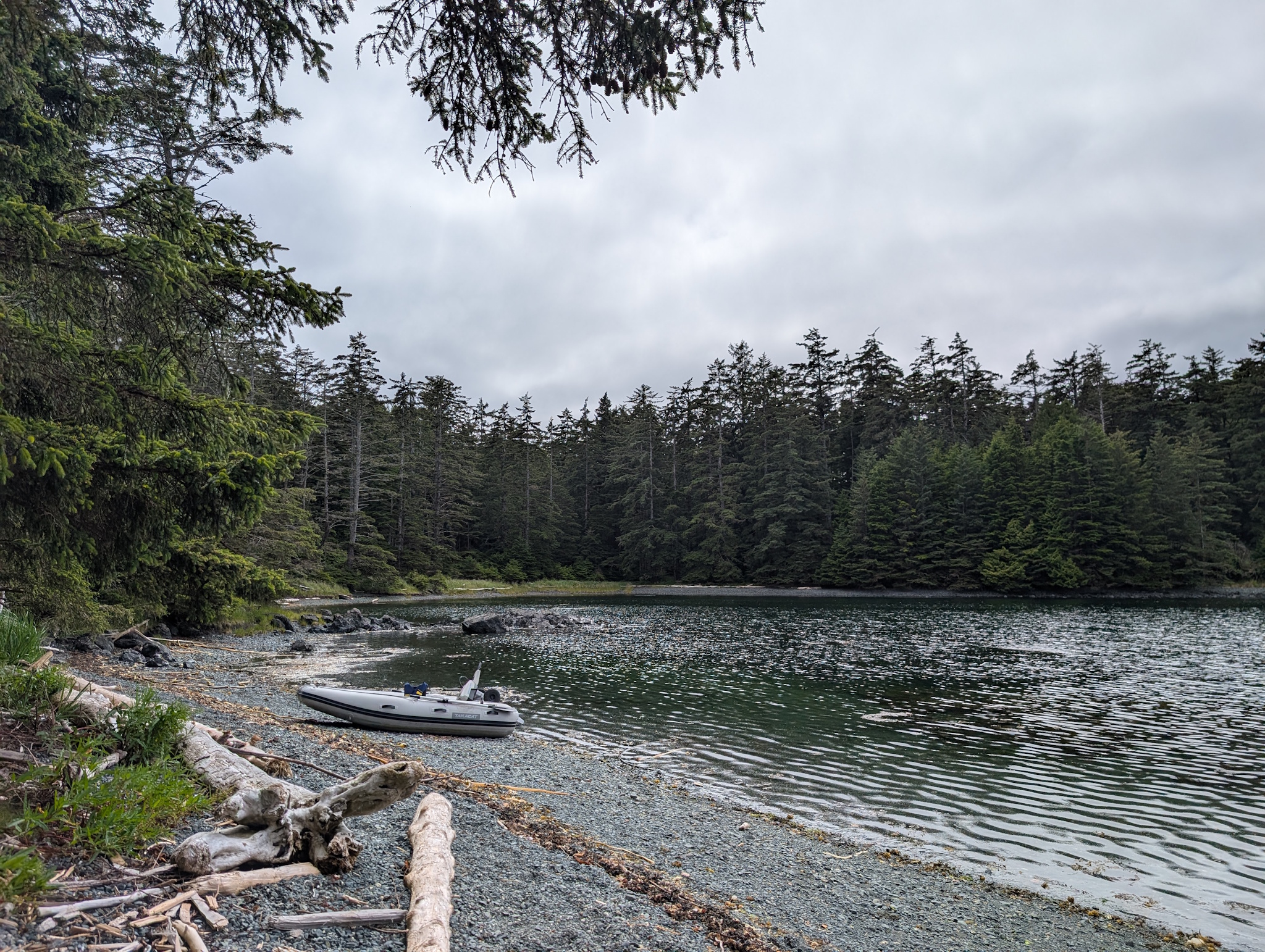
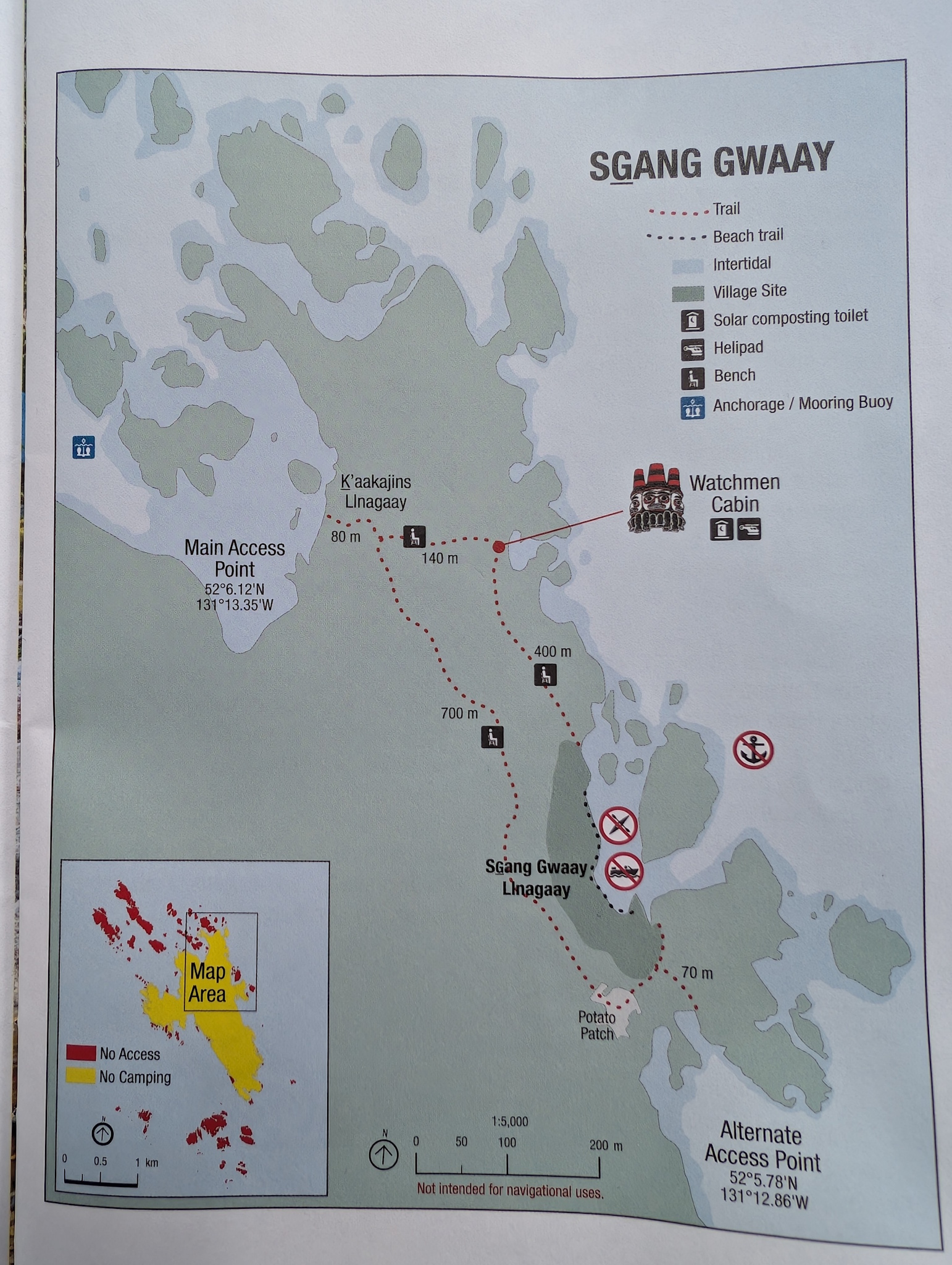
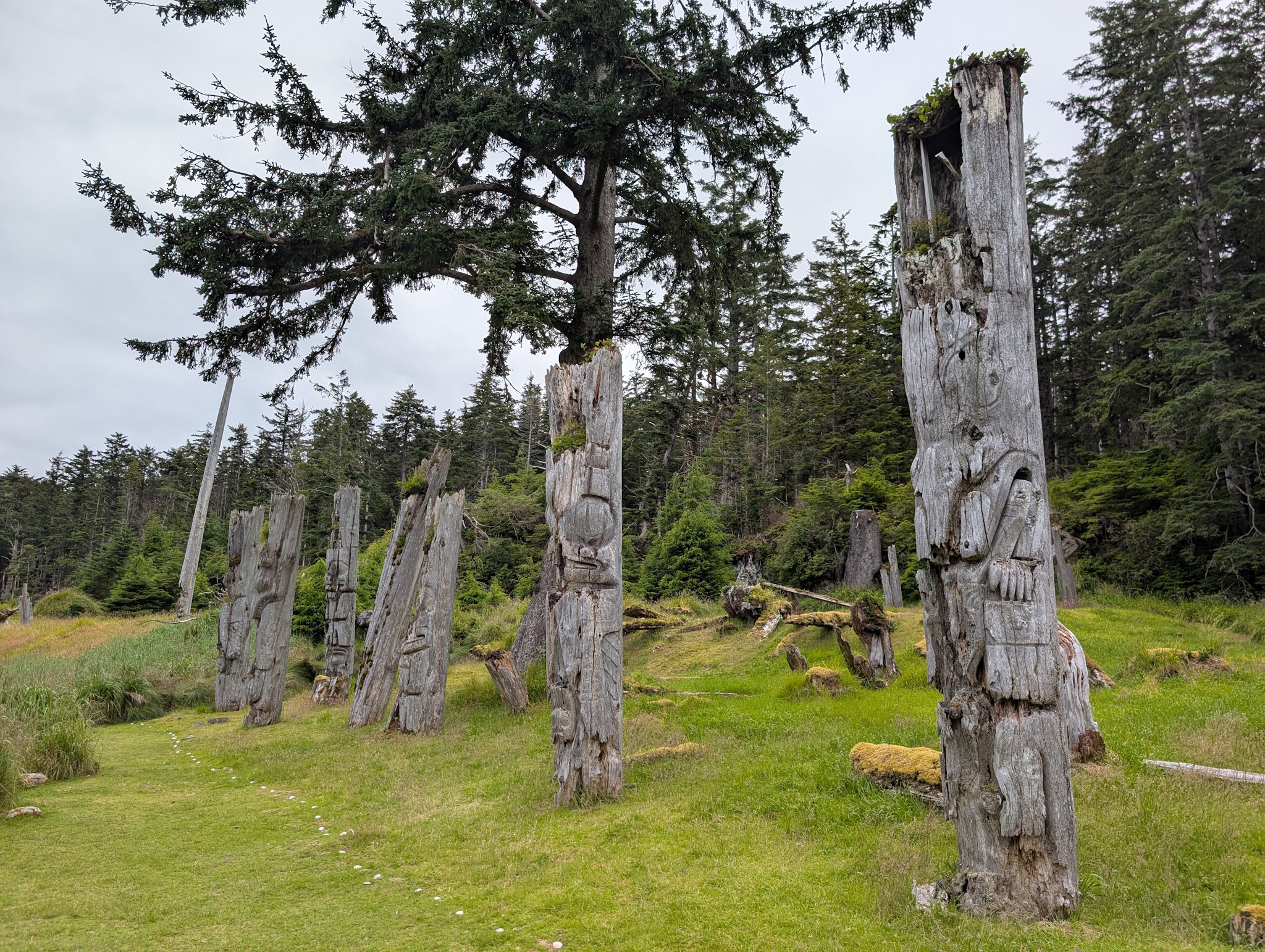
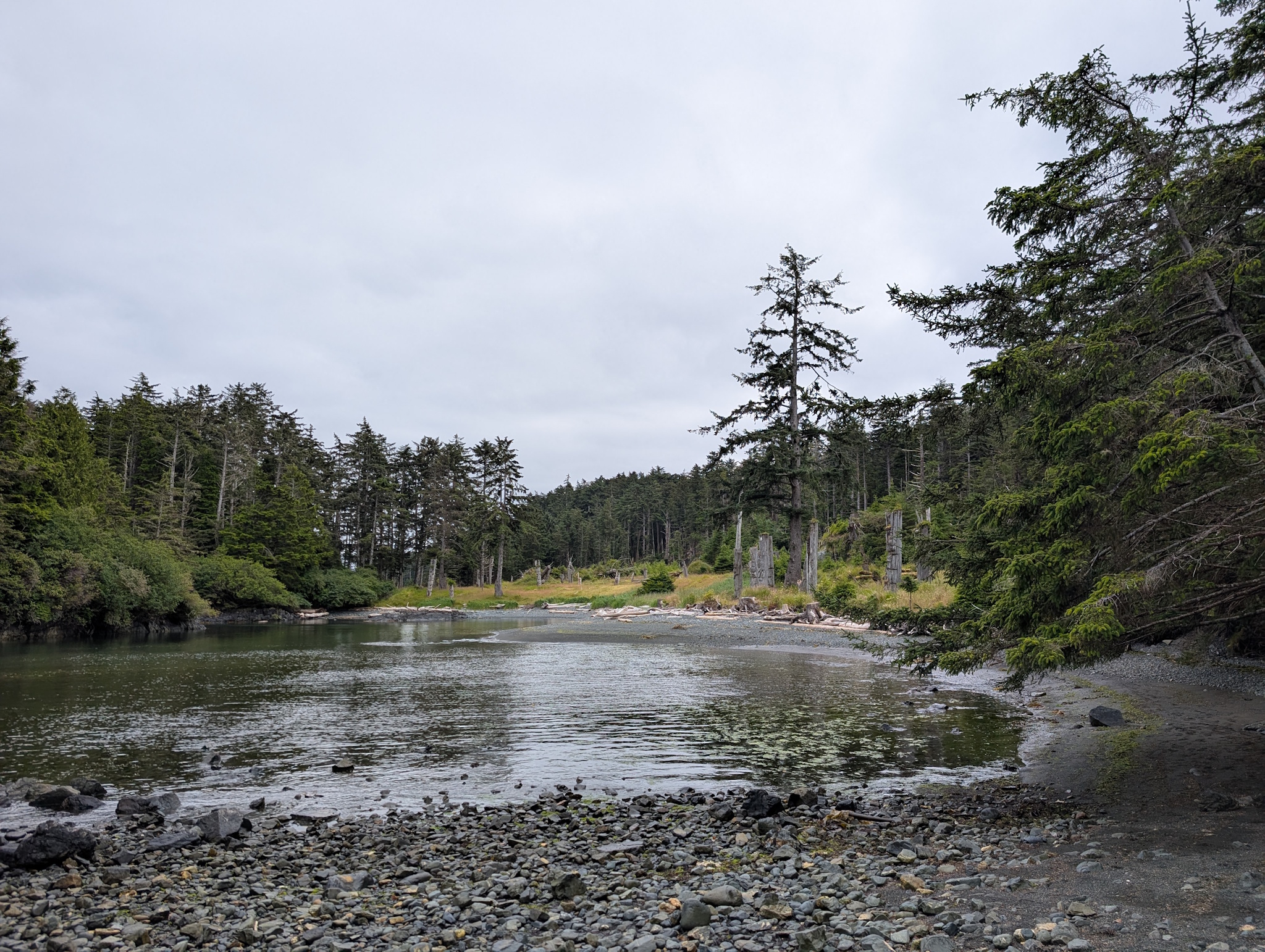
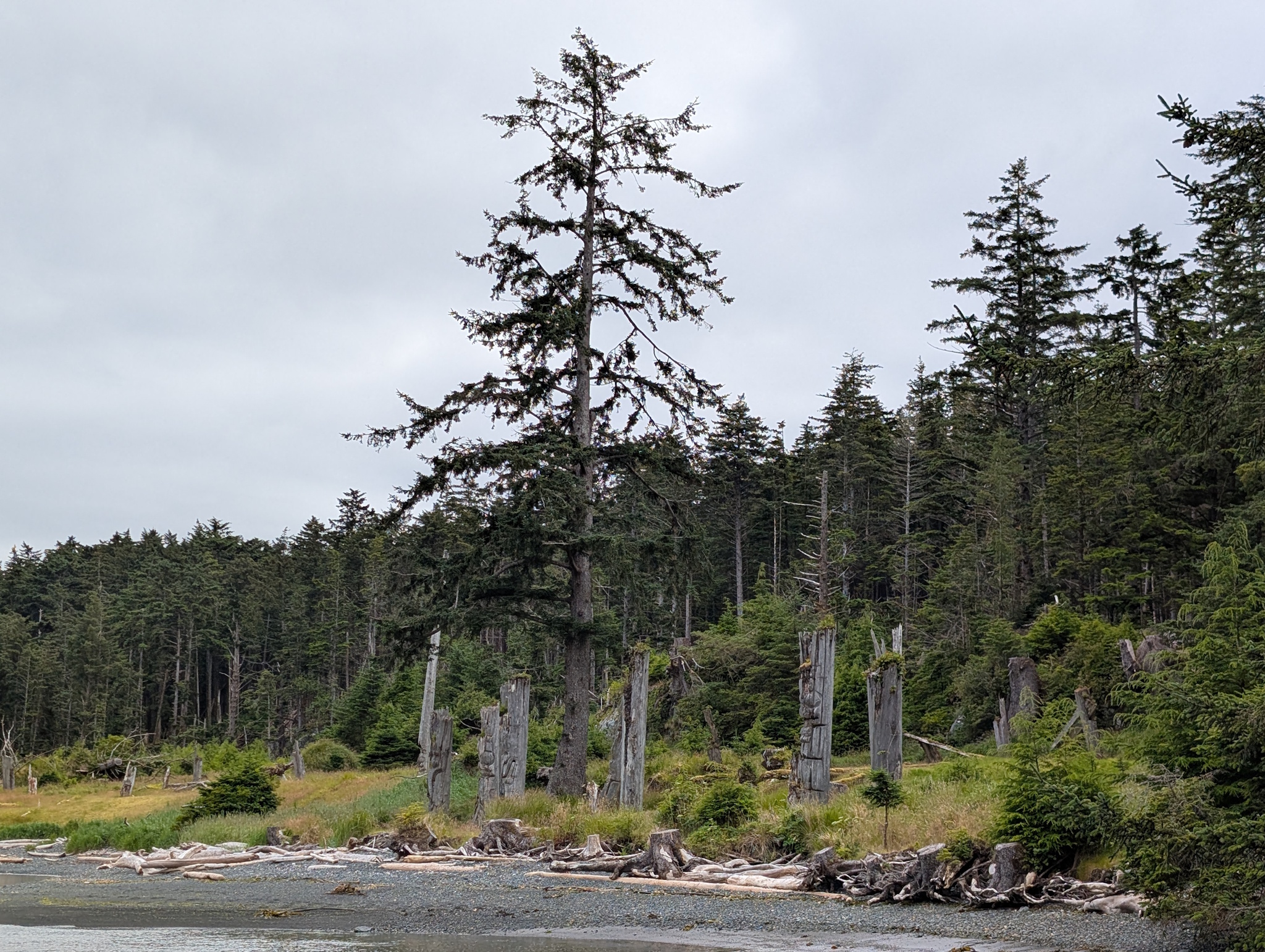
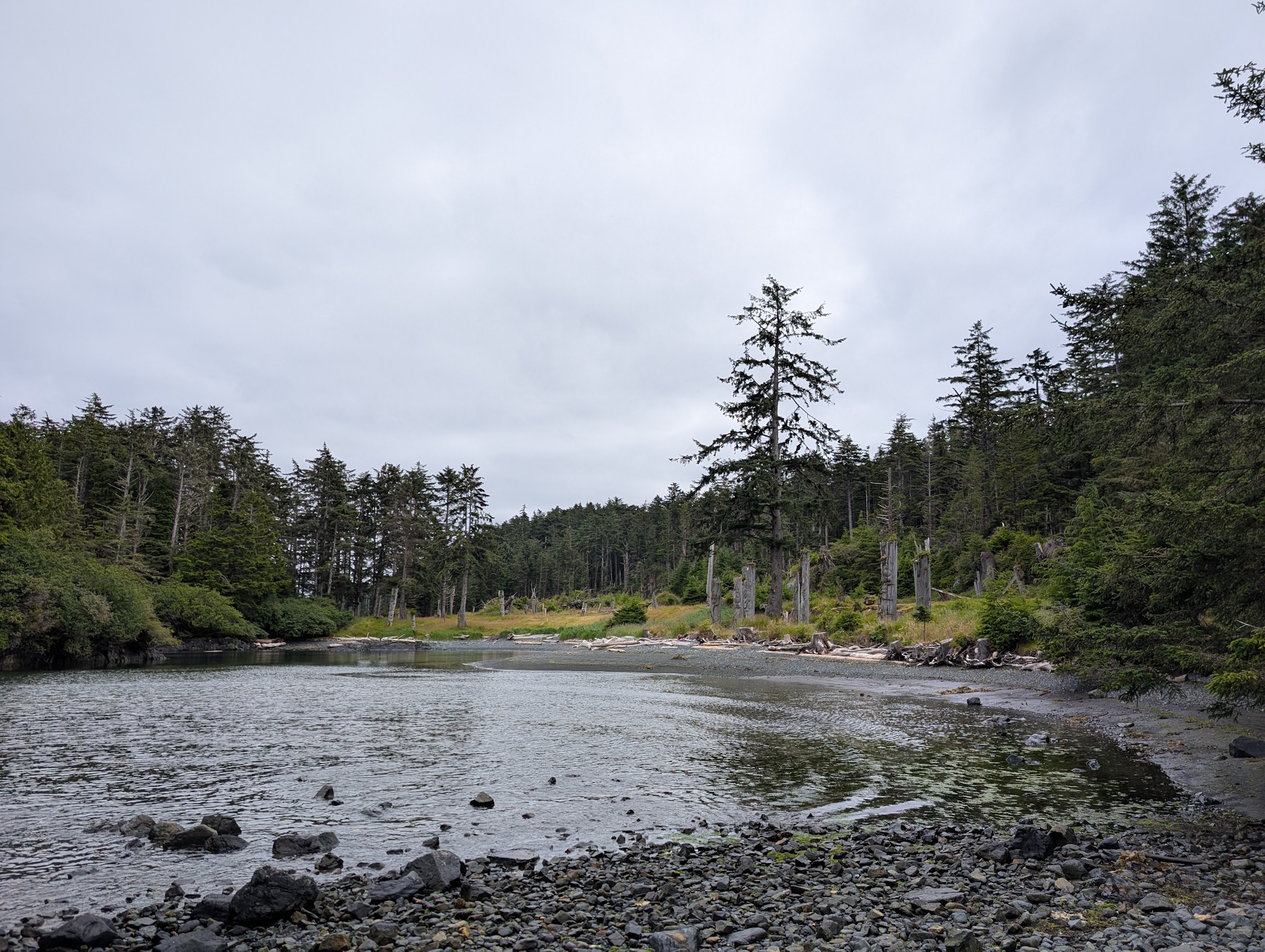
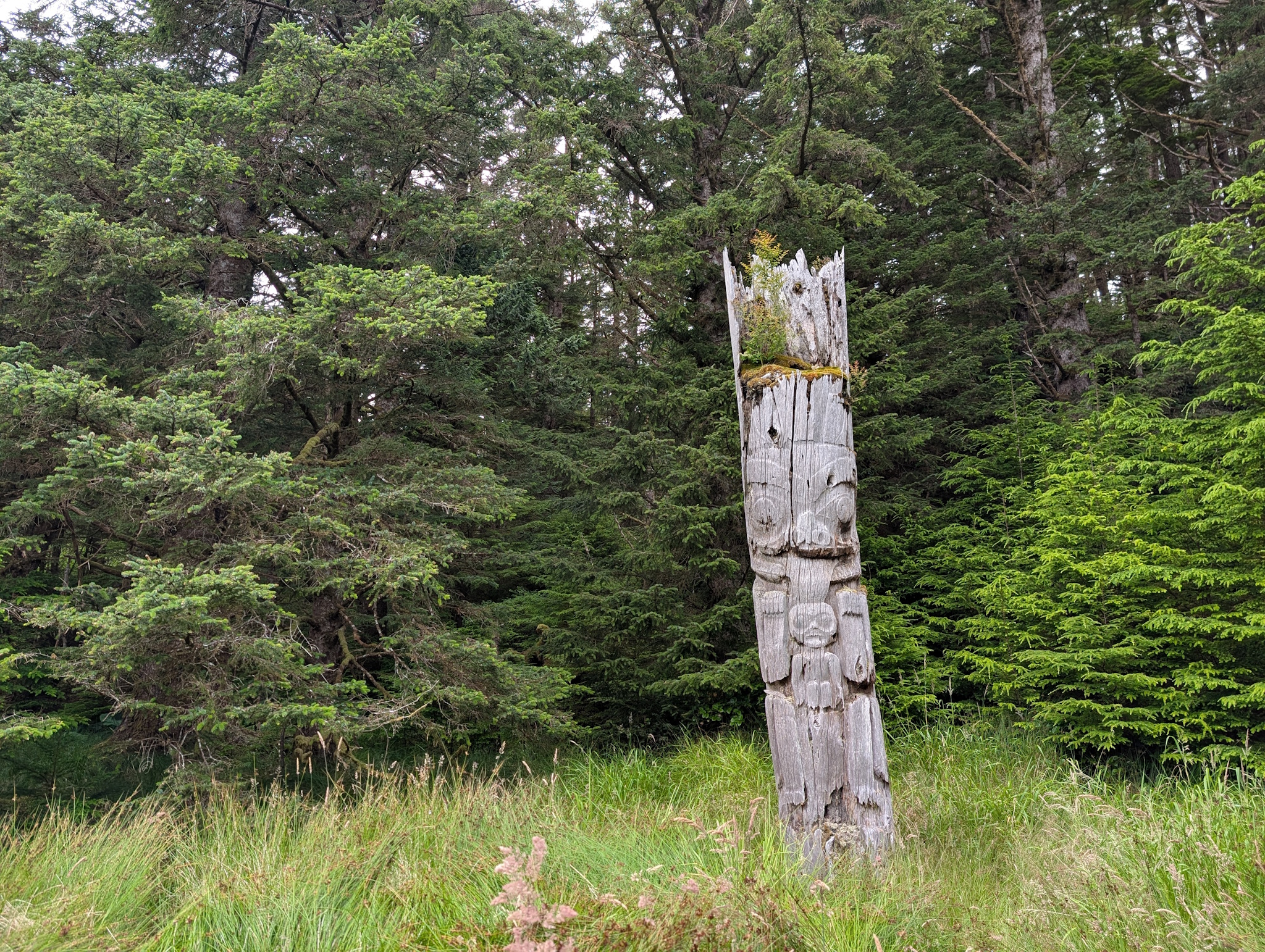
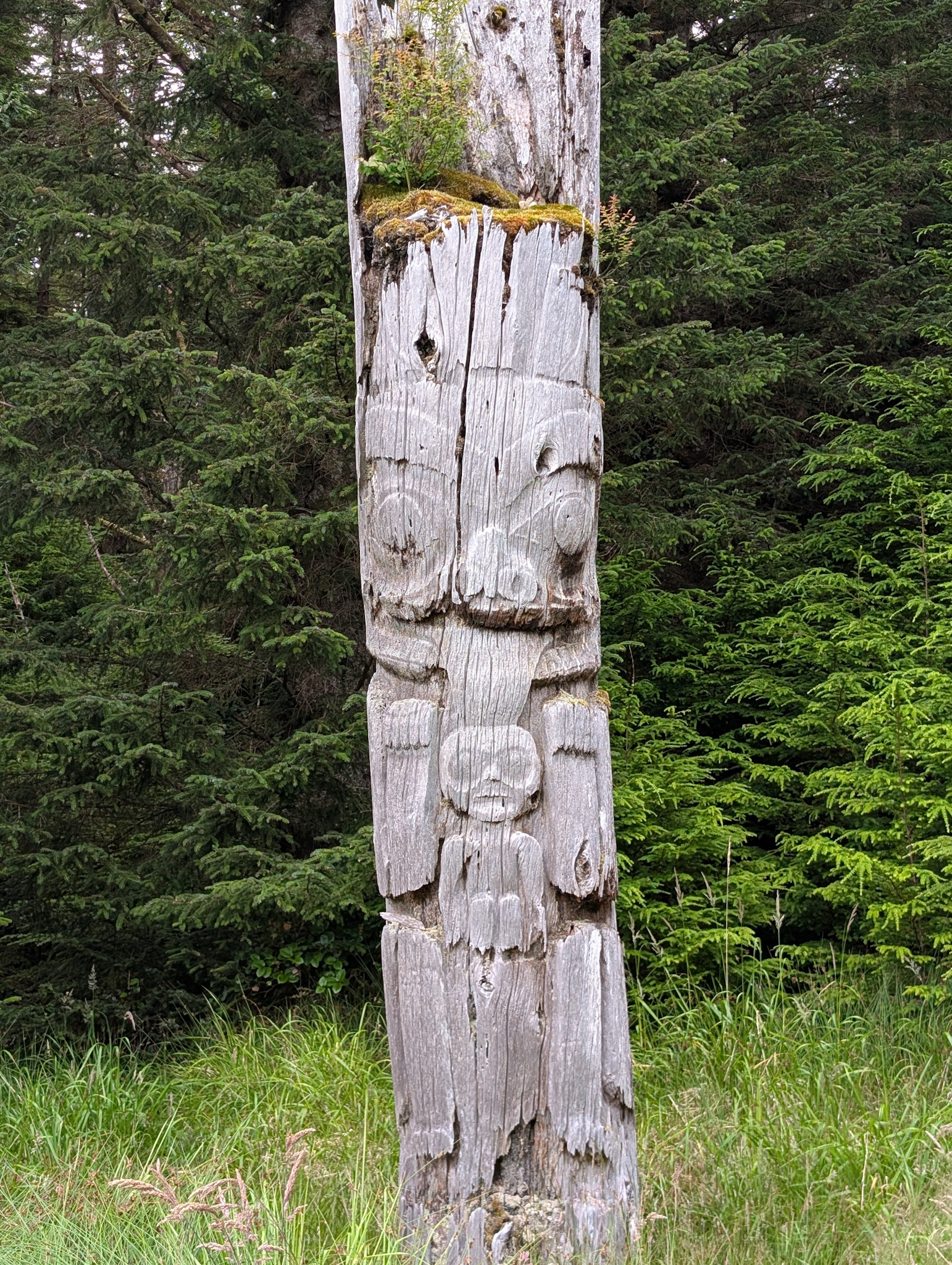
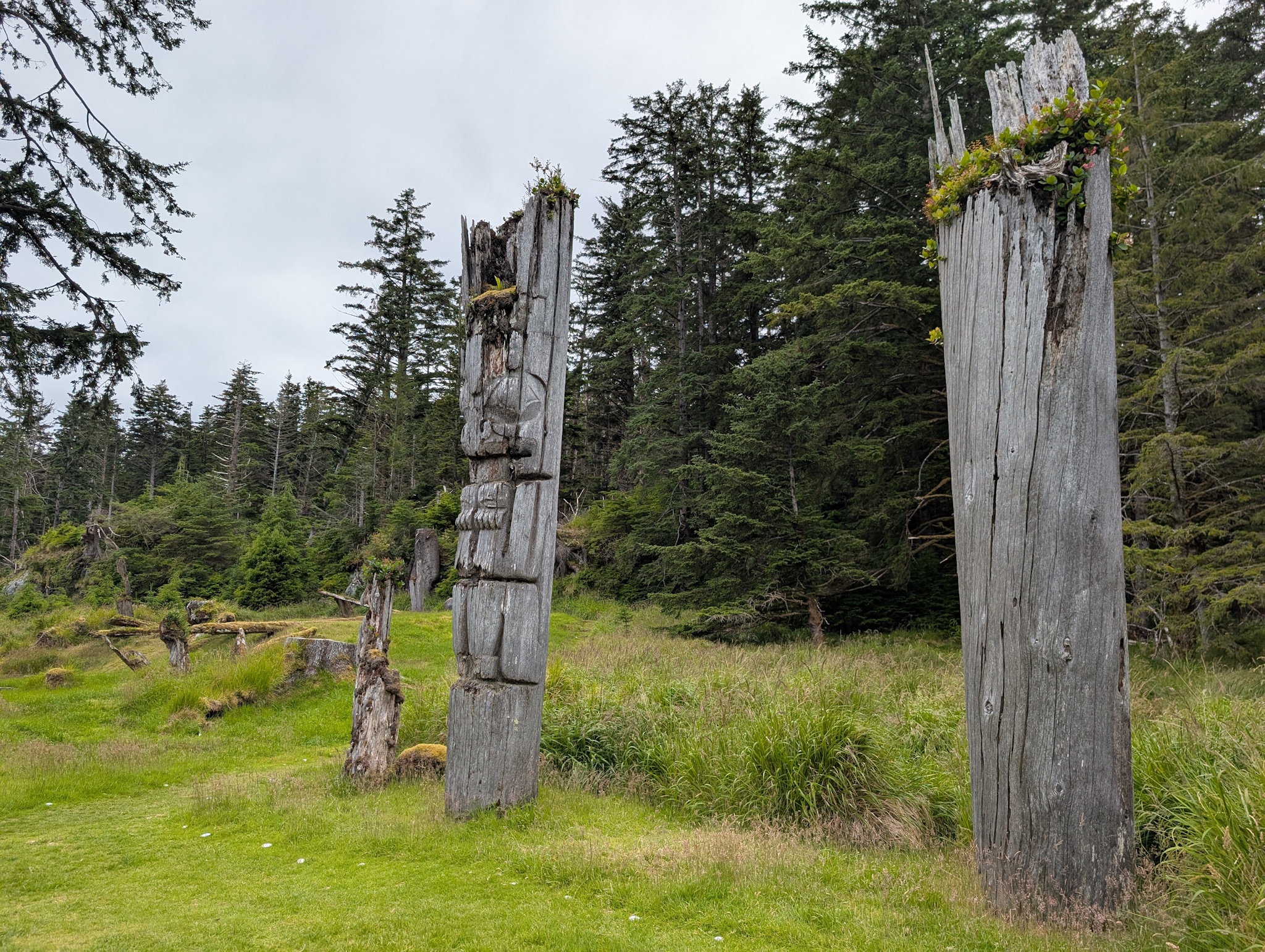
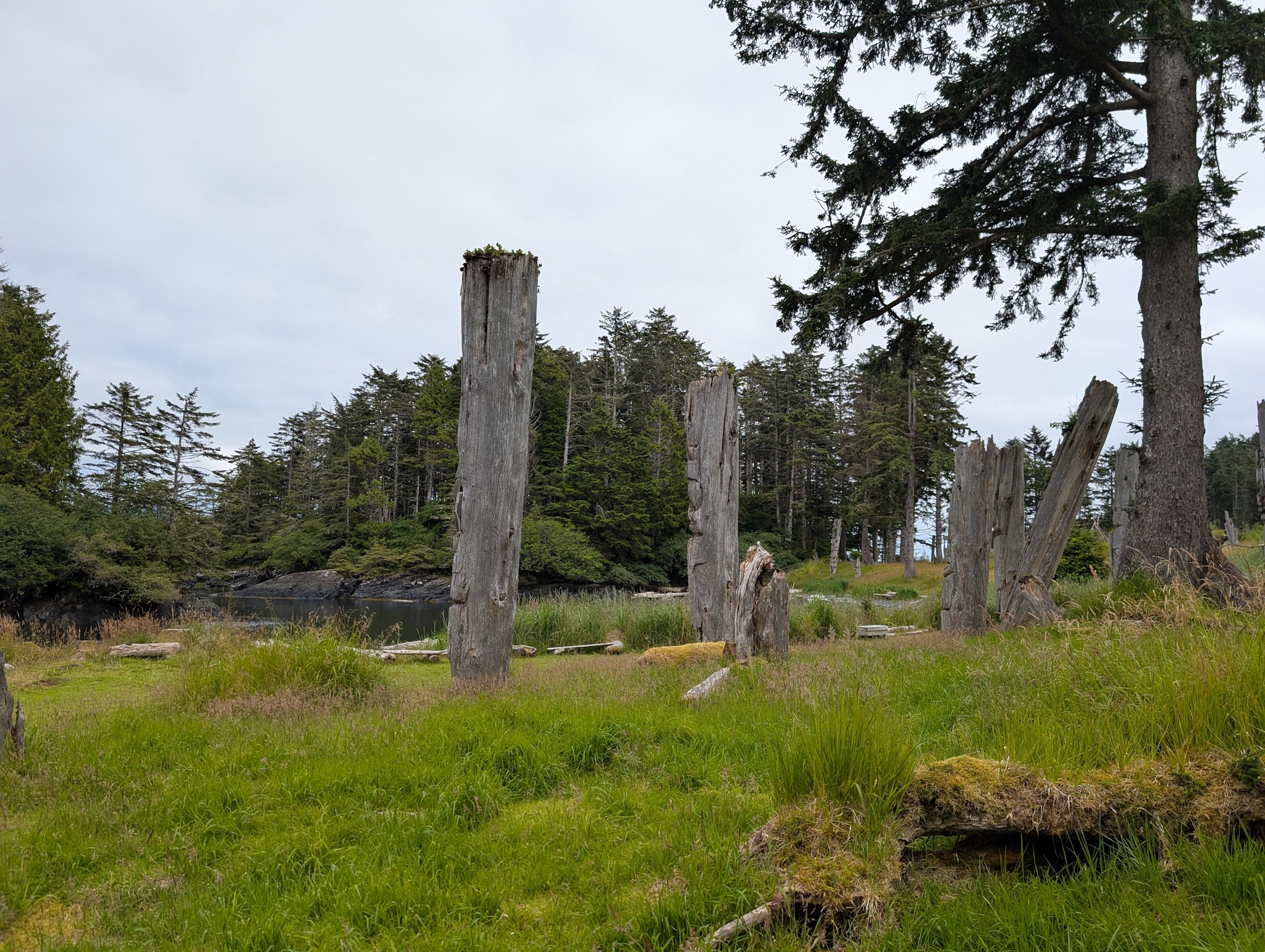
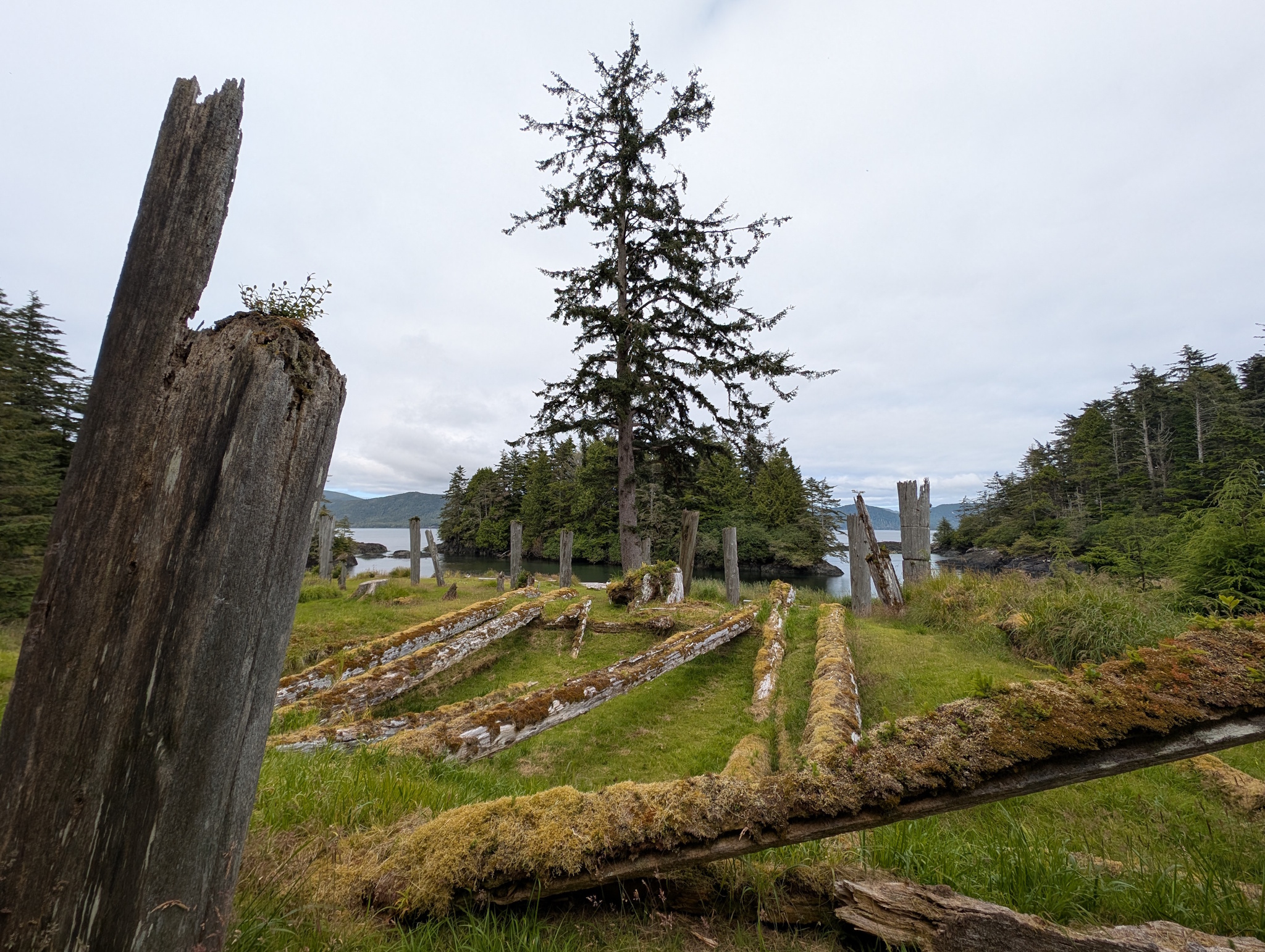
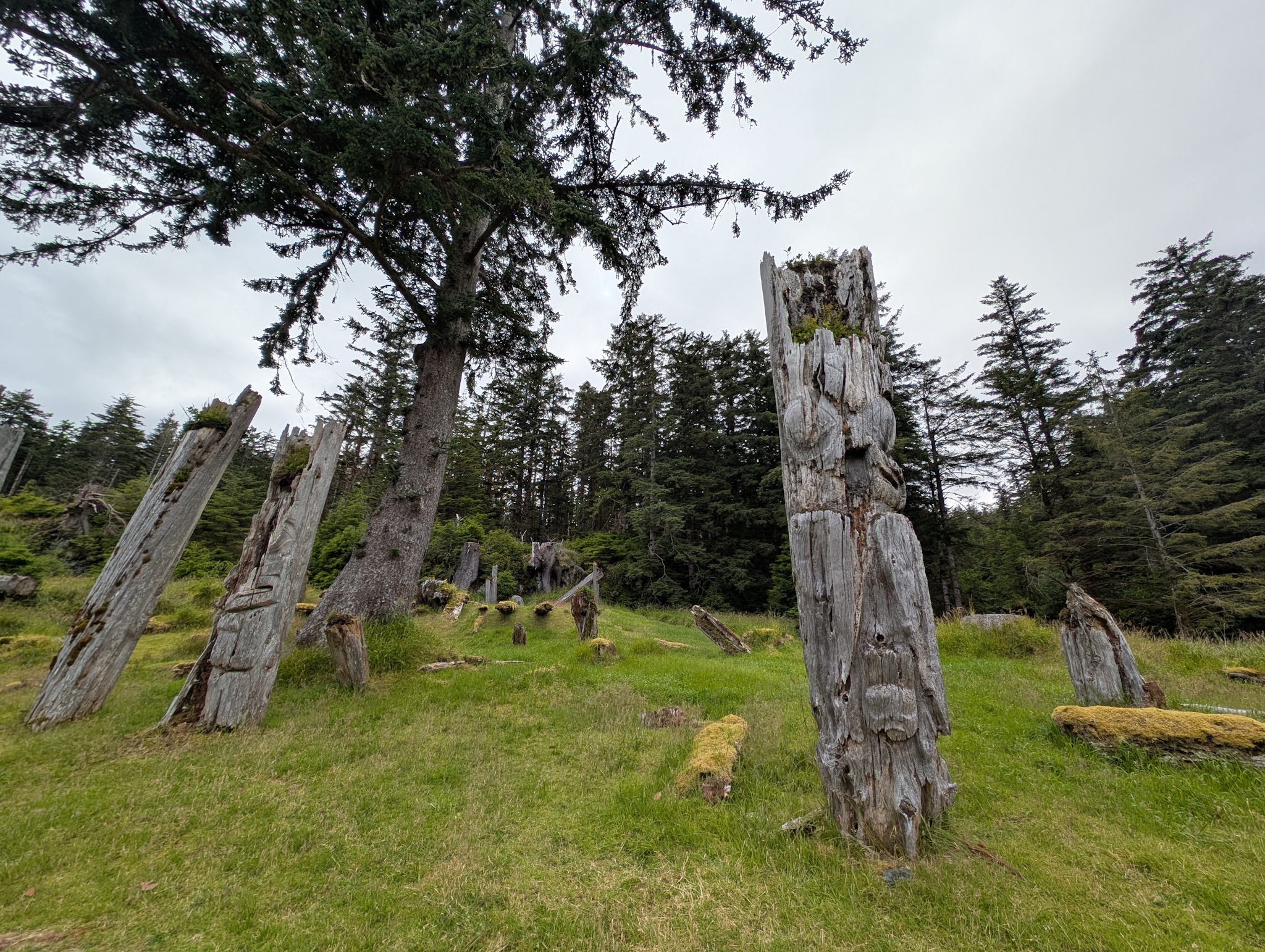
After navigating past the large rocks sticking out of the water, we anchored in the north anchorage at SG̱ang Gwaay (52° 06.1826′ N, 131° 13.7273′ W) before taking the dinghy to the beach with the boardwalk trail. A UNESCO World Heritage Site, SG̱ang Gwaay Llnagaay is a former village site of the Haida, abandoned in the late 1800s after much of the population died through smallpox and other diseases introduced by European contact.
Most of the poles remaining standing, all wearing down steadily with the passage of time, are mortuary poles, with the body of the person the pole was made for entombed near the top in a cedar box. We were led through the site by a young Watchman who explained the known history of the site throughout the tour, shared with a group from a fast tour boat.
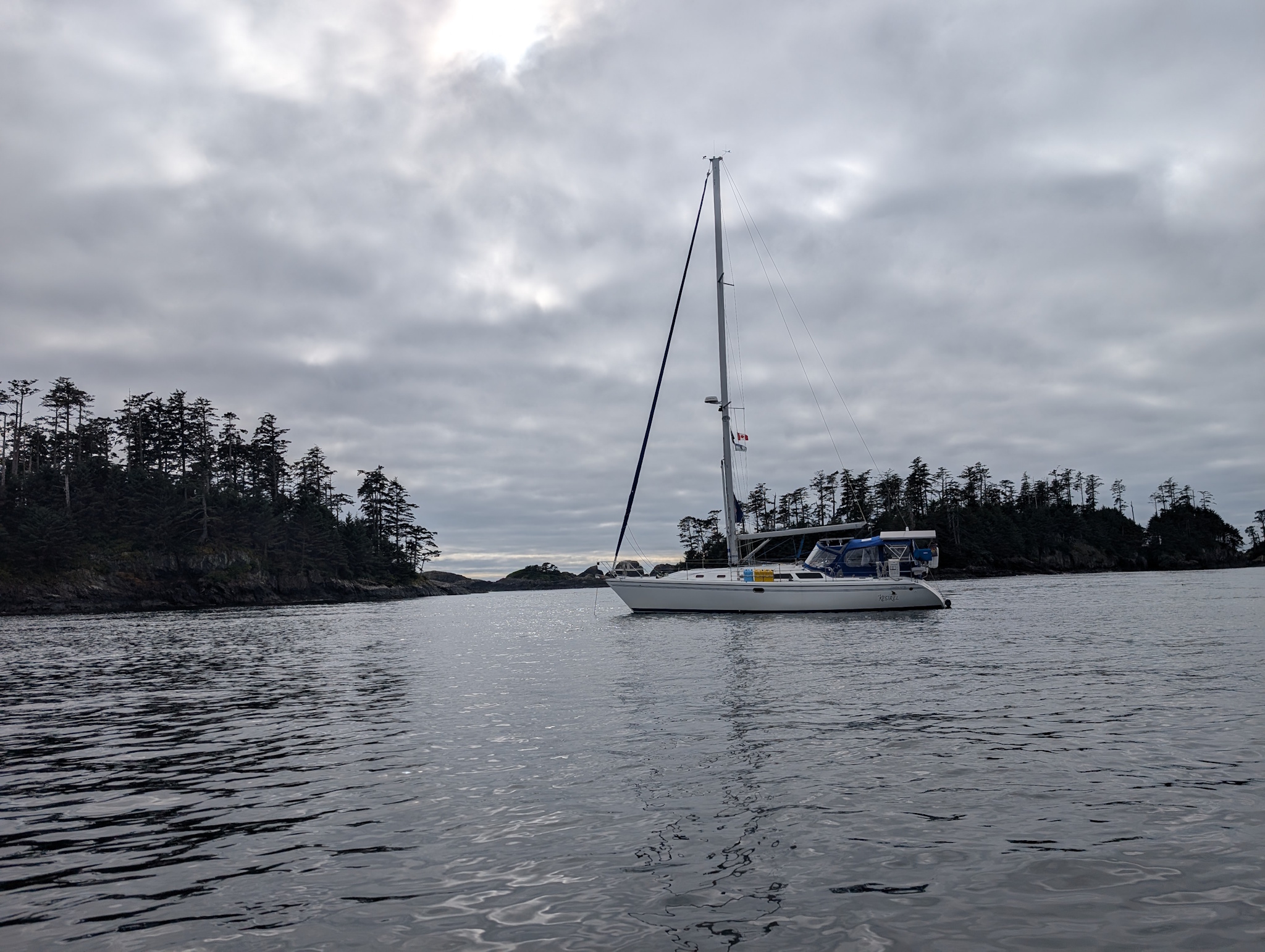
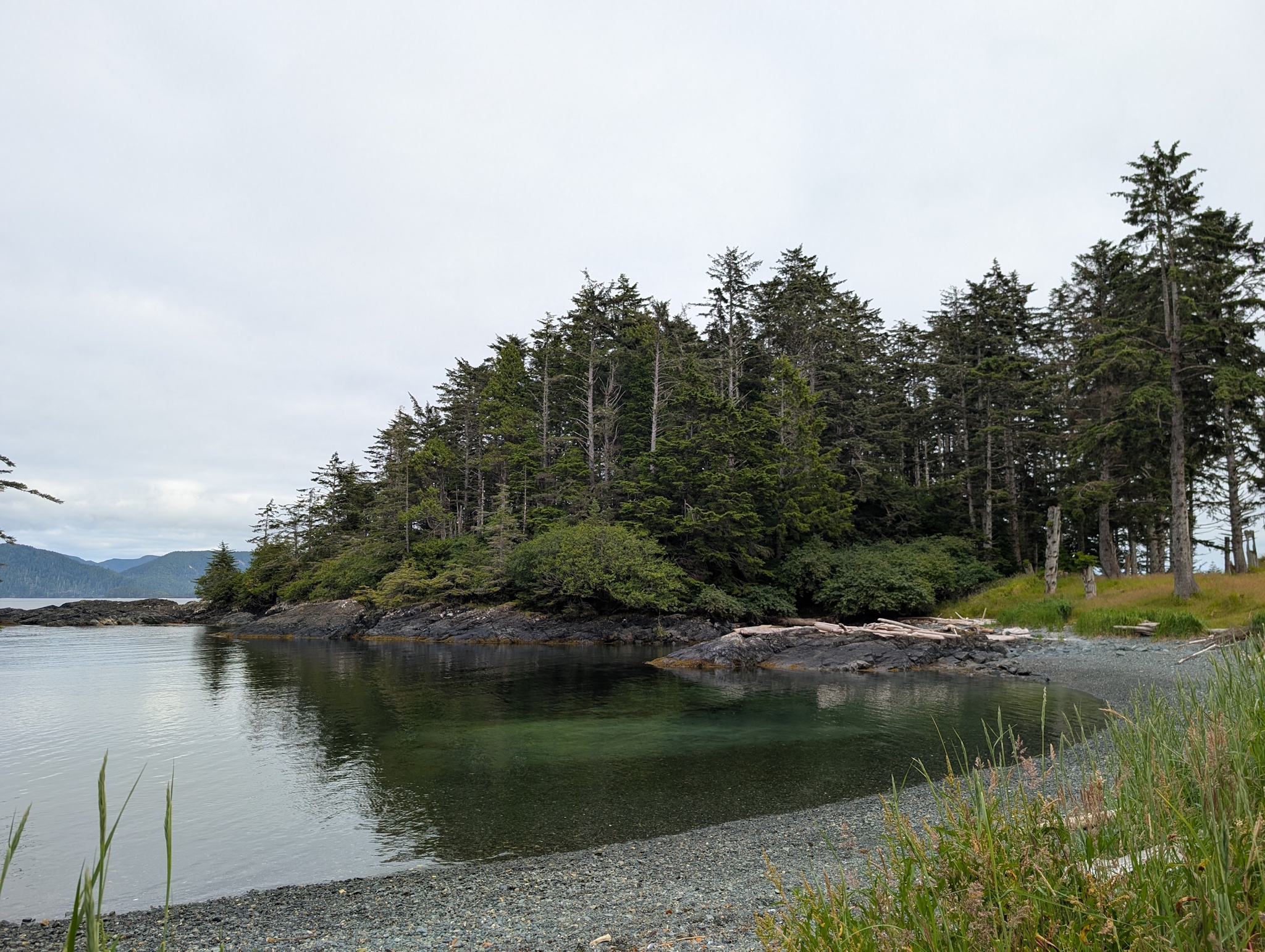
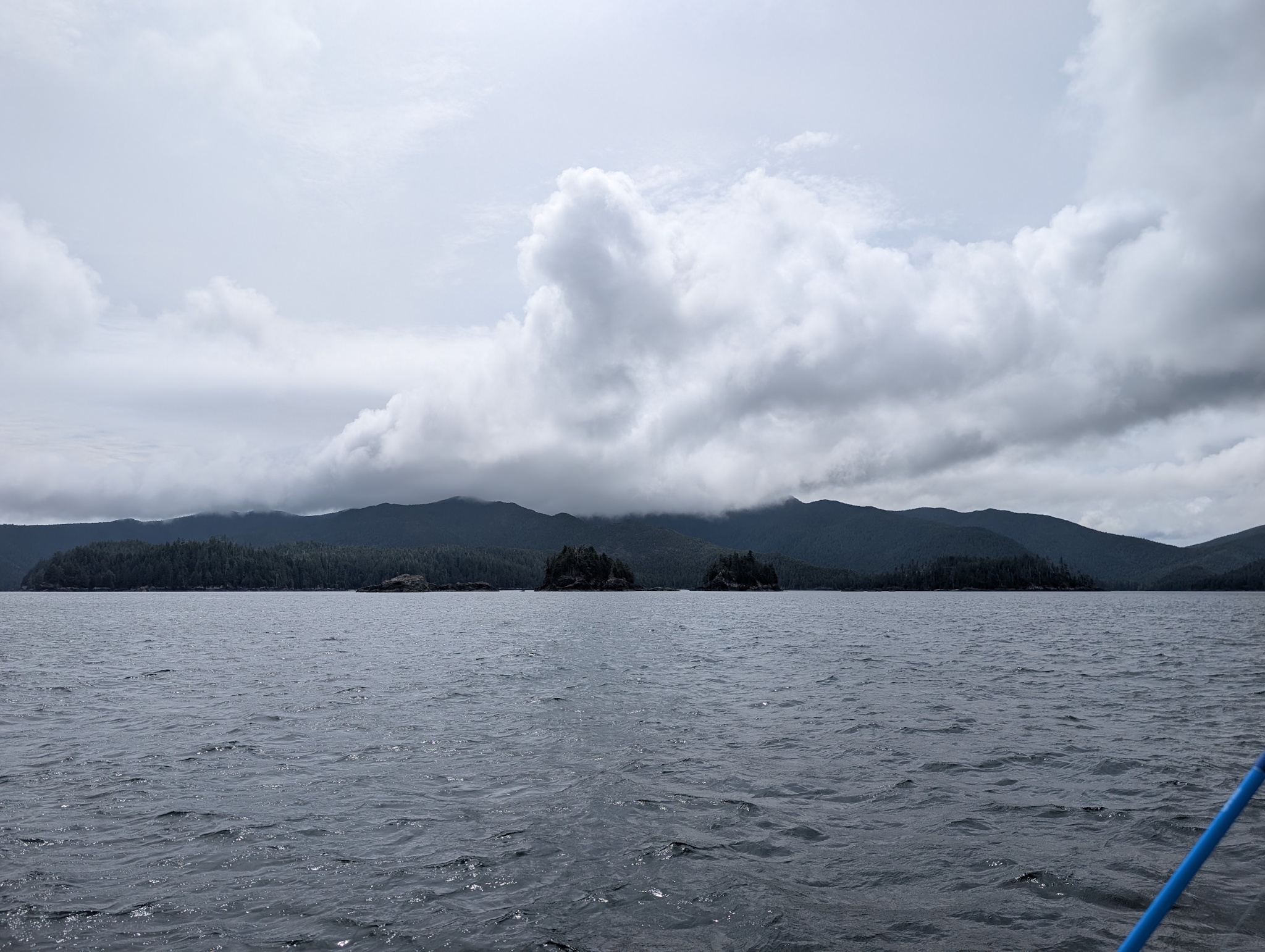
We saw yet more whales heading north from SG̱ang Gwaay to our anchorage for the night, tucked between two unnamed islets halfway up Louscoone Inlet (52° 10.0755′ N, 131° 12.8322′ W) in about 35 feet of water. Late the next morning we went back the way we’d come, back through the Houston Stewart Channel, with humpbacks in the distance both up in Rose Inlet as well as outside the east of the end of the channel.
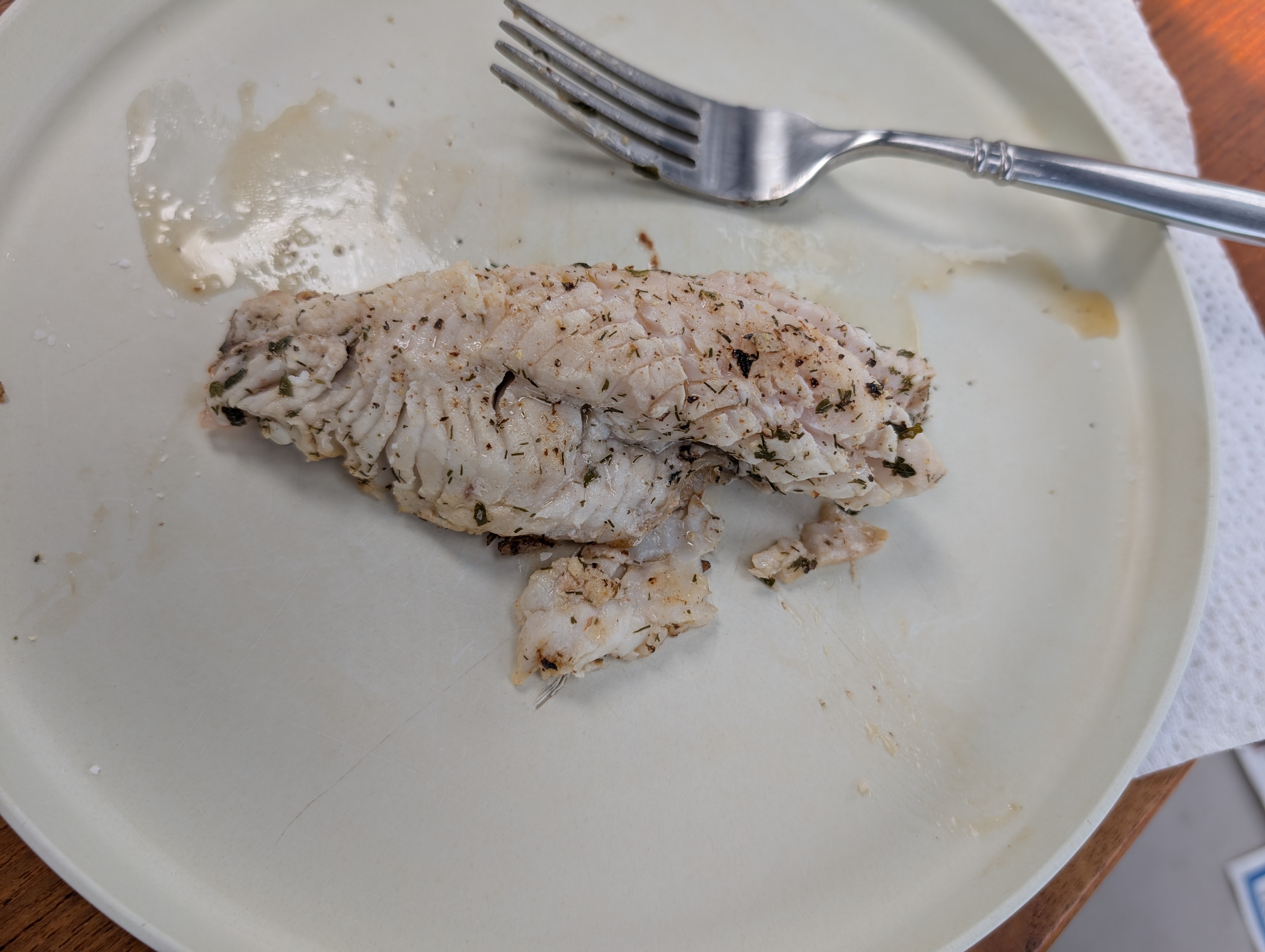
This time we went to Keeweenah Bay (52° 05.8150′ N, 130° 57.9273′ W), and before dropping anchor made a few passes in part of the bay fishing for rockfish. We had smallish rockfish on nearly every other cast, though only ended up keeping two of them, canary rockfish in this case, while the other canary and the two quillback (or dark morph copper) rockfish were a bit small and swam away immediately when we put them back in the water. After anchoring, I fileted the fish and we had one of them for a late lunch, pan-fried with butter, lemon, and herbs.
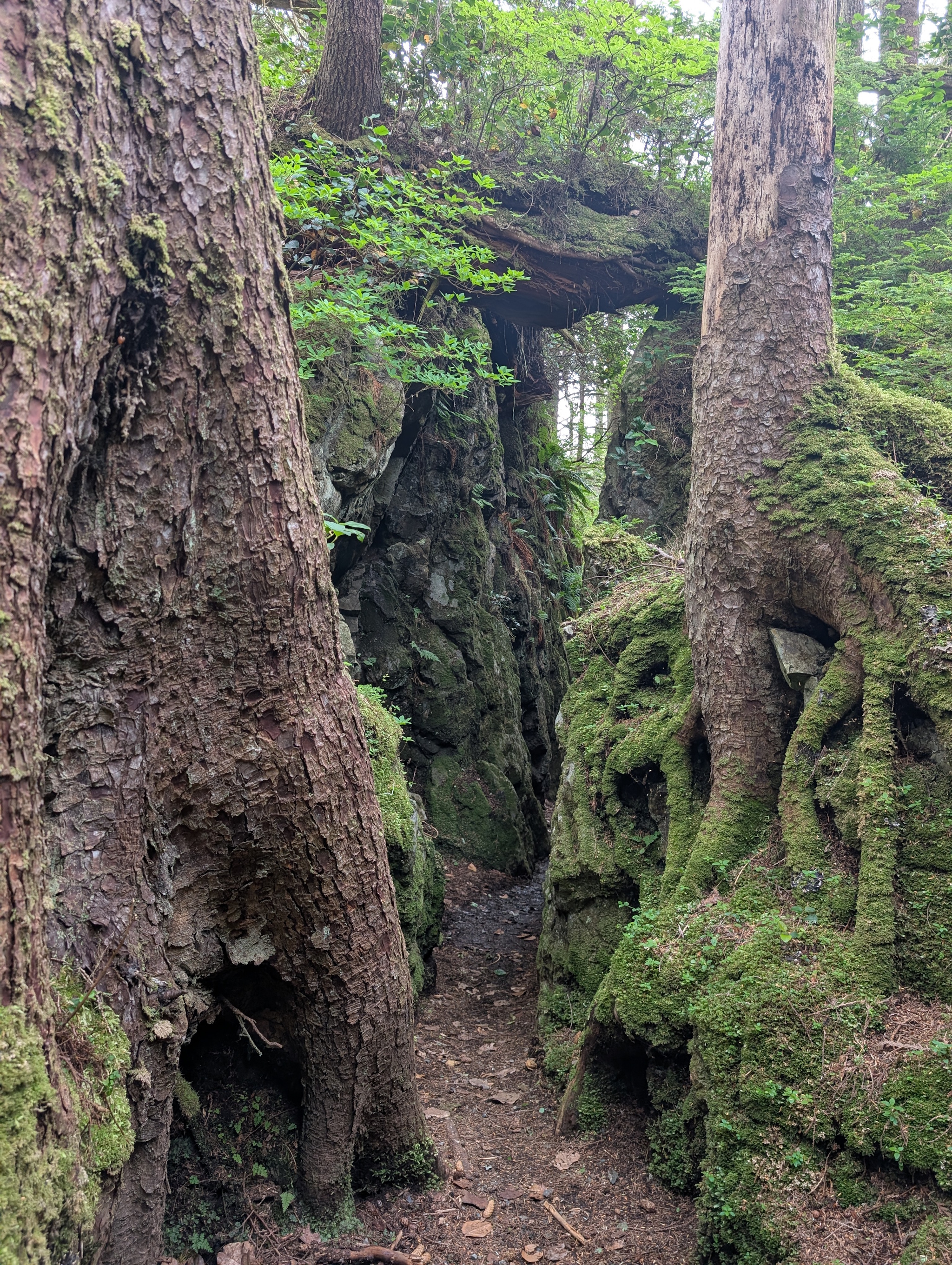
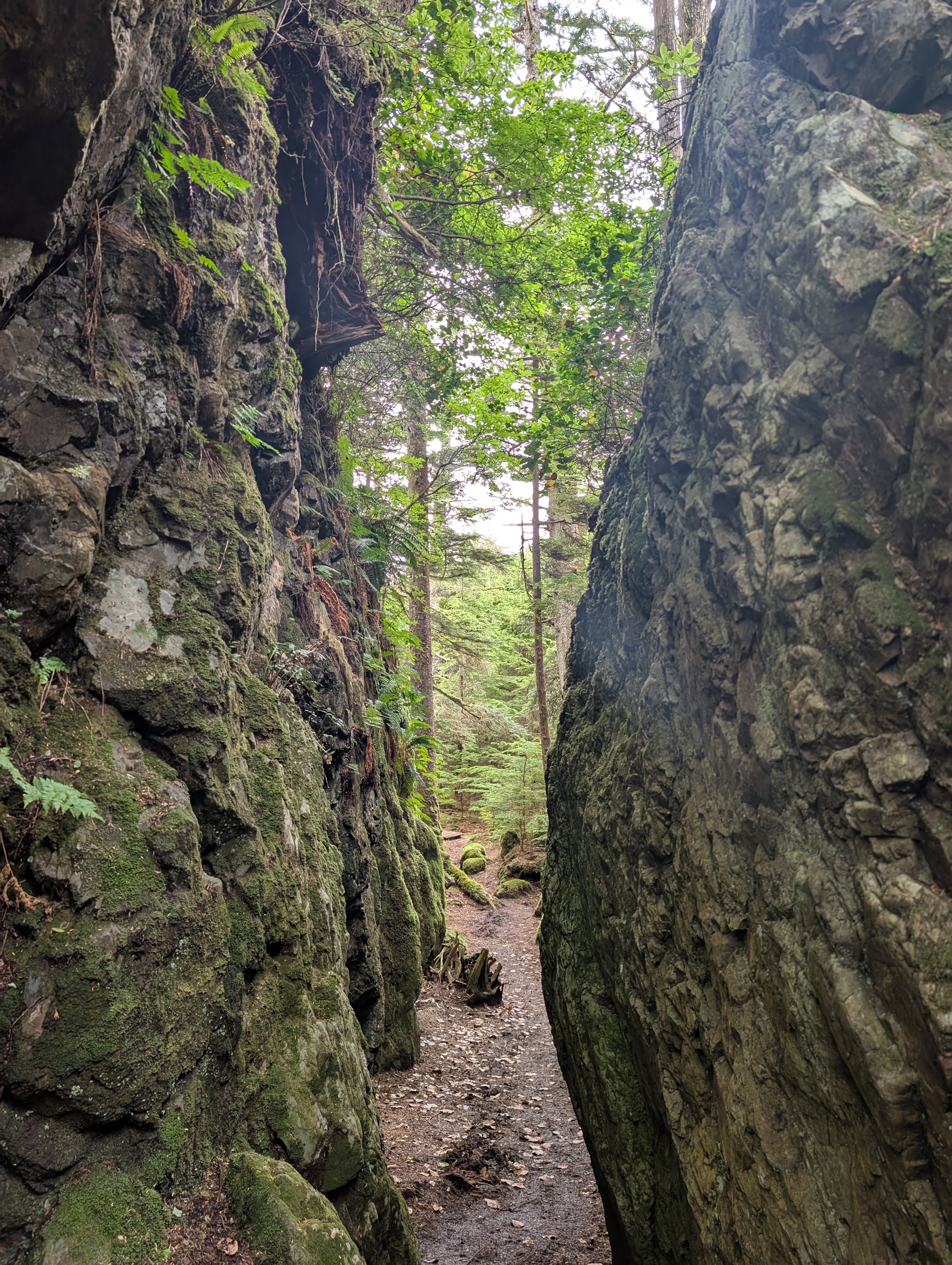
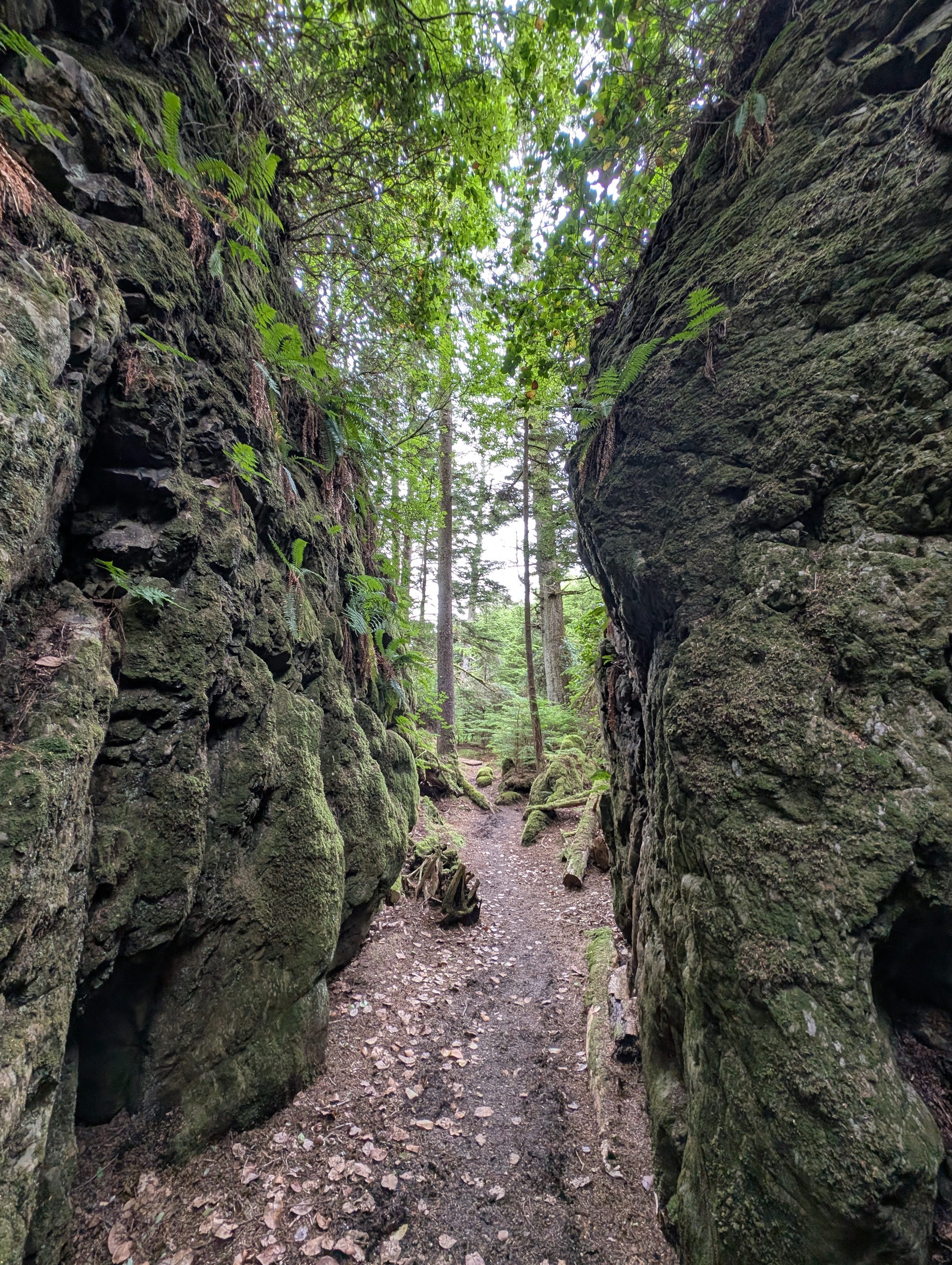
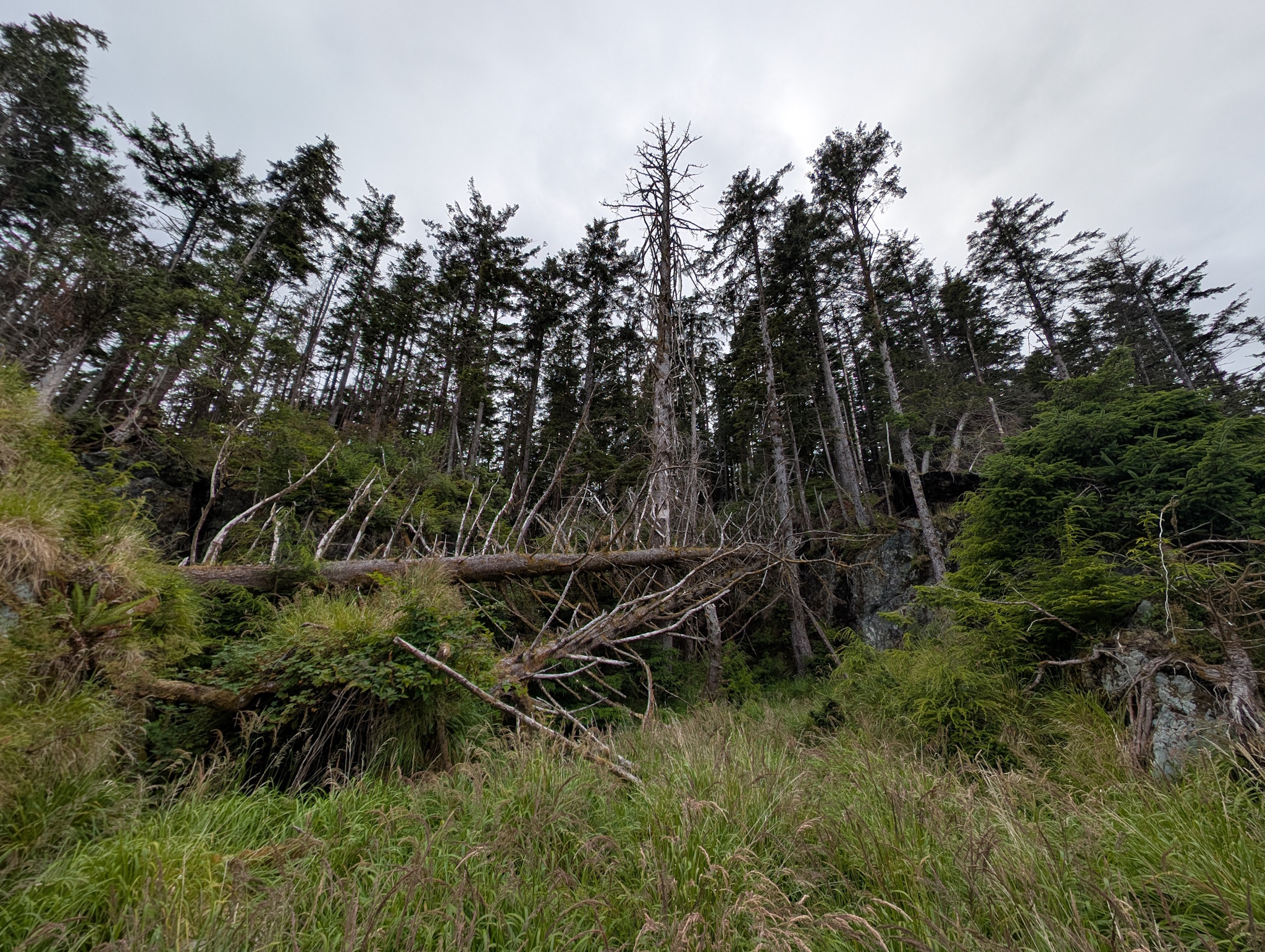
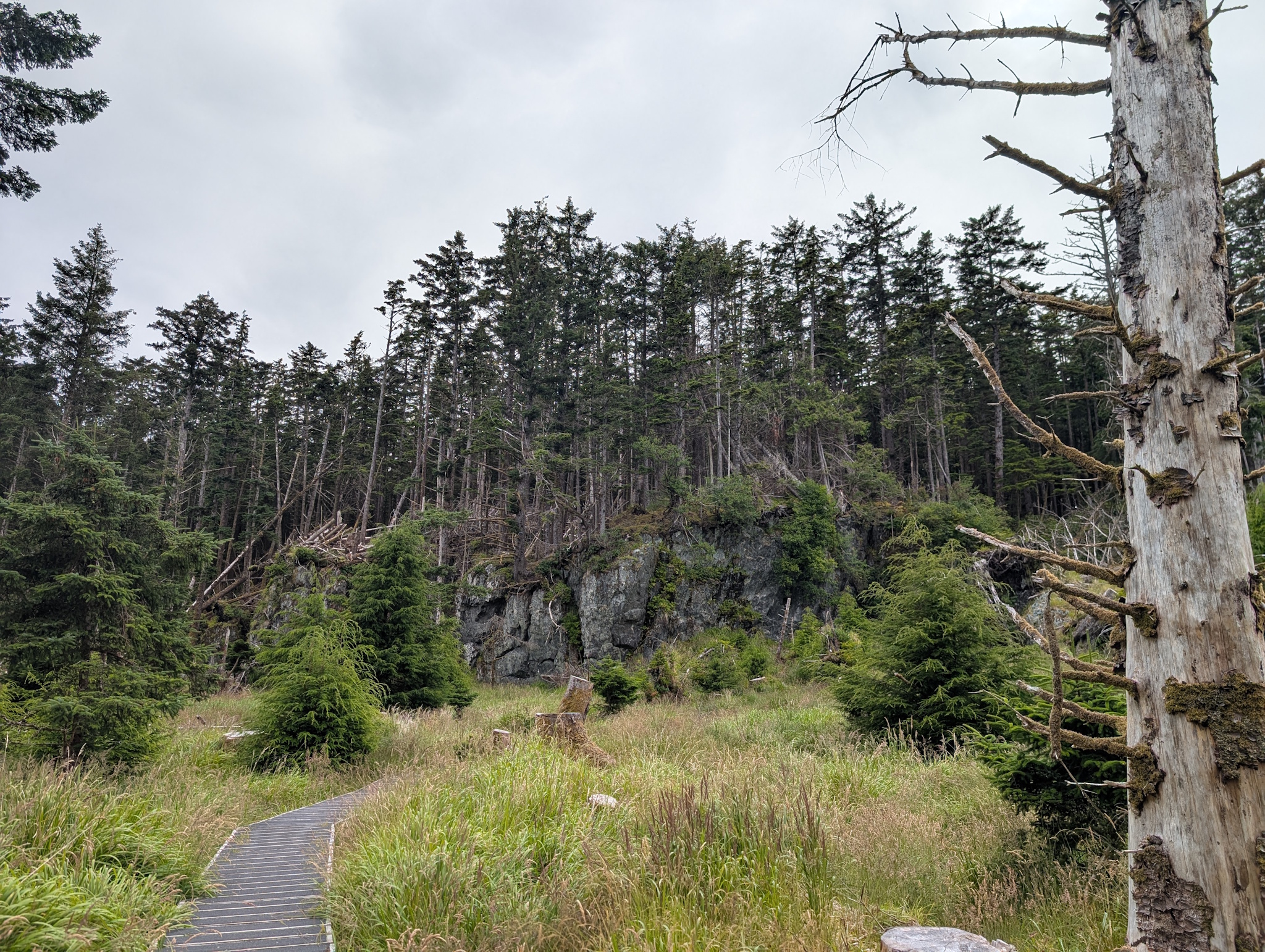
I love the photos of what you call the defensible canyon. I googled that, in SGang Gwaay, and could find no references to it. What do you mean by “defensible canyon”?
The people that lived here were particularly warlike and made a number of enemies in the area over the years so sometimes they would get raided. They’d send the non-warriors to the canyon area when that happened
Ah, thank you.